


 Shkruar nga Alberto Beggiolini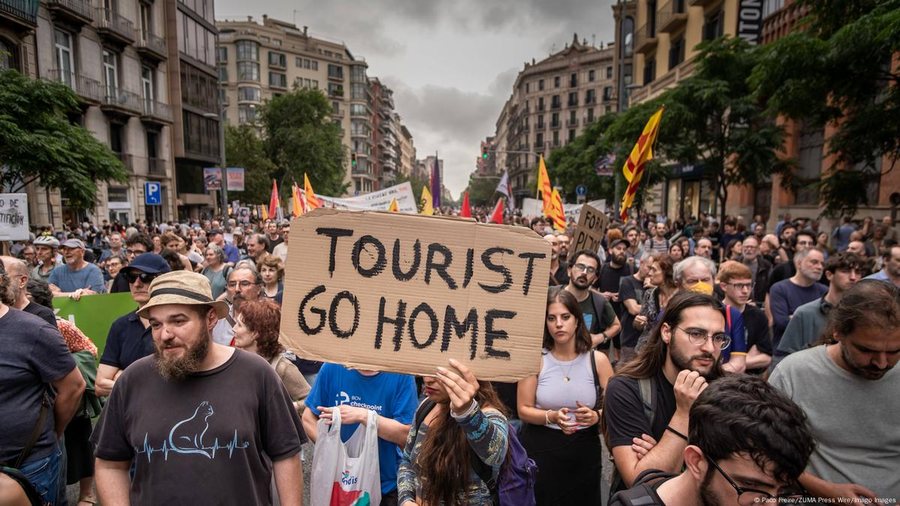
Typical vacations are getting shorter, from 10.3 to 10 days on average, but are increasing in frequency
Many travelers who choose Italian destinations help the real economy, but also generate protests, like the ones of these days. Did anyone really think that tourism could remain immune to the irritation that any "mass" tourism brings? Could anyone have really imagined that the movement of large crowds of tourists, all headed to the same places, would end up creating discord in those besieged destinations?
Behind yesterday's widespread protest against what is called "overtourism" lies a healthy dose of naivety, laziness, indifference, inadequacy and hypocrisy. Examples abound. In Venice, a 100 euro superticket has been proposed for "day trippers", those tourists who stay for a day, are considered "poor" and spend little or nothing.
Unbelievable, given the protests against the wealthy before and during the recent Bezos-Sanchez lavish wedding. Not to mention the controversial anti-tourism initiatives discussed in Trentino-Alto Adige, fueled by images of hundreds of tourists waiting in line, albeit orderly and patiently, for the Saceda cable car in Val Gardena.
In all cases, the naive distraction that ignores the alluring power of local beauty, magnified by images and reports from visitors with smartphones connected to social media, emerges. This distraction leads to a lazy acceptance of the influx, apart from the occasional postal-based complaint.
The reality is that we are all tourists to someone else, but we don't realize it, and in this general outburst, we feel entitled to exclude, restrict, and harass those who simply want to enjoy the same wonderful beauties.
Solutions to mitigate the friction between tourists, residents and localities are multidisciplinary and complex, from scheduling arrivals to scheduling events, to distributing information and promoting alternative and lesser-known destinations.
Meanwhile, however, the real economy generated by the same tourism is growing and strengthening national value. This is confirmed by the latest study conducted by Tecnè for Federalberghi.
Never before has the changing nature of traveler choices been so striking. Currently, fewer adults and more children will be traveling, reflecting family-friendly summer vacations. The holiday season runs from June to September, with a surge in departures in the latter months and a subsequent deseasonalization.
Typical vacations are getting shorter, from 10.3 to 10 days on average, but are increasing in frequency. This defines a type of tourist who is changing their lifestyle and redesigning their free time, fragmenting it according to a personal strategy focused on greater attention to personal well-being.
According to the survey, August is not the only month when people go on holiday, although it remains the most popular month for summer holidays. The increase observed compared to 2024 this time is more closely linked to the quality of spending than to the length of stay. The most popular destinations will continue to be coastal, although the study highlights a greater preference for natural and less crowded destinations, demonstrating the growing appreciation of Italians for natural beauty, the environment and tranquility.
Italy remains the top destination, with 88% of the vote. The remaining 12% are those planning to travel abroad and, again, they will mainly choose coastal destinations.
"August is losing its importance, while June and September are growing ," commented the President of Federalberghi, Bernabò Bocca.
" This is a very positive sign: a more distributed, sustainable and accessible form of tourism is emerging. This is an excellent opportunity to increase employment and the profitability of the sector throughout the year. I believe we are witnessing a major change. Today, tourists are not only looking for accommodation, but also an experience to cherish," Bocca continued.
Spending is no longer focused solely on overnight stays, but is spread across the entire supply chain, including restaurants, culture, crafts and wellness. This is a structural transformation that makes the sector a widespread driver of economic and social value. /Adapted from "Pamphlet" by "ilsussidiario"





Lini një Përgjigje