


 Shkruar nga Pamfleti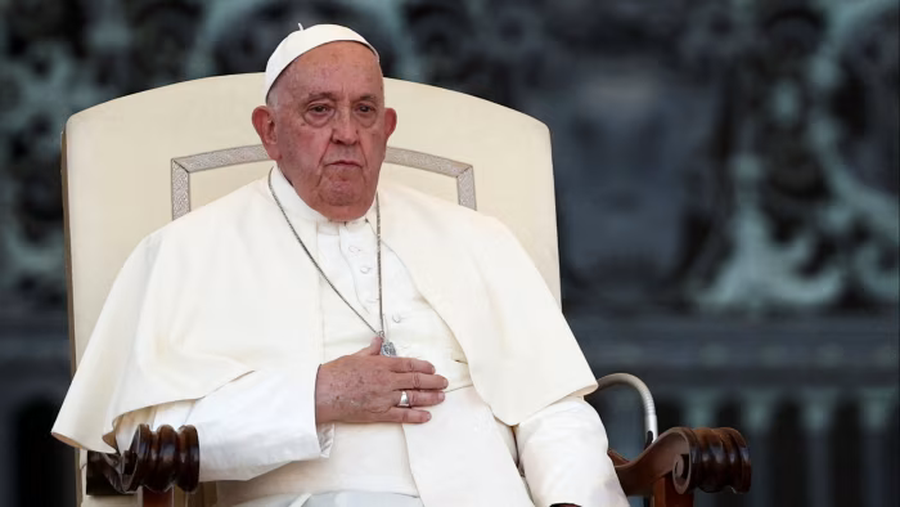
Vatican watchers are debating who might succeed Francis at the helm of a Catholic church riven by internal tensions.
" God never abandons his children, never. Even when we age and our powers decline, when our hair turns white and our role in society diminishes, when our lives become less productive and may risk seeming useless ," declared the 87-year-old Pope, now more than 11 years in the troubled Vatican reign.
It was a poignant reflection on the slowing of his faculties from old age. Inevitably, attention is turning to the question of who might succeed him in the Holy See, and whether the next pope would do better than Francis in calming tensions simmering in the Vatican and the worldwide Catholic Church over doctrine, policy and the staff..
A small but powerful electorate
Although he is not in critical health, Francis wrote earlier this year in his memoir "Life: My Story Through History" that he had never considered following the example of Benedict, his predecessor, and abdicating. At the same time, he mentioned that, early in his reign, he had signed a declaration that he would resign if his ill health made it impossible for him to perform his duties.
One way or another, Vatican watchers know it's only a matter of time before a conclave of cardinals gathers in the Sistine Chapel to elect the next pope. In terms of its size, it is indeed the most powerful electorate in the world. He has 236 cardinals at the moment, but only 125 are under the age of 80 and therefore have the right to vote for the man who will lead the Church and its faithful around the world.
By geographic region, Europe will provide 51 voting cardinals (about 40 percent of the total), Asia 21, Central and South America 18, Africa 17 and North America 15.
Of course, it would be a lie to suggest that cardinals will vote in continental blocs. However, these figures reflect the gradual decline of organized Catholicism in the Church's historic European heartland and the growing influence of some African, Asian and Latin American countries where the religion is flourishing.
Prediction of conclaves:
Francis, who is from Argentina, is the first non-European pope since the Syrian-born Gregory III, who reigned in the eighth century. He has done much to shape the election of the next conclave by naming no less than 92 of the 125 cardinals who will have the vote.
However, this in no way makes it certain that the next Pope will be non-European or even of a theological outlook similar to Francis. As John Thavis wrote in November in a well-regarded article explaining how the election process works:
"The dynamics of papal conclaves are extremely difficult to predict."
Conclaves are usually shrouded in secrecy: cardinals are sworn not to reveal the maneuvers and calculations behind their election. However, in another publication this year, Posterity: My Memories of Benedict XVI, Francis took the extraordinary step of revealing some of what went on behind closed doors at the 2005 and 2013 conclaves.
2005 Conclave
In 2005, after the death of the Polish-born John Paul II, the decision eventually went in favor of Germany's Cardinal Joseph Ratzinger (the future Benedict) — but not before some jokes that wouldn't seem out of place in the US. Convention of political parties in the 1920s.
According to Francis - then Cardinal Jorge Mario Bergoglio - he won the support of 40 of the 115 cardinals in the conclave's third vote, not because he was seeking the papacy, but because a group of cardinals wanted to block Ratzinger.
The idea was to destroy Ratzinger's chances and then switch the pro-Bergoglio vote to a third candidate who would not be "foreign" - that is, non-Italian. Francis ended it all by telling the other cardinals that he would not play along with the anti-Ratzinger camp. Germany was duly elected on the fourth ballot.
Progressives and conservatives
Whoever succeeds Francis will have a Herculean task on his hands. In many ways, the most difficult problem to solve is that, since the reign of John Paul II, the conflicts between progressives and conservatives in the Catholic Church have come to be reflected and infected by similar controversies in secular politics in the US, the democracies European and the non-Western world.
Francis has weathered these storms with mixed success.
In Let Us Dream: The Path to a Better Future, a book he published in 2020, Francis denounced "various types of populism" — implicitly, of the right-wing type — "that distort the meaning of the word 'people' by bind it to ideologies that focus on perceived enemies, internal and external”.
However, he was equally critical of left-leaning liberalism, calling it a worldview that "exalted and promoted the atomized individual, leaving little room for brotherhood and solidarity".
In short, Francis is neither as liberal as his conservative opponents claim, nor as conservative as his liberal opponents suggest. He is walking a narrow path between two mutually hostile camps within the organized Church and among the Catholic faithful worldwide.
Francis promotes careful change
That said, Francis has taken several steps that make clear his impatience with conservative forces. In January 2021, he changed Church law to allow women to administer communion and serve at the altar – although they cannot be ordained as priests.
Six months later, he enraged traditionalists by reinstating restrictions on the celebration of the Latin Mass that the more conservative Benedict had lifted in 2007.
In other ways that have attracted less attention, Francis has updated the Church's ideas and practices. In March 2023, the Vatican rejected the so-called "doctrine of discovery", laid out in various 15th-century papal decrees, that had been used to justify European colonialism.
A few months ago, the Vatican issued new rules that strip bishops of their power to recognize the validity of "supernatural" phenomena such as apparitions of the Virgin Mary. In conclusion, there will be everything to play for at the upcoming conclave./ Adapted "Pamphlet" from "Financial Times"



Lini një Përgjigje