


 Shkruar nga Pamfleti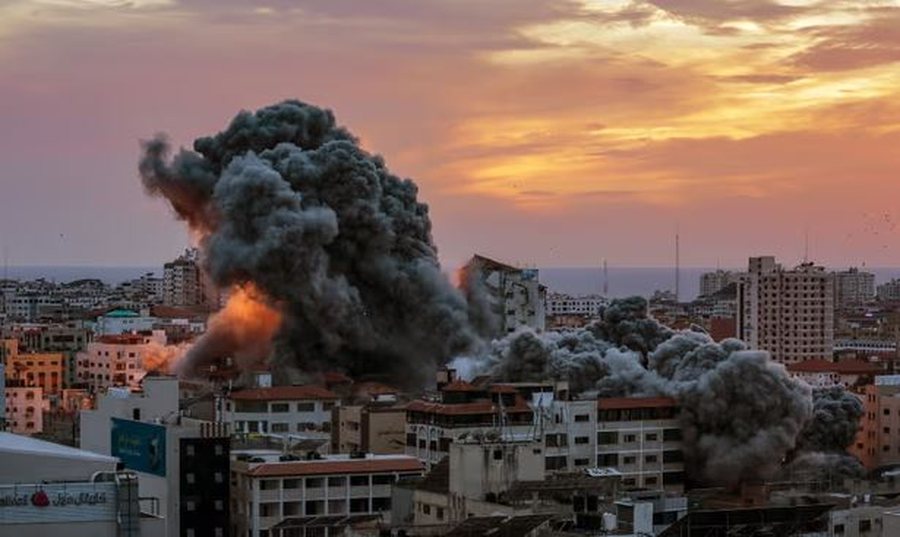
According to Israeli intelligence estimates, Hezbollah's weapons stockpile is more than seven times that of Hamas and includes far more lethal weapons.
More than nine months into its war with Hamas in the Gaza Strip, Israel now looks closer than ever to a second, even bigger war with Hezbollah on its northern border.
In June, the Israel Defense Forces announced that plans for a full-scale assault on southern Lebanon had been approved. And in mid-July, Hezbollah leader Hassan Nasrallah said the Iran-backed Shiite group was prepared to increase rocket attacks on a wider range of Israeli cities.
Although this possibility has received relatively little scrutiny in the international media, a full-scale war between Israel and Hezbollah would have consequences that dwarf the current conflict in Gaza.
A major Israeli air and ground attack against Hezbollah, the most armed group in the Middle East, would likely cause unrest across the region and could prove particularly destabilizing as the United States enters a crucial phase of its season of presidential elections.
Nor is it clear that such a war can end quickly, or that there is a clear path to a decisive victory.
The implications for Israel itself could be grim. Although Israeli air defense systems have been remarkably successful so far against missile attacks from Gaza, Lebanon, Iran and Yemen, an all-out war with Hezbollah would be a completely different game.
According to Israeli intelligence estimates, Hezbollah's weapons stockpile is more than seven times that of Hamas and includes far more lethal weapons.
Along with hundreds of attack drones, they include an estimated 130,000-150,000 missiles, including hundreds of ballistic missiles that can reach targets in Tel Aviv and even further south, indeed, any point in the country.
Furthermore, as previous wars have proven, Lebanon is a treacherous battlefield.
Israel's last war with Hezbollah, in the summer of 2006, was inconclusive and despite killing several hundred of the group's fighters, left the group's military power largely intact.
Hezbollah is also much more armed than it was then. Israel's frontline command estimates that if a full-scale conflict broke out now, Hezbollah would launch about 3,000 rockets and missiles every day of the war, threatening to overwhelm Israel's missile defenses.
Israel should focus on protecting essential military infrastructure and bases, tell the civilian population to stay in bomb shelters and hope for the best. It would be a challenge that surpasses anything Israeli leaders have faced before.
For now, both sides still have reason to exercise restraint. In fact, it seems that all the actors involved in the current conflict, Israel, Hezbollah, Iran, the Lebanese government and the United States have strong reasons to try to avoid a regional war.
But even if the Biden administration manages to reach an agreement between Israel and Hezbollah that includes a withdrawal of Hezbollah forces from the area around the border, Israeli leaders may still find it difficult not to respond to a domestic audience that favors relations with Hezbollah.
Unlike its surprise war in Gaza, Israel has long been preparing for a war with Hezbollah.
Although Israel's military leadership was completely caught off guard by Hamas' October 7 attack, it had predicted for several years that Hamas might try to join Hezbollah and other regional proxies of Iran in a coordinated multi-front attack against Israel.
In 2000, Qasem Soleimani, who led the Quds Force of Iran's Islamic Revolutionary Guard Corps and oversaw Iranian proxy forces throughout the Middle East, actively promoted a new strategy called the "ring of fire": supporting and armed a series of mainly Shia militias, the Islamic Republic would gain influence in countries such as Iraq, Lebanon, Syria and Yemen.
At the same time, he strengthened ties with the Hamas-controlled Gaza Strip.
These militias, some of which were located on Israel's borders, provided Iran with deterrence against Israel's more powerful military and gave Tehran a ready platform for attacks.
In early 2023, Salah al-Arouri, a senior Hamas leader who was then based in Lebanon and helped cement Hamas' ties to Hezbollah, was speaking publicly of the need to "unite all fronts" against Israel.
For many Israeli officials, Hezbollah, as the best-armed and best-trained of these Iranian proxies, posed the greatest threat.
On October 7, as Hamas's brutal onslaught unfolded along the Gaza perimeter, Israeli leaders rushed to prepare for an even bigger attack by Hezbollah in the north.
As the war in Gaza has unfolded, the situation along the northern border has remained volatile. Although both sides have exercised some restraint, Israel has decided to escalate the situation on many occasions.
In early January, Israeli forces killed Arour, the leader of Hamas, while he was staying in Dahiya, the Shiite neighborhood of south Beirut, crossing an important threshold, as Israeli attacks as far north as Beirut have been rare in recent years. .
Kohët e fundit, Izraeli ka vrarë gjithashtu tre nga komandantët e lartë të Hezbollahut. Gjatë gjithë luftës, forcat ajrore izraelite kanë goditur shpesh autokolona armësh dhe ndonjëherë kanë vrarë operativë të Hezbollahut në Luginën Bekaa, afër kufirit të Libanit me Sirinë. Që nga mesi i korrikut, Hezbollah kishte konfirmuar vdekjen e më shumë se 370 luftëtarëve të tij në sulmet izraelite që nga fillimi i luftës në Gaza. Dhjetëra persona të armatosur palestinezë dhe civilë libanezë janë vrarë gjithashtu.
Hezbollahu, nga ana tjetër, ka rritur gradualisht rrezen dhe sasinë e sulmeve të veta me raketa, dhe në anën izraelite, rreth 30 ushtarë dhe civilë kanë vdekur.
Qytetet dhe fshatrat në të dy anët e kufirit janë rrafshuar. Autoritetet izraelite thonë se më shumë se 1000 shtëpi dhe ndërtesa janë dëmtuar rëndë si rezultat i sulmeve të Hezbollahut.
Ka vlerësime të ngjashme në lidhje me dëmet nga pala libaneze. Por efekti më i madh në Izrael deri më tani mund të jetë zhvendosja afatgjatë e dhjetëra mijëra izraelitëve.
Në qendër të përplasjes midis Izraelit dhe Hezbollahut është pushtimi dhe armatimi i zonave në jug të lumit Litani nga grupi shiit.
Sipas marrëveshjes së armëpushimit të vitit 2006, Hezbollahu supozohej të qëndronte në veri të Litanit, me tokën midis lumit dhe kufirit izraelit, distanca varion nga rreth shtatë milje në lindje në 20 milje në perëndim, nën kontrollin e OKB-së ; vetëm ushtria libaneze do të lejohej të kishte një prani ushtarake atje.
Por këto masa nuk u zbatuan kurrë dhe që në fillim forcat e Hezbollahut vendosën de facto kontrollin e kufirit me Izraelin.
Kështu, kërkesa më e rëndësishme e Izraelit është që njësitë e Hezbollahut, dhe veçanërisht forcat elitare të grupit Radëan, forcat e operacioneve speciale që janë krijuar për të kryer bastisje dhe sulme ndërkufitare në Izrael duhet të qëndrojnë në veri të lumit Litani.
Përkundrazi, Hezbollahu ka thënë se do të pranojë një armëpushim të ardhshëm vetëm nëse parashikon një kthim në status quo-në e para-7 tetorit, me fjalë të tjera, duke lejuar luftëtarët e Hezbollahut të kthehen në jug të Litanit.
Në një skenar të tillë, grupi ka të ngjarë të kërkojë gjithashtu të rindërtojë 20 postat ushtarake që ndërtoi përgjatë kufirit dy vjet më parë, të cilat izraelitët bombarduan dhe shkatërruan menjëherë pas fillimit të luftës në Gaza.
Situata e paqëndrueshme në kufirin verior ka shkaktuar një situatë të paqëndryeshme në qeverinë izraelite. Edhe pse Netanyahu dhe Gallant e kanë kërcënuar Hezbollahun dhe shtetin e Libanit me shkatërrim absolut nëse Hezbollahu nis një luftë gjithëpërfshirëse, asnjëri prej tyre nuk duket i prirur për një skenar të tillë tani.
Vlen të kujtohet se vetë Hezbollahu u krijua në vazhdën e pushtimit të parë të Izraelit në Liban në vitin 1982, në atë që tani njihet si Lufta e Parë e Libanit.
By 2000, Hezbollah had succeeded in driving the Israelis out of their self-proclaimed security zone in southern Lebanon, forcing the full withdrawal of the IDF due to growing Israeli public concern over military casualties.
Then the war that broke out in July 2006 ended after 34 days in a miserable draw that left both sides unhappy but also wary of another massive direct confrontation.
Many Israeli analysts doubt that Hezbollah has prepared itself well enough for the next round.
If full-blown armed conflict does occur, it may not be short-lived. There is a chance that Hezbollah, with Iran's encouragement, will attempt a war of attrition, hoping that this would gradually lead to the collapse of Israel, as envisioned by Tehran's hardliners.
After the war in Ukraine, many Israelis feared they would face a similar scenario: an endless war designed to exhaust the country's will and capabilities until it succumbs to external pressure.
What they did not foresee, given Hamas' brutal invasion and attack on Israeli communities on October 7, was that Israel would indeed find itself in the country of Ukraine, but, as it tried to defend itself, would be treated instead of this, from many western countries and in the international media, as another Russia, almost a treacherous state.
The Russian government, of course, is happy to see the war in Gaza prolong because it diverts Western attention and US resources from its bloody campaign in Ukraine.







Lini një Përgjigje