


 Shkruar nga Pamfleti
The EU is an extremely important market for technology companies, as explained by Holger Schmiding, chief economist at Berenberg
Major US tech giants have openly bet on Donald Trump since the first day of his inauguration, hoping that the US tariff strategy will achieve its goals. However, the countermeasures quickly imposed by the affected countries are "backfiring" and the first to feel this are none other than technology companies, which have also suffered the most in the stock market.
Tech giants rely heavily on access to foreign markets. For example, Europeans buy billions of dollars worth of digital goods from American companies every year, from Google cloud storage to Netflix subscriptions. So Europe, but also China, launched a high-tech counterattack, embarrassing an industry that had blindly trusted Trump.
The EU is an extremely important market for technology companies, as explained by Holger Schmiding, chief economist at Berenberg.
"Although it is likely that the EU will not immediately respond with significant counter-operational actions, it will threaten such actions if negotiations do not yield results by mid-year," he assesses and underlines that technology companies are a powerful sector through which the EU is "strongly attacked."
The European "response" through... iPhone
And how did Europe manage to "beat" big American tech companies? With a series of actions such as taking stricter rules to delay the issuance of business licenses to American companies, limiting access to public contracts, restricting intellectual property rights or even completely banning investments in the EU, according to Carsten Brzeski, head of macroeconomics at ING Research.
“Targets could be app stores, mobile phones, cloud services and other areas, such as determining where data is stored,” says Brzeski.
Europe is showing great interest in the products and services of companies such as Apple, Google, Amazon, Meta, Microsoft, Intel and LinkedIn. Many of them maintain their regional headquarters in the Irish capital, Dublin, largely thanks to the exceptionally low corporate tax.
The EU has already taken steps to crack down on big tech companies. Its digital regulation, the Digital Markets Act (DMA), for example, aims to counter Big Tech’s dominance. Last month, the Commission, which is the EU’s executive body, accused Google’s parent company, Alphabet, of violating the DMA and issued guidelines to Apple, demanding that the iPhone maker do more to comply with the law.
"Bleeding" and from Chinese countermeasures
At the same time, according to Dan Ives, global head of technology research at Wedbush Securities, US tech companies are facing supply chain impacts from Trump's tariff policies, with many of them relying on components and assembly lines in Asia. That's why they've seen all their stocks plunge in the past two sessions with Beijing already adopting countermeasures.
In particular, two days after Trump announced tariffs, Apple shares fell 16%, Meta shares fell 14% and Amazon shares fell 13%. According to estimates from the Bloomberg Billionaires Index, Tesla CEO Elon Musk has personally lost $110 billion in net worth so far this year, Amazon founder Jeff Bezos $37.6 billion and Meta CEO Mark Zuckerberg $18.6 billion.
On the front line of the "war"
As a Washington Post analysis reports, American tech giants are at the forefront of the targets of any American trading partner looking for a way to retaliate.
China announced retaliatory tariffs that included a particularly high tax on exports of rare earth minerals essential for computer chips that power everything from iPhones to artificial intelligence.
"In other words, sectors that represent American economic power," said a tech industry lobbyist, who spoke on condition of anonymity.
A telling sign of the "boomerang" that American tech companies have experienced is that they initially shifted hardware production from China to other countries, such as Vietnam and India, due to tariffs imposed on Beijing during the first Trump administration. But the new round of tariffs is hitting those countries hard, meaning imports of iPhones and game consoles will become more expensive. Notably, on Friday, Nintendo announced it would delay taking pre-orders for its new console as it studies the impact of the tariffs.
Private complaints with Trump
So far, tech leaders who have supported Trump have largely kept their grievances private, not wanting to become targets of his wrath. "There's a fear in every industry to criticize the president," said the industry lobbyist, who spoke on condition of anonymity.
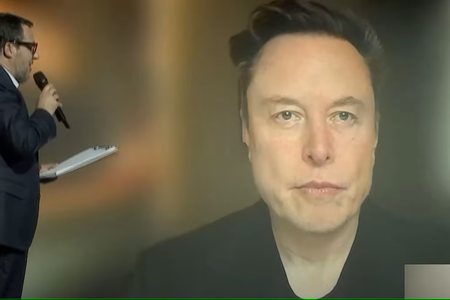
In Silicon Valley, there is still hope for a “free trade zone between Europe and North America, with zero tariffs.” That’s pretty much what Elon Musk, one of Trump’s closest aides and a member of the US government, said on Saturday.
But the tariffs create uncertainty that industry experts say is preventing companies from planning their future moves. The market chaos also makes it less likely for tech startups to go public, depriving venture capitalists of making money from their investments. /Adapted from the pamphlet by CNN/






Lini një Përgjigje