


 Shkruar nga Andrea Riccardi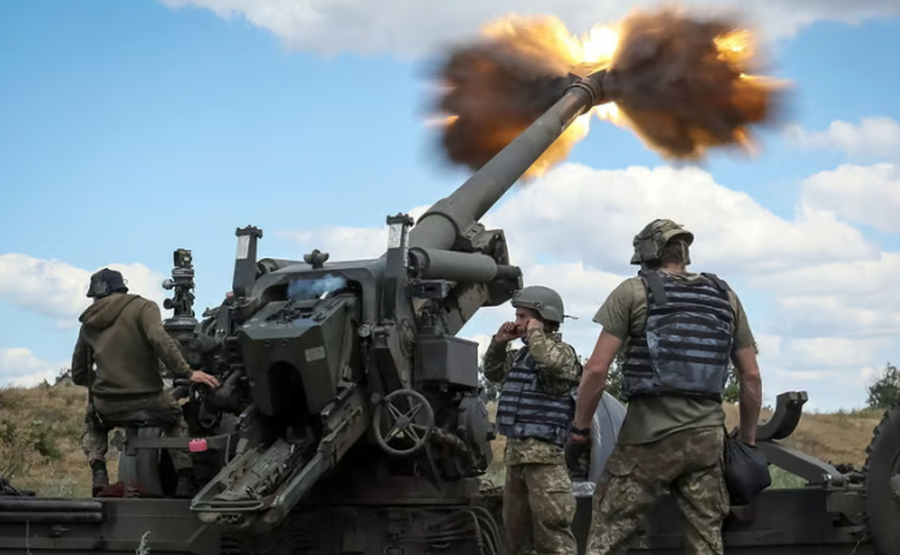
Every war leaves the world worse than it found it...
We are in a period in which war, once a “scourge” as the United Nations Charter declared, has become the main “instrument” of international politics. Conflict can easily escalate, but it is impossible to resolve it either through negotiations or victory. This is evident in the negotiations in Islamabad between the United States and Iran, mediated by Pakistan, which are dragging on without any consensus.
The Iranian regime, deprived of its supreme leader by the assassination of Khamenei, who had been in power since 1989, is trying to be a unified and coordinated interlocutor with the United States, which aims to withdraw with dignity from the situation.
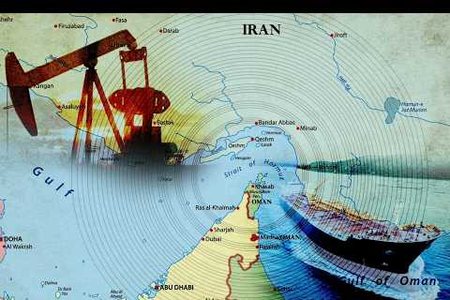
Since March 1, the situation has been complicated by the crisis in the Strait of Hormuz, which, despite being non-stop, accounts for approximately 20 percent of world oil and gas production. The conflict began with Israeli and American bombings of Iranian military, industrial and political targets. The regime in Tehran seemed weakened by the economic crisis and the protests, with demonstrations chanting "Women, Life, Freedom" since the fall of 2025, and the most recent ones in early January, all of which were ruthlessly suppressed.
Yet the country is resisting military pressure despite the devastation and sanctions. This is not so much an expression of internal cohesion (although the bombings have fostered this despite the regime’s continued unpopularity) as a characteristic of 21st-century warfare. The military disparity between the United States and Israel on the one hand and Iran on the other is obvious, but given the current state of armaments and deterrence, force is not sufficient to subdue Tehran. This is a situation that is repeated in many situations because of the military capabilities achieved, beyond the possession of nuclear weapons.
After all, Russians and Ukrainians have been fighting each other for more than four years, since February 24, 2022, with a high death toll and a high price of destruction, almost all of which was paid by Ukraine, following the Russian invasion. The aggression was intended as a blitzkrieg, a lightning war, to overthrow Zelensky’s government and create a government favorable to Moscow, also relying on the fragile cohesion of a young, partly Russian-speaking state with Russian minorities.
The Ukrainian resistance came as a bitter surprise to Putin, who was confident of a quick victory. Western support, which began before the invasion, was vital, but the unanimous response to the aggression, which united Ukrainians, also proved decisive. Thus, with some variations, the conflict has become almost a war of position, while the bombing continues. It is a clear example of how modern warfare ends up perpetuating itself, causing serious damage and human losses. Trump had promised a quick resolution to the Russian-Ukrainian conflict, but now the situation is deadlocked.
It was he himself, during his first term, who promoted the Doha Agreement with the Taliban in 2020, which ended twenty years of American and allied troops in Afghanistan, with their withdrawal the following year. With this decision, he put an end to a war that had been unfinished. The tragic death toll was 241,000, including more than 65,000 Afghans allied to the coalition and more than 85,000 Taliban and neighboring forces. The Western coalition suffered more than 3,500 casualties, 57 of them Italian. Not to mention the number of Afghans who believed in democracy and the emancipation of women and who have been forced to flee or are in danger.
Have the West really respected their commitments to facilitate the departure of those who had collaborated with them? The extremely long operation, with soldiers on the ground, also due to the very rugged terrain of Afghanistan, shows today the difficulty/impossibility of winning wars of this type, despite the military and technological power deployed. The Soviet experience in the country warned of this. But the lessons of history are obscured by the exaltation of force and the military instrument.
The discourse on war and peace that Leo XIV continues to give is based on the tragic lesson of the conflicts of the 20th and 21st centuries: it is not the fruit of a kind of traditional "charity", but of a fundamental evangelical inspiration combined with a global observation of reality.
Pope Francis wrote: "Every war leaves the world worse off than it found it. We can no longer think of war as a solution, given that the risks will probably always outweigh the hypothetical benefits attributed to it. Faced with this reality, today it is very difficult to rely on the rational criteria developed in other centuries to speak of a possible 'just war'. Never again war!" he concluded.
War remains a "useless massacre". This is a reasonable belief, given the shortcuts to war that become a dead-end tunnel, costing a huge cost in human lives and putting the economies of many countries at risk./ Adapted from "Pamphlet" by "Corriere della Sera"



Lini një Përgjigje