


 Shkruar nga Jonathan Stevenson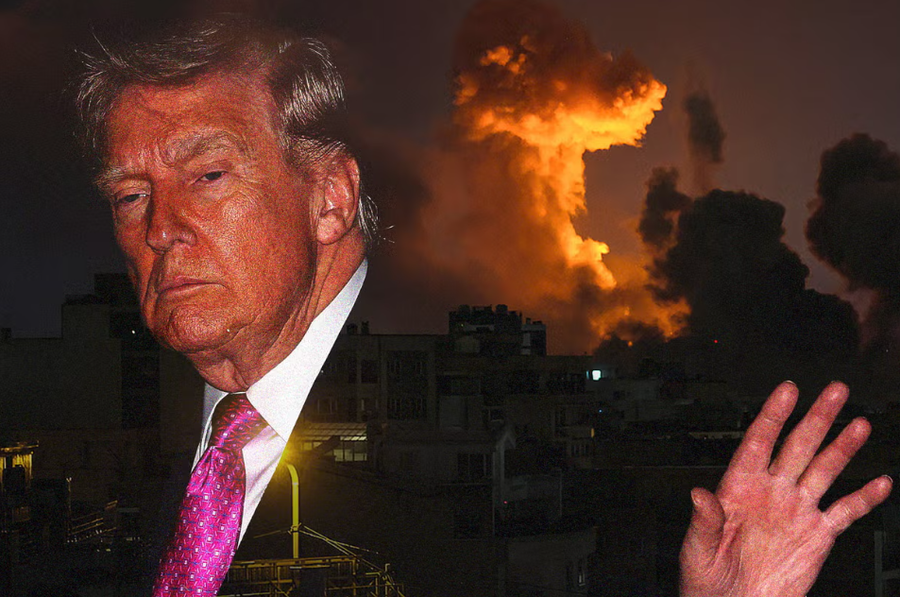
The premature use of force is undermining America's global authority and replacing diplomacy with an instability that does not spare even its closest allies.
Last month, Joe Kent - an army veteran, former CIA officer and until yesterday an ardent supporter of Donald Trump's "America First" principle - resigned as director of the National Counterterrorism Center.
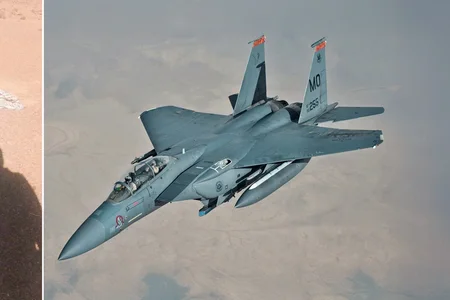
The reason was clear: the Trump administration had entered a war with Iran, even though the latter posed no imminent threat to the US. Although Kent was wrong to declare Israel the main “conductor” of American involvement (after all, Trump remains president and has his own will), he hit the mark on something else: the current war against Iran is, at best, a preventive and completely ill-advised “war of choice.”
In our recent history, the typical example of such a war remains the intervention in Iraq in 2003. Beyond the debate over weapons of mass destruction, the question of the legitimacy of launching a preventive war was the hottest point of that conflict - an issue that never received a convincing answer.
Instead, through what was christened the “Bush Doctrine,” deterrence was deliberately confused with “pre-emption strike.” The latter requires a threshold threat and is legally recognized as a right.
Although strongly opposed at the time, this doctrine effectively made unilateral military attack in the name of deterrence the norm. In those years, public opinion was much more understanding.
After the horror of September 11, America lived with the anxiety of another attack of that scale. The fear that Saddam Hussein might provide chemical or nuclear weapons to terrorist groups was real, especially when it came to al-Qaeda, a radical group without a territory that knew no logic of restraint.
On this basis, it was argued that the new circumstances justified a preemptive strike. In its 2002 security strategy, the Bush administration brought this under the umbrella of “preemptive self-defense,” claiming the right to strike “even if the exact time or place of the enemy’s attack was not known.”
This interpretation attempted to squeeze deterrence into the UN rules. The logic was simple: if we waited until the attack was imminent, it might be too late to stop it.
However, the legal and moral problems of this doctrine were quickly forgotten as attention shifted to trying to control post-invasion Iraq. But the consequences remained.
The Bush Doctrine's emphasis on "rapid response" made it nearly impossible to secure broad international support and also served as a pretext for abusive practices such as the torture of terrorism suspects.
This preventive spirit was also inherited in the use of drones and special operations, often based on intelligence information that was simply assumptions.
Both Bush, Obama, but also Trump (in his first term) and Biden embraced this path, as it gave them the opportunity to exit the "endless wars" in Iraq and Afghanistan.
And as long as the war was against terrorist groups, this approach was somewhat acceptable. But the assumption was that in relations between states, the world would return to stricter rules.
Even in 2011, when the US and its allies intervened in Libya against Gaddafi, they were careful to present the operation as a “humanitarian mission” to protect civilians, and not as an open attack for regime change.
Few in the foreign policy community predicted such a fierce clash between the great powers, or thought that an American president like Trump would be so willing to completely break the old rules.
Now, eyes are on the US Congress as the only means to contain him. The Constitution gives the president free rein in foreign policy, but leaves the right to declare war solely to Congress.
Although the last attempt to limit the White House's power in the war with Iran failed, the situation may change. Disillusionment among the military, regional destabilization, and the midterm elections could make future efforts more successful.
The MAGA movement may have won popular support with the slogan "America First," but when unilateral attacks are accompanied by disdain for allies, America's weight in the world only diminishes.
This was clearly seen when Trump asked for help to reopen the Strait of Hormuz and was met with reluctance from allies. Seizing weapons when diplomacy still has room is an action that brings unnecessary destabilization.
Today, both liberals who want a rules-based order and realist conservatives are uniting in a common “deterrent” front. They are aware of the dangers of America’s strategic overreach and the blowback that comes with it.
The latest military adventure with Iran may be the spark that will make these voices heard louder than ever./ Adapted from "Pamphlet From " Financial Times"
Note: Jonathan Stevenson is a fellow at the International Institute for Strategic Studies (IISS). He previously served on the US National Security Council during the Obama administration.



Lini një Përgjigje