


 Shkruar nga Pamfleti
On NATO's eastern flank, Denmark, Poland and Romania are deploying the American Merops system, small enough to fit in the back of a pickup truck. It uses artificial intelligence to identify and track drones when satellite and electronic communications are jammed.

Europe is on alert after drone flights in NATO airspace reached an unprecedented level in September, prompting European leaders to agree to build a "drone wall".
According to Euronews, in a warehouse hundreds of kilometers from Ukraine, workers in northern Denmark are carefully assembling anti-drone equipment. Some of it will be exported to Kiev to block Russian technology on the battlefield, while others will be distributed across Europe to combat a series of violations of NATO airspace that have troubled the continent.
Two Danish companies, previously focused primarily on defense, are reporting a surge in new customers looking to protect their countries' airports, military bases and critical infrastructure, all targets of drone flights in recent weeks.
Drone detection radar technology from Weibel Scientific was deployed at Copenhagen Airport ahead of a key EU summit, where sightings of unidentified drones forced the closure of airspace for several hours in September.
The company MyDefence produces radio frequency devices that cut off the connection between the drone and the pilot, neutralizing the threat. Signal “jamming” is limited and strictly regulated in the EU, but is widely used in Ukraine, where the war has led Russia and Ukraine to use drones connected by fiber optics to avoid interference.
Russia has begun using attack drones with additional antennas to thwart Ukrainian blockade efforts.
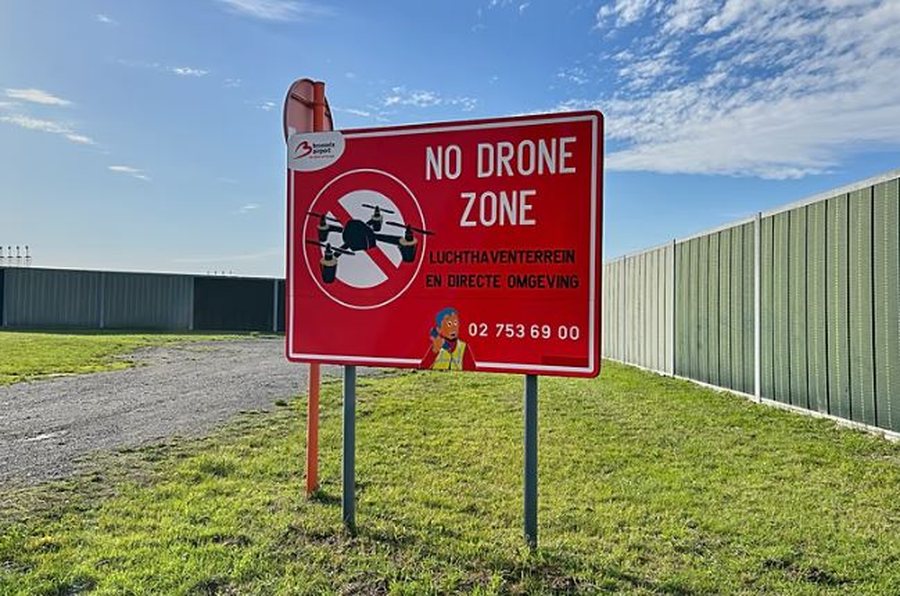
Increase in airspace violations by drones
The drone war escalated after Russia's full-scale invasion of Ukraine in 2022. Russia has bombarded Ukraine with drones and missiles, hitting railways, power plants, and cities. Ukraine has retaliated with domestically produced drones, striking military and energy targets inside Russia.
Europe is on alert after drone flights in NATO airspace increased sharply in September, leading to the decision to build a "drone wall" along borders to detect, track and stop drones violating airspace.
In November, NATO announced the deployment of a new American anti-drone system on the alliance's eastern flank. Following a violation of Polish airspace, NATO Secretary General Mark Rutte announced the Eastern Sentry program to deter further violations by Russia.
Some European officials have described the incidents as tests by Moscow to see how NATO would react, raising questions about the alliance's readiness. The Kremlin has dismissed the accusations as "baseless."
Key challenges include detecting drones, which are sometimes confused with birds or aircraft in radar systems, and neutralizing them at low cost.
Andreas Graae from the Royal Defence College in Denmark said there is a "big push" to deploy anti-drone systems in Europe in the face of Russian aggression.
'Machinery before people'
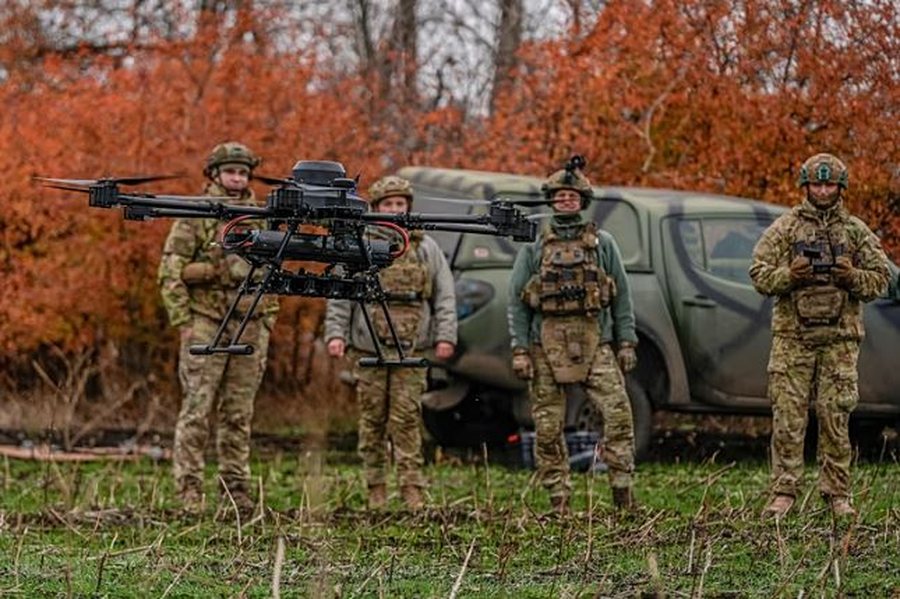
Founded in 2013, MyDefence makes equipment to protect airports, government buildings and critical infrastructure. CEO Dan Hermansen called the Russia-Ukraine war a “turning point” for the company.
Over 2,000 Wingman detectors have been sent to Ukraine since the invasion. “We’ve heard in Ukraine that they want to put the machines in front of people to save lives,” Hermansen said.
MyDefence doubled its revenue last year to about $18.7 million (16.1 million euros). Drone flights this year over five Danish airports, including two military bases, as well as similar incidents in Romania, Lithuania and Norway, have fueled interest in its technology.
Hermansen said these episodes were an "eye-opener" for many European countries, shifting the focus from defense to civil security.
Anti-drone radar technology
On NATO's eastern flank, Denmark, Poland and Romania are deploying the American Merops system, small enough to fit in the back of a pickup truck. It uses artificial intelligence to identify and track drones when satellite and electronic communications are jammed.
The goal is for the border with Russia, from Norway in the north to Turkey in the south, to be so protected as to deter any attempted breach.
Weibel Scientific, north of Copenhagen, has been producing Doppler radars since the 1970s. Their technology, typically used in the aerospace industry, is now being applied to drone detection, such as at Copenhagen Airport.
Radar determines the speed of the object according to the change in the wavelength of the reflected signal, enabling prediction of the direction of movement.
Peter Røpke, Weibel's chief executive, said: "The war in Ukraine and the evolution of drone technology have significantly increased demand for this product."
This year, Weibel secured a €65 million contract, the largest in its history. Drone flights and discussions about a “drone wall” have further increased demand. Røpke said their technology could become a “key component” of any future anti-drone shield.








Lini një Përgjigje