


 Shkruar nga Gabriele Carrer
Former CIA chief David Petraeus says the West must quickly learn the lessons of the war in Ukraine. In the Trump era, Europe must avoid fragmentation and invest in truly decisive capabilities, he says.
What we are seeing today in Ukraine is “the future of war, a conflict increasingly without pilots, without troops on the ground, or at least controlled and led remotely,” says David Petraeus, a retired U.S. Army general, former commander of U.S. Central Command during the wars in Iraq and Afghanistan, and director of the Central Intelligence Agency between 2011 and 2012.
What is the situation in Ukraine four years after the start of the Russian invasion?
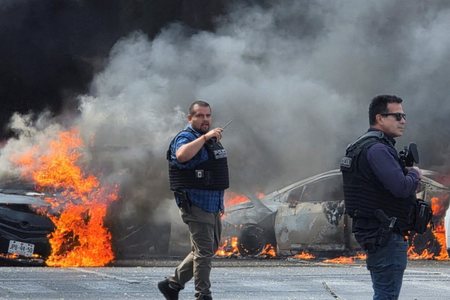
Fighting is fierce along the front and every night in Ukrainian cities and deep inside Russian territory. Russia is attacking Ukrainian civilian infrastructure, electrical grids, heating systems, in addition to military targets.
Ukraine retaliates almost every night by striking deep into the Russian Federation: strategic air bases, refineries, warehouses, and military-industrial centers. But what is the “front” today? No longer continuous trenches like in the first two years of the war.
On the Ukrainian side, it consists of small outposts: soldiers hidden in basements or dug-in positions, with reinforced cover. Around them there is omnipresent surveillance by drones.
It is an increasingly unmanned war, piloted and remotely controlled. The Ukrainians are trying to replace soldiers with machines whenever possible. They use 9,000-10,000 drones a day - from reconnaissance aircraft, kamikazes and bombers, to "motherships" that launch other drones into enemy territory.
Thirty-five to forty percent of them never make it back. They crash or are designed to crash on target. Their lethality is such that the front line has become a "kill zone" extending 10-20 kilometers.
On the ground, too, vehicles are increasingly driverless. We're seeing remote-controlled vehicles carrying supplies and evacuating the wounded, while others mount machine guns, grenade launchers or mine-laying systems.
At sea, naval drones have had a major impact on the Russian Black Sea fleet, forcing many units to withdraw to distant ports. They have even managed to damage a submarine. At the same time, it is also electronic warfare.
Thus, efforts are being made to knock down, jam, and blind enemy systems by interfering with GPS, satellite links, and command networks. In 2023, Ukraine produced 3.5 million drones, rapidly updating their software and hardware.
This year, it aims to produce 7 million, setting up joint factories and co-productions in Europe. When the guns fall silent, this infrastructure could become a real “arsenal of democracy” for the West.
Is this also the reason why, beyond our values, we should support Ukraine?
We must do it first and foremost because the Ukrainians are also fighting our war. They are stopping a common adversary, Russia. Moreover, we cannot allow such aggression to be rewarded.
Ukraine embodies Vladimir Putin's nightmare: a prosperous, democratic Slavic country with rights and a functioning market economy, capable of showing Russians a viable alternative.
If Moscow achieves its goals, demilitarizing Ukraine, annexing more territory, replacing Volodymyr Zelensky with a pro-Russian president, it will not stop there.
Then it could be Moldova's turn, then a NATO country, perhaps a Baltic state. Therefore, containing it in Ukraine is a strategic, but also a moral, mission and duty. Both the European Union and NATO have reacted with increasing determination, driven by two factors: US President Donald Trump's pressure to increase European spending and the threat posed by Putin.
The latter has repeatedly described the collapse of the Soviet Union as the “greatest geopolitical catastrophe” of the 20th century. This speaks volumes about his vision. He aims to reconstruct, to the extent possible, a Russian imperial space.
Why have we Westerners, and especially Europeans, underestimated Putin?
Because we didn't listen carefully enough and underestimated his authoritarian radicalization. After the collapse of the Soviet Union there was a big push for integration: the NATO-Russia Council, open military channels, institutional cooperation.
The idea was to include the new Russian Federation. But over time, Putin has developed an alternative vision: a sphere of influence of his own, from the Eurasian Economic Union to a network of regional alliances. Nothing really comparable to the European Union, but enough to support a revisionist project. The central issue remains Ukraine: Putin denies that it has the full right to exist as a sovereign state.
Do we have the means today, political, economic, military, to change Putin's mind?
Po, dhe çelësi është brishtësia e ekonomisë ruse. Inflacion i lartë, një rubël e dobët, rritje e ndenjur dhe shterim i rezervave të fondeve sovrane të pasurisë. Sanksionet evropiane kanë ndikim dhe presioni i mëtejshëm, veçanërisht nga Shtetet e Bashkuara, mund të ndikojë rëndë në ekonominë e Rusisë në kohë lufte, veçanërisht duke ulur të ardhurat nga nafta dhe gazi dhe duke iu kundërvënë “flotës në hije”.
Në të njëjtën kohë, Bashkimi Evropian ka ndarë burime të konsiderueshme për të mbështetur buxhetin dhe mbrojtjen e Ukrainës. Nëse i shtojmë kësaj një forcim të mbrojtjes kundër raketave dhe dronëve, aktualisht dobësia kryesore e Ukrainës dhe ruajmë presionin në front, në një moment të caktuar Putini mund të ketë më shumë nevojë për një armëpushim sesa Kievi.
Garancitë e sigurisë duket se janë çështja e pazgjidhur në çdo armëpushim apo marrëveshje të propozuar. Çfarë nevojitet vërtet?
Duhen garanci të forta. Jo domosdoshmërisht trupa evropiane në vijën e frontit, megjithëse kjo do të ishte pengesa më e fortë, por angazhime automatike. Nëse Rusia shkel armëpushimin, do të aktivizoheshin sanksione masive dhe një rritje e menjëhershme e ndihmës ekonomike dhe ushtarake për Ukrainën.
Kjo do ta bënte koston e një agresioni të ripërtërirë të paqëndrueshme. Po ashtu, duhet të pranohet se Ukraina tani është në ballë të luftës së së ardhmes: dronë, luftë elektronike, sisteme pa pilot. Sot ne duhet të mësojmë nga ukrainasit, jo anasjelltas. Perëndimi duhet t'i mësojë shpejt këto mësime në vend që thjesht të “mësojë” (teorikisht).
A mund të luajnë ende Shtetet e Bashkuara, nën Trump-in, por edhe më pas, një rol në sigurinë evropiane dhe ukrainase?
Pa dyshim. Shtetet e Bashkuara kanë aftësi unike të inteligjencës, mbikëqyrjes dhe zbulimit, duke përfshirë aftësitë hapësinore, që janë thelbësore për verifikimin e çdo shkeljeje të armëpushimit.
Për më tepër, roli i tyre do të ishte vendimtar si në ofrimin e ndihmës për Kievin, ashtu edhe në bërjen e mekanizmit të sanksioneve kundër Moskës të besueshëm. Sa i përket NATO-s, Shtetet e Bashkuara kanë sërish një rol qendror. Është pozitive që Evropa po rrit shpenzimet e mbrojtjes, pjesërisht falë presionit të Trump dhe kërcënimit rus.
Por Uashingtoni shpenzon ende më shumë se të gjithë aleatët e saj së bashku, dhe në një mënyrë më të mirë. Sfida për Evropën është të shmangë fragmentimin dhe të investojë në aftësi vërtet vendimtare. Ato që Ukraina tashmë po i demonstron në terren, në një luftë që po ripërcakton vetë natyrën e luftës.
Ju keni qenë protagonist në Irak. Cilat mësime nga ajo kohë mbeten të rëndësishme sot, në epokën e kërcënimeve hibride dhe konkurrencës midis fuqive të mëdha?
Ekziston një mësim themelor. Kur u ktheva në Irak për të udhëhequr operacionet kundër rebelimit, pasi ndihmova në rishikimin e manualit kundër kryengritjes të Ushtrisë Amerikane, zhvillova një kornizë udhëheqjeje strategjike të hartuar për ata që janë në krye të një organizate në luftë.
It consists of four tasks. First, define the right "big ideas." Understand the nature of the conflict, the physical and human terrain, the ethnic, sectarian, and political dynamics, and build a coherent strategy.
Second, communicate these ideas effectively, both deeply and broadly, within the organization and to all stakeholders: governments, allies, and the public. Third: oversee implementation. Lead by example, mobilize, select the right people, create the right organizational architecture, measure results with the right metrics, and align meetings and processes with strategic priorities.
And fourth, to constantly review and refine big ideas. Every war is a continuous learning process. Whether it is a high-intensity conventional war or hybrid threats, the principle is the same: have the right ideas, communicate them, implement them, and adapt them. / Adapted from "Pamphlet", by "Linkiesta"



Diçka si më rigon më duket.