


 Shkruar nga Maurizio Molinari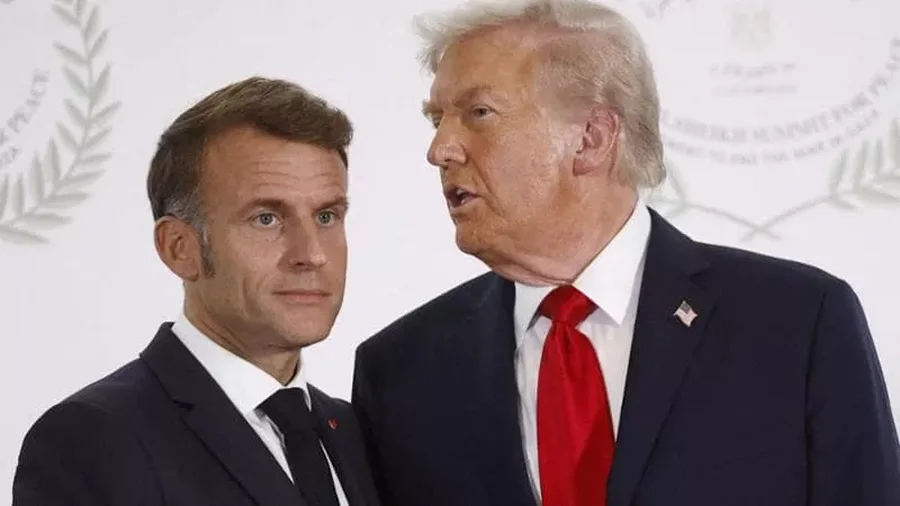
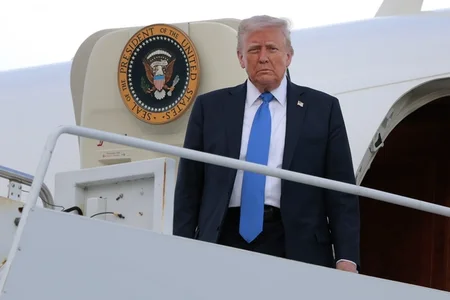
In other words, Trump's clash with Macron in Davos, through the publication of private messages, actually serves both sides, because the eternal Franco-American duel of identity and strategy touches the core of these great rivals...
From the Battle of Yorktown to the De Gaulle–Eisenhower duels, to Macron’s messages revealed by Trump: the 250-year relationship between France and the United States describes an alternating cycle of love and rivalry, unique among democracies. Immediately after American independence in 1776, France was the first to recognize the new Republic, supporting it against London. At Yorktown, Admiral de Grasse’s fleet was decisive, transforming Paris into “the first ally of the United States,” as American presidents have repeated over the years, from Franklin D. Roosevelt to Joe Biden. But the alliance quickly broke down: George Washington declared neutrality in Franco-British conflicts, and by the early 19th century, distrust had already turned into rivalry.
This was highlighted at the Versailles Conference at the end of World War I, when President Wilson sought a “defeated but re-integrable” Germany, while Clemenceau secured a peace treaty that severely punished Berlin. The dispute weakened the League of Nations, which Washington did not join, and was revived in June 1944, when Eisenhower’s allies landed in Normandy to liberate Europe from Nazism. They also faced the character of General de Gaulle, who, as a symbol of resistance, opposed Montgomery’s plans and managed to enter Paris first, thus overcoming Vichy collaboration and ranking among the winners of World War II, also equipped with the right of veto in the UN Security Council.
To understand the rivalry between De Gaulle and Eisenhower, it is enough to recall that immediately after the German surrender, De Gaulle wanted to annex the Aosta Valley, but Eisenhower ordered an American unit to intervene to keep it within Italy. De Gaulle considered the American leadership of NATO too restrictive and, in 1966, withdrew from the military command of the alliance, affirming France's "strategic sovereignty", supported by the possession of the atomic bomb and the ambition to rival Washington everywhere: from Africa to the Middle East, to relations with the USSR.
The duel is not just political; it cuts deep into the cultures of both countries. While Alexis de Tocqueville, with Democracy in America, celebrates the cradle of rights, over a century later the philosopher Régis Debray, with How We All Became Americans, highlights divergent values: the US values individualism, while in France the role of the state is stronger. The contrast is stark: Paris does not dub Hollywood films; it pits gastronomy against fast food, French against English, philosophy against Netflix, secularism against universal religion. Yet in the American imagination, Paris embodies Europe, just as, in the French imagination, New York represents the world.
Disagreement over George W. Bush's war in Iraq marked the lowest point in relations in 2003. Jacques Chirac, who had supported the US after 9/11, led the most vocal opposition to the intervention against Saddam. His UN ambassador, Dominique de Villepin, engaged in a bitter duel in the Security Council with Secretary of State Colin Powell, rejecting allegations that Baghdad possessed weapons of mass destruction.
This prompted Bush’s campaign to promote “Made in USA” products over French cheeses and wines, even renaming “French fries” as “freedom fries.” NATO and G7 summits devolved into heated Bush–Chirac skirmishes, involving not only political debates but also logistical issues. It is perhaps no coincidence that the Sarkozy–Obama deal to topple Gaddafi in 2011 was based on the White House’s choice of “leadership from the rear,” giving the Anglo-French a leadership role long desired but weakened by their dependence on “Made in USA” munitions and intelligence.
The rest is recent history. Macron was initially reluctant to follow Biden’s lead in confronting Moscow over Ukraine, to the point of trying to take independent initiatives in the Kremlin. Then, once Trump returned to the Oval Office, he became the main spokesman for sending EU troops to protect Kiev from the threat of a US disengagement.
The short circuit on the issue of Palestinian statehood angered Trump: the Hamas-Israel deal in August was close to being concluded when the Elysee Palace launched a campaign for an “independent Palestine,” in open defiance of the Oslo Accords, leading to the hardening of Hamas and the cancellation of the agreement brokered by envoy Witkoff.
This explains why, when the “Trump Plan” for Gaza was signed, which provided for a ceasefire and the release of hostages, the Elysée learned the news from the press agencies. It is not surprising that Macron will not attend the presentation of the “Peace Board” in Davos, while his decision to lead the anti-Trump front on Greenland, using harsh language, seems driven by a desperate attempt to boost his popularity in France, which has never been so low, by taking advantage of the rivalry with America.
Just as, in the opposite direction, Trump is doing in the US, aiming to gain ground in the polls that show his party's difficulties in the midterm elections. In other words, Trump's clash with Macron in Davos, through the publication of private messages, actually serves both sides, because the eternal Franco-American duel of identity and strategy touches the essence of these great rivals. / Adapted from "Pamphlet" by "La Repubblica"




Lini një Përgjigje