


 Shkruar nga Pamfleti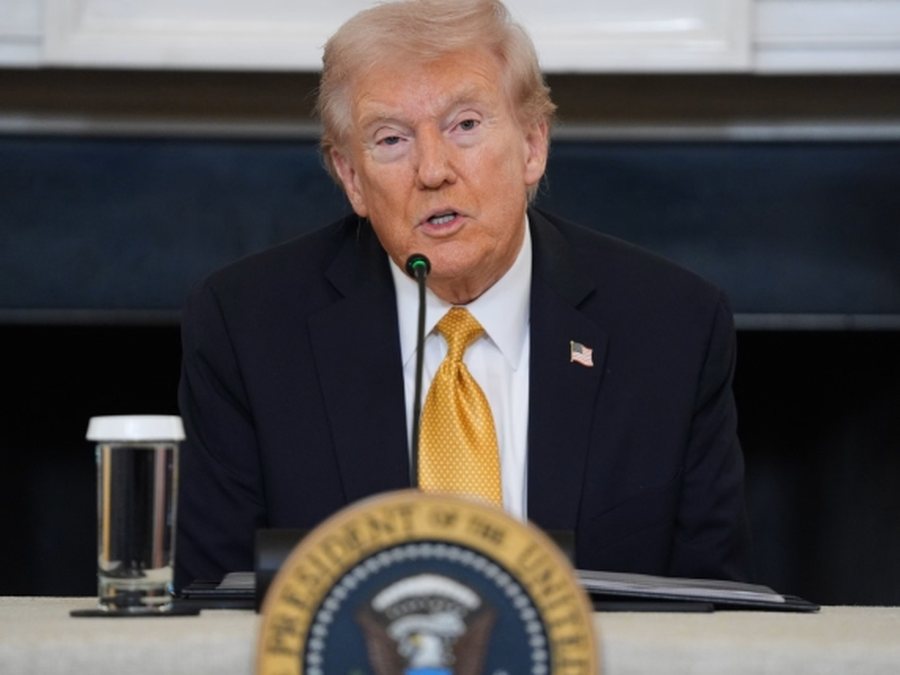
Republicans last night secured the 8 votes of their Democratic colleagues needed to reach the 60 votes needed to reach an agreement to end the shutdown, which has now lasted for 40 days, the longest in history.
The agreement consists of funding the federal government until January 30. With this agreement, Democrats ensured the reemployment of federal employees laid off during the shutdown.
And those on forced leave will receive back pay.
But the decision to extend health insurance subsidies, the main issue that caused the clash between Democrats and Republicans, is divided and will be decided by another vote in December.
And on this issue, the Democratic Party is divided: the majority, including Senate Democratic leader Chuck Schumer, voted "no" to the deal.
Many Democratic lawmakers are also against it: the House of Representatives would have to approve this deal, but if Republicans remain united, they have a simple majority, which is enough for approval.
The bill prohibits the Office of Management and Budget from implementing further massive job cuts until January 30th.
This vote also paves the way for passage of legislation that would guarantee funding for the Department of Agriculture throughout the fiscal year, as well as for food stamps, the Department of Veterans Affairs and Military Construction, and for the operations of Congress itself.
All other federal agencies will be funded through January 30. The shutdown is causing significant disruption, disrupting flights as Thanksgiving approaches (2,000 cancellations on Sunday and 7,000 delays) and threatening food assistance for millions of people.
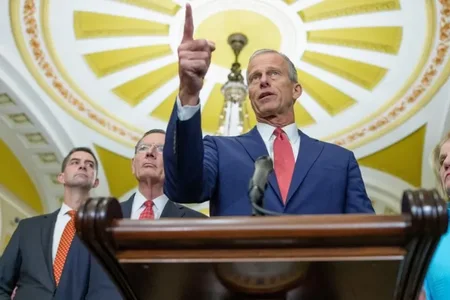
A small group of moderate Democratic senators brokered the deal with Republicans: Jeanne Shaheen and Hassan of New Hampshire and Angus King of Maine (an independent) explained that after six weeks, it was clear that Republicans and Trump would not budge.
They were joined by Senator Tim Kaine of Virginia, home to hundreds of thousands of federal workers who have been left without pay; but the state's other senator, Mark Warner, voted "no," saying he could not pass a law that would expose citizens to high health insurance costs. At the same time, Democratic negotiators secured a promise from Senate Majority Leader John Thune to put the health care subsidies to a vote in December (with the bill being drafted by Democrats), but a vote does not guarantee passage of the bill (although many Republicans themselves favor extending the subsidies, which benefit many of their constituents in "red" states). Trump, returning to the White House last night, said he believed the shutdown was nearing an end, but reiterated that he would not allow "illegal immigrants to have health care."
Democrats reject the president's statements and claim that, without an extension of benefits, an average of 22 million people will see their health care costs double.
Meanwhile, independent Senator Bernie Sanders, who opposes the deal, insisted that last Tuesday's election shows that voters want the Democratic Party to fight for health care and that "giving in to Trump now is a terrible mistake." Others, including Abigail Spanberger, who won the Democratic gubernatorial election in Virginia, have said that the election should not be interpreted as a reason to continue the shutdown.
Notably, at the heart of the compromise are three bills negotiated by moderates from both parties that would fund certain agricultural programs for the entire fiscal year and leave out many of the significant cuts that Trump had proposed in his budget.
The president aimed, for example, to eliminate the Food for Peace program, which sends surplus U.S. agricultural products to hungry communities around the world (the bill includes $1.2 billion for the program, supported by many Republicans representing farm states). Senate negotiators also defeated an effort by House Republicans to cut in half funding for the Government Accountability Office (GAO), an agency created 100 years ago to help Congress monitor federal spending.
The GAO has twice this year concluded that Trump violated rules that prohibit him from unilaterally canceling government funds. The agency has the power to sue Trump to force him to return funds he has withheld.
The measures negotiated by bipartisan senators would keep the GAO afloat, allowing it to maintain its current funding and powers, even though House Republicans had sought to eliminate them. /Adapted from Corriere/







Lini një Përgjigje