


 Shkruar nga Pamfleti
Washington and Tehran have reached an agreement after weeks of tensions, however its implementation and impact on the region still remain unclear…
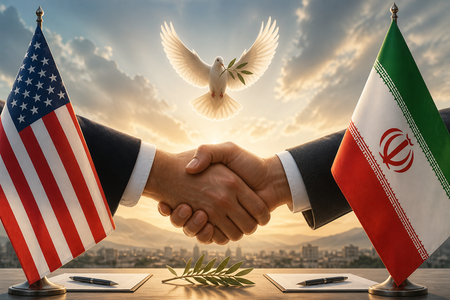
After a series of unsuccessful attempts and lengthy negotiations, the United States and Iran have finally reached an agreement, with both sides presenting it as a diplomatic success.
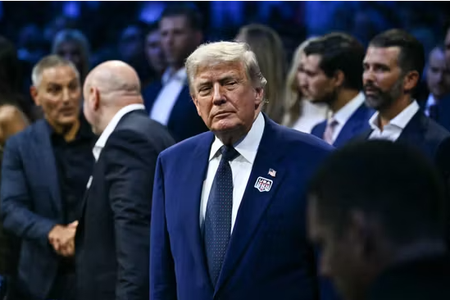
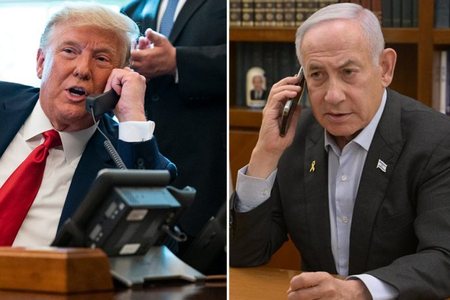
US President Donald Trump declared that “this great agreement will bring peace and security to the entire region.” On the other hand, Iran’s Deputy Foreign Minister, Kazem Gharibabadi, praised what he called his country’s military achievements as he confirmed the signing of the Memorandum of Understanding.
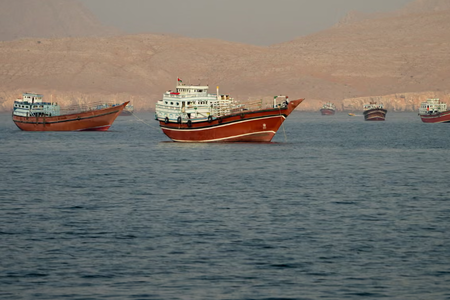
According to the parties involved and the mediator Pakistan, the agreement envisages the lifting of the US blockade of Iranian ports, as well as the reopening of the Strait of Hormuz, which Iran had closed. However, these measures may not take effect immediately.
Such a development would ease pressure on the US administration due to the negative impact that the closure of Hormuz has had on the global economy. At the same time, the Iranian economy, hard hit by sanctions and isolation, could benefit from the easing of trade restrictions.
Pakistani Prime Minister Shehbaz Sharif, who was the first to announce the agreement, said the document also provides for "the immediate and permanent cessation of military operations on all fronts, including Lebanon."
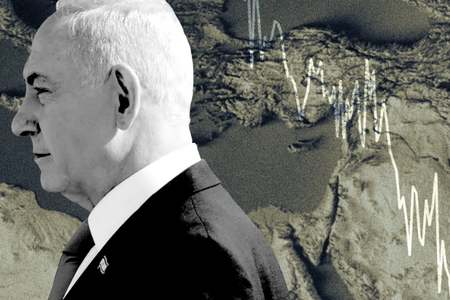
However, the achievement of this objective remains uncertain. Israeli Prime Minister Benjamin Netanyahu has given no signs that he is willing to stop Israel's current offensive against Hezbollah in Lebanon.
In the last week alone, two Israeli attacks on the southern suburbs of Beirut, in response to rockets fired by Hezbollah towards northern Israel, threatened to undermine the entire diplomatic process.
According to reports, Iran pulled back at the last moment from another missile attack on Israel so as not to jeopardize the finalization of the deal.
For this reason, it remains unclear whether the agreement will bring a lasting calm to Lebanon, where two previous ceasefires have failed to hold.
Meanwhile, Gulf Arab states are expected to welcome the deal, as it could reduce, at least temporarily, the risk of Iranian missile attacks on their territory. Such threats have raised serious concerns about the economic model of the United Arab Emirates, Qatar and Saudi Arabia, which relies on regional stability and international investment.
One of the most important aspects of the agreement for the United States remains the Iranian nuclear program. It is still unclear whether the document contains sufficient guarantees and mechanisms to prevent Iran from developing a nuclear weapon.
This was also the main argument of the US and Israel for taking military action. Iranian state media have hinted that the agreement could include such a mechanism, but the details remain unclear and are expected to be the subject of intensive negotiations in the coming stages.
The official signing ceremony has not yet taken place and is expected to take place in a few days. Given the many twists and turns this process has taken in recent weeks, no one can guarantee that the path to full implementation of the agreement will be easy.
For the time being, however, the agreement has partially reduced the uncertainty that has accompanied the conflict, which for weeks has swung between the prospect of a ceasefire and the risk of military escalation. /Adapted from BBC /


Lini një Përgjigje