


 Shkruar nga Pamfleti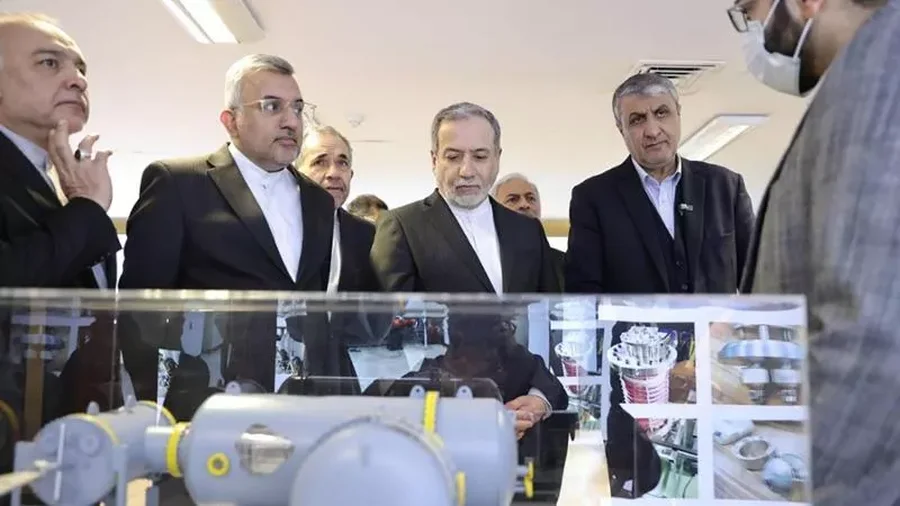
Iranian researchers were traveling on diplomatic passports...
At least until the end of 2024, Iranian nuclear scientists and Russian technicians affiliated with the Russian Ministry of Defense, nuclear experts, had contacts and exchanged information that, according to the United States, aimed to provide Tehran with technology potentially useful for the development of nuclear weapons, reveals the 'Financial Times', which has obtained classified documents.
-Secret meeting
Between November 7 and 11, a group of engineers and physicists from Iran's Defense Innovation and Research Organization (SPND) traveled to St. Petersburg to meet with Russian officials and experts from Laser Systems, a company under U.S. sanctions that develops systems for civilian and military use, with ties to the Russian military. The Iranian researchers traveled on diplomatic passports.
The Financial Times spoke to former CIA analyst Jim Lamson, a fellow at the James Martin Center for Non-Proliferation Studies, who said the Iranians were seeking “laser technology and expertise that could help them validate a nuclear weapons design without conducting an explosive test.” This is not the first such meeting: in August, the City newspaper reported a secret trip by Iranian technicians to Russia, apparently with the same objective.
-Cooperation with Moscow
Tehran has always reiterated its intention to use the nuclear industry only for civilian purposes and that uranium enrichment is necessary for drug research and development. Russia, which helped Iran build the civilian nuclear reactor at Bushehr, has always opposed Iran having a nuclear weapon, but according to Carnegie scholar Nicole Grajewski, the meetings demonstrate a major leap in nuclear cooperation between the two countries.
In June, the Israelis and Americans bombed key sites in Iran's nuclear program, but although Trump claims it has been "destroyed," intelligence agencies and the International Atomic Energy Agency (IAEA) itself confirm that the program was not canceled, but delayed, and that Tehran's stockpile of uranium enriched to 60% (just under the 90% required for a nuclear weapon) has not been destroyed.
-The risk of a new conflict
In short, the 12-day war is not over, and many analysts are convinced that another round of military clashes between Israel and Iran is only a matter of when, not if. Tensions also remain high on the nuclear diplomacy front. In October, the Europeans called for the UN to reimpose sanctions on Iran, following the expiration of the ten-year agreement signed in 2015, and the IAEA Board of Governors is preparing to discuss a new motion of no-confidence on Iran’s nuclear program.
-IAEA in the dark
IAEA Director Rafael Grossi has again asked Iran to allow inspections of the sites attacked in June, a request rejected by Iranian Foreign Minister Abbas Araghchi, who was negotiating with the Americans on nuclear issues at the time the Israeli attack began.
"We only cooperate on nuclear facilities that were not hit, in accordance with IAEA regulations," he stated.
Tehran is cautious, but the country's economic situation is catastrophic and sanctions have worsened an already grim situation. Negotiations may be the Islamic Republic's only chance to avoid domestic protests and a new military clash with Israel.
Kamal Kharrazi, head of Iran's Strategic Council for Foreign Relations and an advisor to Supreme Leader Ayatollah Ali Khamenei, said Iran is ready to resume negotiations with Trump, but only if they are based on "equality and mutual respect."
Before the 12-Day War, Trump had made a ban on uranium enrichment a condition of a deal; Tehran opposed it, claiming it was its right. Now the deal with the Saudis could change the equation. Washington has agreed to help develop Riyadh's civilian nuclear program, but on one condition: no uranium enrichment on Saudi soil./ Adapted from "Pamphlet" by "LaRepubblica"


Lini një Përgjigje