


 Shkruar nga Pamfleti
The "Energoatom" scandal, the most dangerous crisis for Ukraine since the beginning of the war...
Can a hero of national resistance be at the same time part of a compromised system?
Ukraine is experiencing this dilemma at its most difficult moment, as corruption scandals risk giving arguments to those who have long questioned Kiev's institutional stability, mainly the Trumpist wing in the US and pro-Russian circles in Europe.
That is precisely why the scandal at the state-owned company Energoatom has erupted into a political crisis with domestic and international repercussions. It is forcing Ukraine to ask itself: what is left of the 2014 revolution and the European promise that justified so many sacrifices?
Because no military victory can replace the need for a moral victory. Ukraine is fighting for territory, but equally for a political model that should be an example to the West. If its internal credibility is shaken, so is the legitimacy of its cause in the eyes of the world.
The most serious problem is not the amount of money stolen, but the sector affected: energy.
In a country that has been resisting the Russian strategy of "permanent winter" for three years, the fact that funds for the protection of power plants and substations have been diverted to the construction of luxury villas is a shock to public opinion and a risk to national security.
Three German Marshall Fund analysts: Josh Rudolph, Olena Prokopenko and Valeriia Ivanova, explain that the figure of Timur Mindich, an old friend of Zelensky, is the symbol of the old post-Soviet system: a combination of private businesses, personal friendships and public functions. His escape from the country, thanks to an internal “leak” of information, shows that Ukrainian institutions still remain permeable to informal networks of power.
The political problem has a name: Andrii Yermak
At the center of the scandal is Andrii Yermak, the head of the President's Office, the most powerful man in Ukraine after Zelensky. He is not elected, does not answer to Parliament, but according to evidence he has influence over diplomacy, strategic appointments, foreign policy and even law enforcement.
Such a figure, in times of war, is dangerous. It is no coincidence that the Kremlin called the situation “toxic.” The problem is not just personal, but systemic: The Office of the President has been transformed into a courtyard, not an administrative structure.
Zelensky in the biggest test since the beginning of Russian aggression
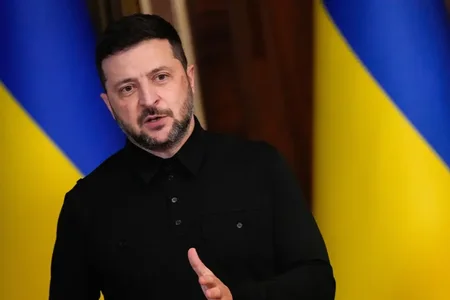
Zelensky finds himself in an impossible situation: He cannot be replaced because martial law prohibits elections. But he also cannot allow scandals to tarnish Ukraine's image and erode the West's trust.
His popularity has plummeted, Western trust has begun to wane, and Ukraine risks losing the main condition for being considered a future European democracy: transparency.
Brussels is therefore demanding new guarantees for governance; Washington is demanding concrete accountability; the G7 is warning that Western public opinion may grow weary of support for Kiev if reforms do not move forward.
Ukraine cannot fight corruption with the old methods. Neither a cabinet reshuffle nor the resignation of a minister is enough.
The solution, according to many analysts, is Yermak's removal, which would be more than a political move — it would be a moral signal to the nation and its allies that Ukraine intends to be as strong in governance as it is on the battlefield.
The world discovered Zelensky as a leader when he refused Joe Biden's offer to evacuate in the early days of the Russian aggression. His statement, "I don't need a car, I need ammunition," went down in history.
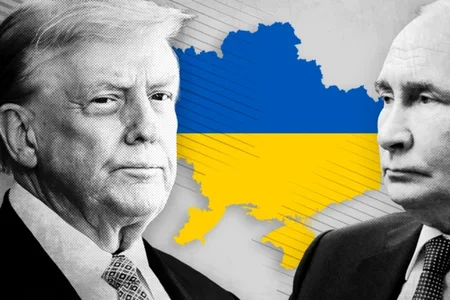
He has had many other strong moments, including a direct confrontation with Donald Trump and JD Vance in Washington, which restored European support and helped him rebuild relations with the new American administration.
But today, internal scandals present them with a new test, perhaps more challenging than any military offensive. /Adapted from "Pamphlet" by "Corriere Della Sera"



Lini një Përgjigje