


 Shkruar nga Pamfleti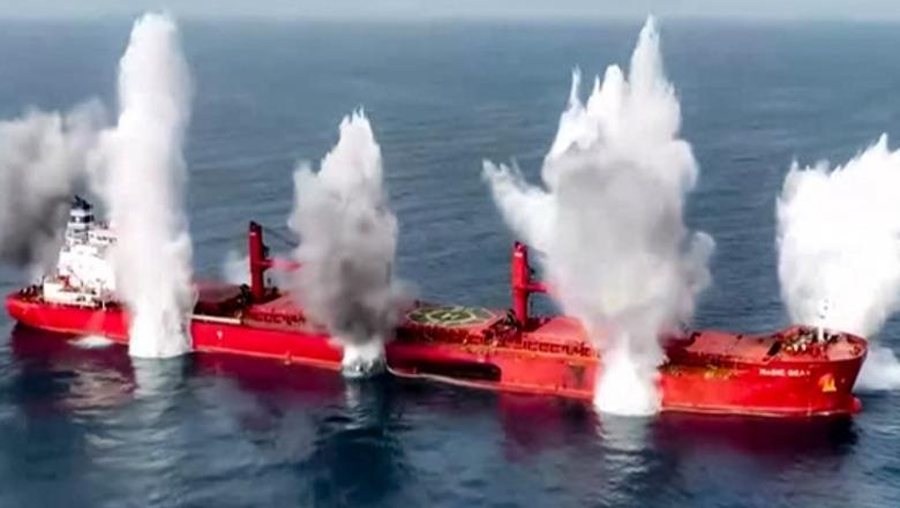
The Houthis are demanding bribes from companies to avoid attacks. How is this possible? Part of the explanation lies with Russia, which is helping them.
There is a Russian mystery in the Middle East, softened after two years of very fierce fighting. In Gaza, a fragile ceasefire persists, waiting for a force to come in and disarm Hamas.
In Lebanon, Hezbollah's military potential has been greatly weakened by Israel's offensive a year ago. The Iranian nuclear threat has also diminished after the June war, and Qatar, for the time being, appears to have abandoned further aid to jihadist organizations.
There is only one corner of the chaos that remains completely unchanged. Neither the naval operations of the United States and the Europeans, nor the Anglo-American bombings, nor the Israeli attacks seem to have changed anything. The Houthis, the militias who control most of Yemen, continue to block the transit route through the Bab el-Mandeb Strait that connects the Mediterranean and Suez with the Gulf of Aden, the Indian Ocean from there and East Asia, where almost half of the world's manufactured goods are produced and where the fastest growing markets are located.
Russia plays a silent but crucial role in this blockade, which has lasted for two years. According to data from the International Monetary Fund, until the end of 2023, approximately 80 ships, including merchant ships and oil tankers, passed through the Bab el-Mandeb every week: it was the main link from Chinese ports to Italy, two weeks faster and less expensive than sailing around Africa to Gibraltar. However, since the Houthis began launching missiles or drones at ships from the capes of the Arabian Peninsula, transits fell sharply from 80 to 30 per week and have never recovered.
The threat from Yemeni guerrillas has resisted billions of dollars invested by Western governments to eliminate them. According to unconfirmed but persistent rumors, the Houthis are demanding bribes from companies to avoid attacks. How is this possible? Part of the explanation lies with Russia, which is helping the Houthis.
According to Reuters, in late September, Moscow, with Iranian mediation, discussed sending Yakhont missiles (which are highly effective against ships) to Yemeni guerrillas. And in late October, Yemeni Vice President Aidarus Al-Zubaidi was in Moscow, hosted by the Russian government at the highest level.
Where is the Kremlin's interest in all this? To destabilize and weaken European economies as much as possible, of course (including Italy). But also to strengthen the attractiveness of the Arctic route, under its control, which is opening up between China and Europe: for Italian ports, this would be a defeat./Corriere della Sera




Lini një Përgjigje