


 Shkruar nga Pamfleti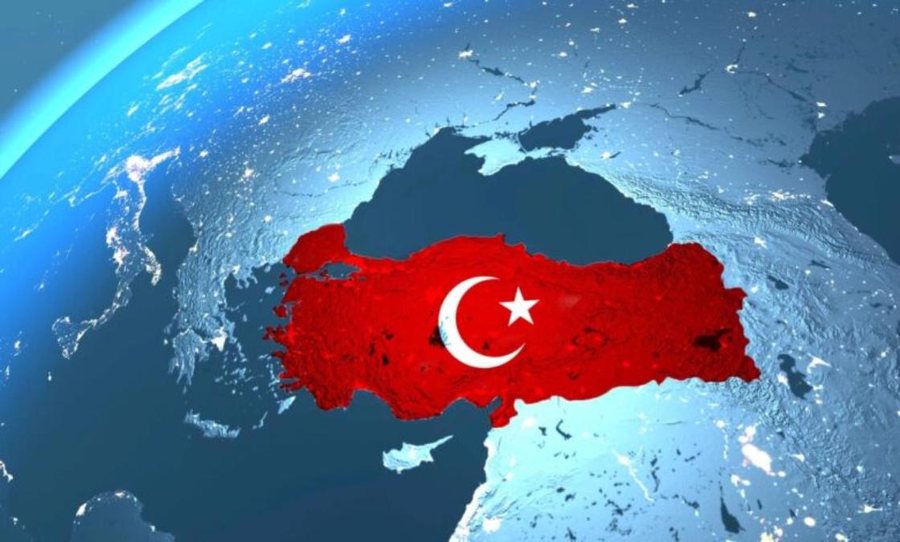
President Recep Tayyip Erdogan once warned Greece that Turkey could “come one night without warning.” More than a year later, he went to Athens on a planned official visit…
Speaking at Oxford University in April 2026, Foreign Minister Hakan Fidan declared that the line between regional and global crises “has effectively disappeared” and that middle powers are gaining strategic weight in the new international order. He was essentially describing Turkey.
But in an analysis published in Bosphorus News, journalist Murat Yıldız writes that Turkey is an ambitious regional power with real military and diplomatic capabilities. However, energy dependence, economic weaknesses, lack of technological autonomy and institutional problems limit its potential to become a superpower. In the international arena, power is measured by the capacity to maintain influence over time, not just by the ambition to project it.
The analysis says that Turkey is more active, more militarily capable and more diplomatically visible than it was two decades ago. It produces drones, operates bases abroad, mediates between opposing sides and is involved in almost every security issue on its borders, from the Black Sea and Syria to Libya, Somalia and the Eastern Mediterranean.
But this profile does not make Turkey a superpower. It more accurately describes an ambitious middle regional power, facing the limits of its economic, technological, and institutional base.
The narrative of the “Turkish Century” promises a higher status, but the reality shows a country with considerable influence, but also with clear borders.
Middle power is not a compromise
In international relations, middle powers stand between great powers and small states. They do not set global rules and do not have reserve currencies, global base networks, or the capacity to exert pressure on all fronts simultaneously.
Their influence stems from more limited advantages: geography, mediation, selective military capabilities, and role in specific crises.
Turkey represents a more militarized variant of this category. It seeks influence through presence, pressure, and access to contested areas. This has worked in some cases, but it has also created a foreign policy that is broader than its base.
Traditional Turkish foreign policy, summed up by Ataturk with the phrase “Peace at home, peace in the world,” was characterized by caution. This approach gradually changed after the 1990s and more significantly after the 2010s.
By the mid-2020s, Turkey had a military presence in Syria, operations in Iraq, its largest overseas base in Somalia, and a role in the Libyan conflict. The key question is no longer whether Turkey has reach, but whether it has the capacity to maintain it without overextending itself.
Energy, the first frontier
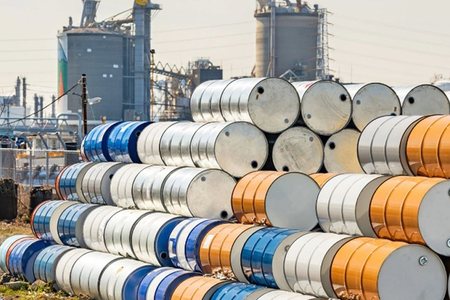
Turkey imports about 70–75% of its energy. This limits its strategic autonomy. An increase in oil prices directly affects the current account deficit.
Dependence on Russia, Iran, and Gulf markets puts Ankara in a tricky position. While the Sakarya gas field may ease the pressure, it will not eliminate the dependency this decade.
Strategic ambition requires a strong economic foundation. The Turkish lira lost over 80% of its value against the dollar between 2018 and 2024, while inflation has remained high.
According to the OECD, inflation is expected to remain above the average for developed countries in 2025–2026. These factors limit the country's ability to finance large strategic projects.
Defense industry: progress with limitations
Turkey has made significant progress in its defense industry, especially with the Bayraktar drone and new projects like KAAN. However, it remains dependent on foreign components, especially for engines and electronic systems.
Export restrictions from Western countries have shown the weaknesses of this model.
NATO membership gives Turkey weight and security, but at the same time limits its autonomy. The case of the S-400 system and the exclusion from the F-35 program show the cost of deviating from the alliance's line.
Diplomatic influence without global order
Turkey has shown mediation skills, especially in the Black Sea wheat deal and the prisoner exchanges between Russia and Ukraine.
However, mediation is not the same as building international order. Turkey can influence crises, but it does not have the capacity to impose solutions.
Weaknesses in the legal system and perceptions of corruption are affecting foreign investment. At the same time, many qualified professionals are leaving the country, weakening the long-term basis for development. /Adapted from Pamphlet /


Lini një Përgjigje