


 Shkruar nga Pamfleti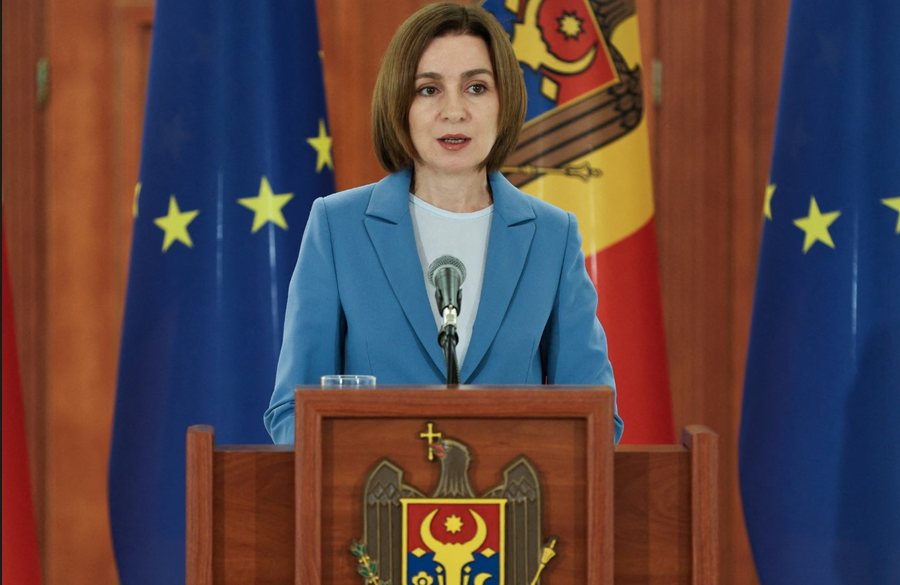
From Transnistria to Brussels: Moldova's difficult path
Moldova is often referred to in the Western media with the bitter label “the poorest country in Europe.” This description is true from an economic point of view: the former Soviet republic of just 2.4 million people has one of the lowest living standards on the continent. But the recent elections showed the extraordinary strength of the Moldovan electorate, which withstood Russian intimidation in a crucial vote for the country’s future and for European balances.
The Kremlin used every means to thwart Moldova's aspiration to join the European Union by 2030: electoral interference, vote buying, propaganda, cyberattacks and disinformation in favor of pro-Russian parties. Even the Orthodox clergy were involved, with allegations that priests were rewarded with paid pilgrimages to Russia in exchange for anti-EU sermons on social media.
Despite this, the result of the vote was clear: pro-European President Maia Sandu and her PAS party secured a full parliamentary majority until 2029, gaining the mandate to pass the deep reforms required for EU membership. This constitutes a clear defeat for Moscow’s efforts to keep Moldova under its orbit.
Since 2022, when it received candidate status alongside Ukraine, Moldova has maintained a determined course towards the West, despite economic crises: high energy prices, double-digit inflation and a large influx of Ukrainian refugees that it has welcomed more than any other country in relation to its population. For the younger generation of Moldovans, EU membership is seen as an existential issue, especially with fears that their country could be Russia's next target after its aggression in Ukraine.
For the EU, Moldova's integration also makes strategic sense: a Kremlin puppet state sandwiched between Romania and Ukraine would be a geopolitical nightmare. However, the country remains fragile. 24% of voters voted for pro-Russian parties, while Transnistria, the breakaway region under Moscow's control, remains a hotbed of danger. As experts warn, Russian interference will not stop, as it aims to undermine public confidence in the European future.
Sunday's election coincides with another round of international tension: heavy Russian bombing of Kiev, violations of Baltic airspace and drone incursions as far as Denmark. The EU is considering the idea of a "drone wall" for collective defense, while the confrontation with Russia is seen as a test of NATO unity and the stability of the continent.
But the EU’s biggest problem remains its limited capacity as a defense organization. Its slow, bureaucratic institutional structure, built to balance democracy and the defense of small countries, often prevents it from making quick decisions in times of crisis. Yet this system is precisely why the EU is seen as a democratic magnet for countries like Moldova, Ukraine, and Georgia, which seek protection from Russian authoritarianism.
Within the EU itself, the challenge of the rule of law and the preservation of democratic values is still real, but institutions remain stronger than in authoritarian neighbors. While the Turkish opposition is suppressed with political imprisonment, legal accountability still functions in the EU, as demonstrated by the conviction of former French President Nicolas Sarkozy for corruption.
However, external challenges from Russia and political tensions from the US, where the Trump administration has often shown impatience with the EU, make European cohesion fragile. Some analysts warn that European leaders often make concessions to domestic populist and far-right forces, eroding the principles that the EU itself claims to defend.
For Moldova, Ukraine and Georgia, the EU remains the best hope for an independent and democratic future. But it remains to be seen whether this will happen at a time when the Union's own democratic sustainability is being called into question. The paradox is that those outside the EU often value its existence more, because they see it as a shield against dictatorship and a guarantee of freedom. /Adapted from “Pamphlet” by “The Guardian”


Lini një Përgjigje