


 Shkruar nga Pamfleti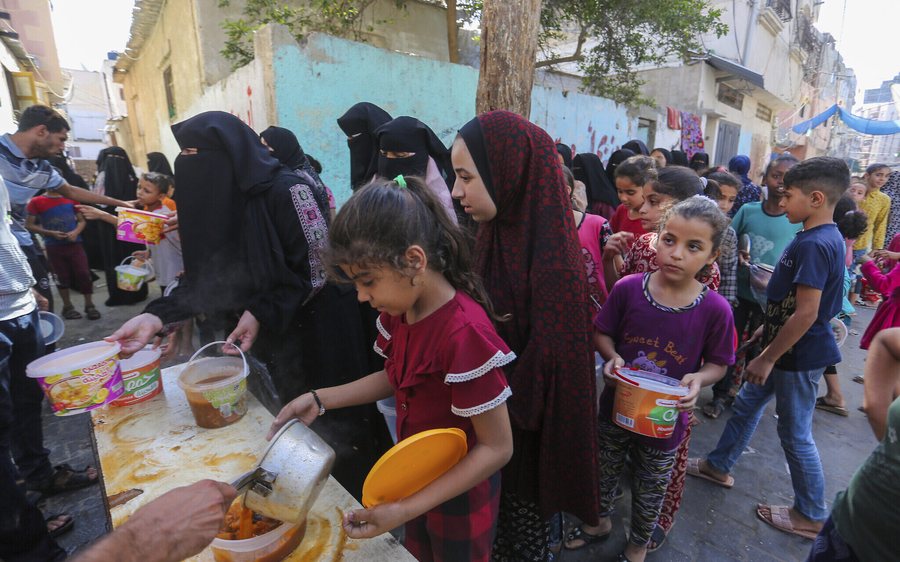
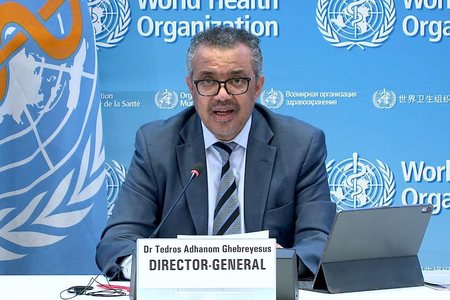
When World Health Organization officials visited Gaza last week, they confirmed that children had begun to starve. Aid agencies and world leaders have repeatedly warned of the dangers of famine in the territory since the war broke out on October 7.
They say not enough aid is being allowed through the border, but Israel says it has tried to speed up screening processes and that the obstacles are beyond its control.
As the situation worsens north of the belt, authorities are conducting a famine review to assess whether a person should be formally declared.
What is hunger?
Hunger levels are assessed by the Integrated Food Security Phase Classification (IPC) Initiative, which was established by the Food and Agriculture Organization of the United Nations in 2004.
According to its definition, famine is a "situation in which hunger and extremely critical levels of acute malnutrition are evident".
The IPC uses a scale of one to five ranging from 'minimal' to 'starvation'. Gaza is currently in the fourth 'emergency' stage. For an area to enter stage five, it means that even with all the humanitarian aid, at least one in five families is in extreme need of food and other basic needs where hunger, death and destitution are evident.
The UN's World Food Program (WFP) also estimates that 30 percent of children suffer from acute malnutrition and that two in every 10,000 people die of hunger, disease or malnutrition.
How often are famines declared?
There are currently no states in an official state of mourning, according to the criteria. But the WFP warns that 47 million people in 54 countries are experiencing "emergency" levels of hunger or worse - and are at risk of being pushed into starvation soon.
Most of them are in Africa, but hunger is expected to increase globally in the coming years. Famine occurs mainly in countries where humanitarian access is limited. Outside of Gaza, Yemen and South Sudan are currently at grave risk, with "conflict, insecurity and resulting displacement driving acute hunger to alarming levels". Afghanistan, Ethiopia and Somalia are also being closely monitored.
How are the hunger levels in Gaza?
The latest IPC report, which covers up to 7 February, said the entire population of Gaza (2.2 million people) was experiencing 'crisis or worse' levels of hunger.
" This is the highest proportion of people facing high levels of acute food insecurity that the IPC has ever classified for any given area or country ," the IPC noted.
About 50% of the population (1.17 million people) were in the second highest 'emergency' category and one in four households (half a million people) were in the famine category.
"Almost all Palestinians in Gaza are skipping meals every day, he added, while adults are starving so that children can eat. The IPC has now activated its hunger review committee to reassess the situation.
According to UNICEF, since November, Gaza's children have had access to less water than is needed to survive.
"UNICEF projects that in the coming weeks, child wasting, the most life-threatening form of malnutrition among children, could increase from pre-crisis conditions by nearly 30 percent - affecting up to 10,000 children ," UNICEF reports.
When a WHO team visited Gaza last weekend, it confirmed the deaths of at least 10 children from starvation during the visit.
Gaza's Hamas-run Health Ministry said on Wednesday that more than 20 had died, with dozens dying silently elsewhere, unable to reach hospitals.
What did Israel say?
Israel has been criticized for not allowing enough aid into Gaza, especially after 100 people were killed trying to get food from an aid shipment last week.
On Thursday, the Israeli body responsible for entry into Gaza told Sky News that other border crossings could be opened if the government instructs it to do so.
Israel says it is not blocking aid to Gaza and that the deadly aid truck incident unfolded when "a mob ambushed" the convoy, denying claims of gunfire.
But the UK has warned that its patience with the humanitarian situation in Gaza has run out. The United States, in coalition with Jordan and others, has begun releasing its own aid, while South Africa has turned to the International Court of Justice in an attempt to force it to intervene./ SkyNews





Lini një Përgjigje