


 Shkruar nga Pamfleti
With the blocking of four main roads in the north and south of Bosnia and Herzegovina, there was a protest in support of the president of the Republika Srpska entity, Milorad Dodik, and the director of the Official Gazette in this entity, Milosh Lukic.
The protesters objected to the indictment filed on August 11 by the Prosecutor's Office of Bosnia and Herzegovina against Dodik and Lukic for not implementing the decisions of the high international representative, Christian Schmidt.
The protest had the motto "the border exists" even though there are no real borders between the two entities of Bosnia and Herzegovina, which are called the "line of demarcation between the entities" in the country's Constitution and the Peace Agreement reached in Dayton in 1995.
About 2,000 people participated in the protests and blocked the main roads leading to the Federation of Bosnia and Herzegovina.
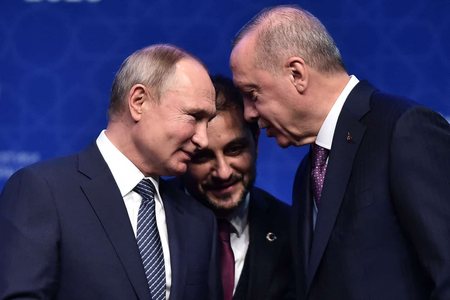
In addition to Dodik's photographs, photographs with the portrait of Russian President Vladimir Putin were also seen at the protests. Meanwhile, protesters' calls for Ratko Mladić, convicted of genocide and war crimes by the International Tribunal for War Crimes in the former Yugoslavia, have also been heard.
Regarding the September 1 protests in support of Dodik - who is on the American blacklist - there have been reactions from international officials.
The high representative in Bosnia, Christian Schmidt, has described the protests as manipulation of the citizens.
" It is irresponsible to organize political events that incite divisions on the dividing line between the entities ," Schmidt said.
Schmid's Office also said that this "line between entities" is not "a border" between the Republika Srpska and the Federation of Bosnia and Herzegovina, but is only an administrative line.
Meanwhile, the peacekeeping mission of the European Union in Bosnia, EUFOR, told Radio Free Europe that "we have not received any request from the Bosnian authorities" for the protest and "we have not deployed any additional personnel".
The Assembly of Republika Srpska earlier in the year passed a series of laws, described as legislation against the Dayton Agreement, including the law on the non-publication of Schmid's decisions, and the decisions of the Constitutional Court of Bosnia and Herzegovina, which have been said not to apply to this entity.
On July 1, Schmidt annulled the anti-Dayton laws passed by the National Assembly of the Republika Srpska entity, regarding the non-publication of decisions of the high representative and the non-implementation of decisions of the Constitutional Court of Bosnia and Herzegovina.
Schmidt also made a decision to amend the Criminal Code of Bosnia and Herzegovina so that actions that violate the constitutional order are treated as a criminal offense./ REL






Lini një Përgjigje