


 Shkruar nga Paul Mason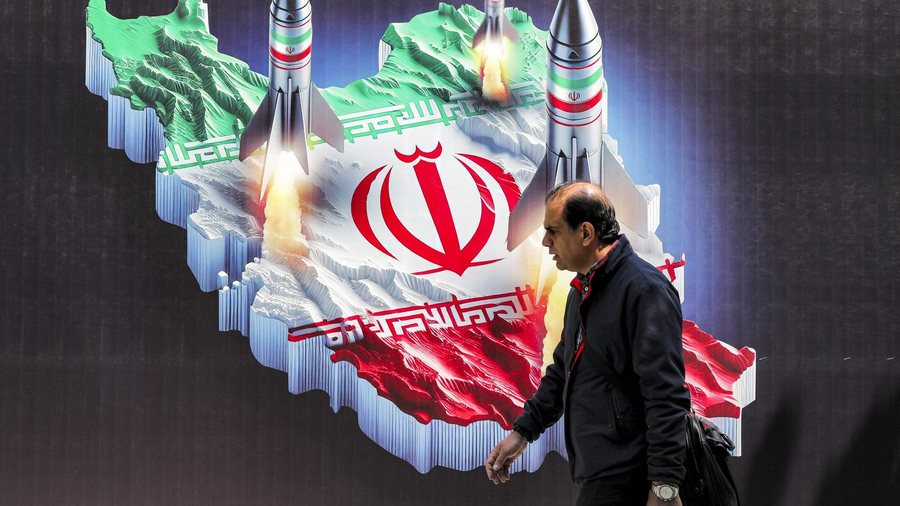
Most obvious is the need for an integrated air and missile defense system to defend Europe against Russia. If drones and ballistic missile strikes are the new way of war—and Russia is able to maintain an inventory of some 900 conventional ballistic missiles despite regularly launching them into Ukraine—then Europe needs a counterweight.
Iran launched more than 300 missiles and drones at Israel, and only seven of them managed to hit their targets. The massive April 14 attack was neutralized thanks to a combination of fighter jets and an anti-missile shield that in some cases managed to intercept missiles and drones from space.
So it is clear that the concept of "integrated air and missile defense" (IAMD) works. And while it is expensive - including lasers, satellites, advanced radars and Artificial Intelligence - it is not as expensive as destroying your national infrastructure in a single night.
Iran's attack was inspired by the model of the Russian military against Ukraine: a wave of slow-moving drones, a few cruise missiles and finally a host of ballistic missiles, some with the ability to maneuver in flight. Although defeated, that attack signaled the "new normal" in war, just as the German air raid on Guernica, Spain in 1937 signaled what war would be like for our grandparents' generation.
Moreover, the April 14 attack heralded a new kind of economic warfare. Israeli fighter jets costing $110 million each, and using high-tech missiles, were used against drones costing at most $50,000 each. Iran's implicit message was: Although you can beat us technically, we will hurt you economically.
We, in Europe, must draw quick conclusions from this event, regardless of the right or wrong geopolitical actions. Most obvious is the need for an integrated air and missile defense system to defend Europe against Russia. If drones and ballistic missile strikes are the new way of war—and Russia is able to maintain an inventory of some 900 conventional ballistic missiles despite regularly launching them into Ukraine—then Europe needs a counterweight.
The success of Israel's missile defense shield will have delighted politicians in Berlin. In November last year, the German government signed a unique agreement to buy the Arrow-3 system, which forms the outer layer of Israeli defense.
In parallel, Germany has claimed the role of "frame nation" for the European Sky Shield Initiative (ESSI) - a project that aims to create a missile defense system across the continent. At this stage, ESSI exists only on paper.
But if it ever does, participating countries will use a mix of the Arrow-3, the US-made Patriot missile for medium-range defense and the German-made IRIS-T for short-range defense. However, France, Italy and Spain have refused to participate in ESSI, because 2 of the systems technologies involved are not European and because a French rival to the Patriot system has been excluded from the plan.
To further complicate matters, the European Commission has recently published a comprehensive European Defense Industrial Strategy, calling for the pooling of defense investment in domestically produced weapons in pursuit of European strategic autonomy. However, there is currently no company in Europe that can produce missiles equivalent to the Arrow-3. So European missile defense is not just a technical issue or a money problem. It highlights the strong geopolitical divisions within the EU. The key word in relation to missile defense is "integration". Israel has a system that coordinates short-, medium- and long-range missiles with its fighter jets.
Europe urgently needs all of this, plus coordination with air defense ships based in the Baltic and Mediterranean Seas, as well as a host of satellites controlled by many countries. Also, this system must be centrally controlled and authorized and available 24 hours a day, 7 days a week.
And this is exactly where the problems begin. The reason the US and Israel currently have the ability to shoot down a ballistic missile in space, and most European powers do not, is that they recognized the threat in time and invested heavily in the appropriate technology to mitigate the effects of such attacks.
Neither Israel nor America needed to go through a Zeitenwende (turning point) to find the money. And after all, both countries are acting as nation-states, not a multinational alliance. Meanwhile, the EU has focused its efforts for a coordinated response on a project to intercept and neutralize hypersonic missiles, Twister.
This system, if ever built, will be content with its targets within the earth's atmosphere, not in space. And in any case it won't be ready until before 2035. And if I tell you that the project is led by France, and that it sees ESSI as a diversion from Twister, then you can begin to understand the fundamental problem of European missile defense.
There are currently a host of legacy projects, prepared since before Russia's all-out invasion of Ukraine and tailored to the competing national interests of France and Germany. And if there is ever to be a common system, it will have to overcome the problem of rival geostrategic visions.
In this case, Britain's role can be, if not central, at least influential. So one of the first challenges for the next government, which is likely to be led by Labour, is to decide what level of missile defense the UK might need; in which part of the project we want to specialize; where we want to cooperate with Europe; and what we look for in terms of command and control.
The answers to these questions do not derive primarily from technical, or even military, considerations: they are strategic. They stem from questions such as: Do we want to deter Russia by showing that we can prevent a conventional attack on one of our allies (that is, stop it at the border), or do we want to show that we can "punish the Kremlin", which in a diplomatic language it means the counterattack against Russia itself.
And who are our most reliable allies, with whom we want to work in the production of military equipment? None of these questions were clearly answered in the so-called foreign and security policy "refresh" put forward by our government in 2023. So it is up to Labor to do so. Keir Starmer has pledged to sign a security pact with the EU.
As he approaches the prime ministership, the issue of missile defense is just one example of how complex it can be. In this context, the question cannot be avoided: Which project are we part of, with which allies and for which strategic purpose.
Air and space experts I've spoken to in recent days have told me it would cost £10bn just to set up a UK-based IAMD system. This is a larger amount than the cut Jeremy Hunt signed off on to the National Insurance Fund. At least the Iranian attack on Israel should warn politicians that in the age of drones and ballistic missiles, national security is not cheap. /Adapted Pamphlet, taken from "The New European"





Lini një Përgjigje