


 Shkruar nga Pamfleti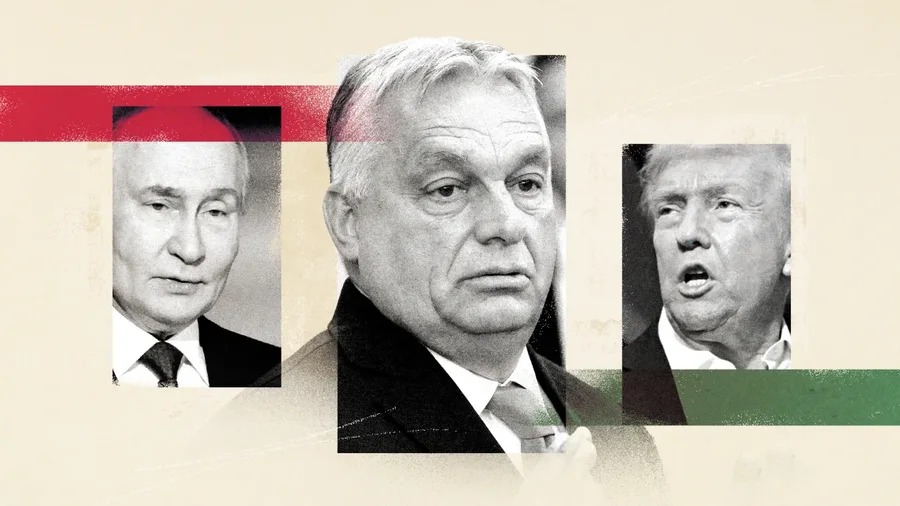
This is not just an electoral defeat. It is clear proof that no amount of foreign support, no matter how powerful and coordinated, whether from Washington or Moscow, can replace the internal will of the people when they decide to change...
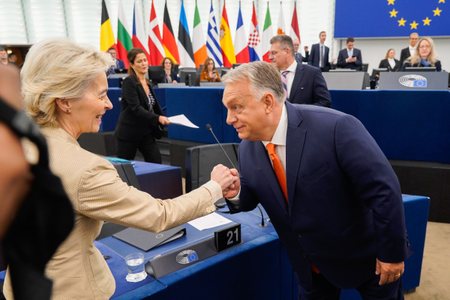
On April 12, 2026, Viktor Orbán conceded defeat after 16 years of absolute rule in Hungary. Péter Magyar's Tisza Party won by a landslide, securing not only a majority but also a two-thirds majority in parliament, a constitutional mandate that allows him to radically change the country.
The record turnout of nearly 79% spoke louder than any speech: Hungarians came out en masse to say “enough.” But what makes this defeat truly painful for some: Orbán did not fall alone. He fell despite the strongest, most open, and most spectacular support he could get, from the White House of Donald Trump and JD Vance, but also from the Kremlin of Vladimir Putin.
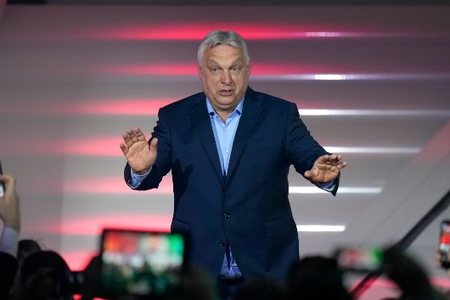
Trump called him a “fantastic man,” “my true friend,” and promised him “the full economic power of the United States.” Vance personally traveled to Budapest a few days before the election, took the stage with Orbán, spoke at the rally, and gave Trump the floor on a loudspeaker in front of thousands of supporters. A coordinated, full-scale support, an American political operation to save Trump’s closest ally in Europe. But the support didn’t end there.
Even Vladimir Putin considered Orbán his most reliable ally in the European Union. Putin publicly praised him as a “leader who defends national interests,” who secured cheap Russian energy despite European sanctions, met with his ministers, and received open offers of assistance from Orbán. Russia also worked actively to preserve his power, from disinformation to other reported plans. The two superpowers, Trump and Putin, joined forces to keep Orbán in power. But the Hungarian people were not sold. They voted against it.
This is not just an electoral defeat. It is clear proof that no amount of foreign support, no matter how powerful and coordinated, whether from Washington or Moscow, can replace the internal will of the people when they decide to change. Hungarians did not vote against Trump or America, nor against Putin or Russia. They voted against corruption, fatigue after 16 years, media control, high prices, and a gradual departure from Europe.
Péter Magyar, a former insider of the Orbán system who turned against him, presented himself as a center-right alternative: conservative but clean, pro-European without being “globalist,” anti-corruption without being leftist. And the Hungarians chose him.
That night in Budapest showed something important to all those who believe that populism automatically wins when it has strong support from abroad: the people are not a crowd bought by phone calls, rallies or promises of energy. They have memory, they have fatigue and they have an instinct for change when the system becomes unwieldy. Even in a country where Orbán had built a powerful state machine, the popular tide had turned.
For Trump and those who saw Orbán as the model of “illiberal Europe,” as well as for Putin who lost his “Trojan horse” in the EU, this is a strong blow. Because the message is simple and undeniable: in the end, the people decide, not Trump and not Putin.
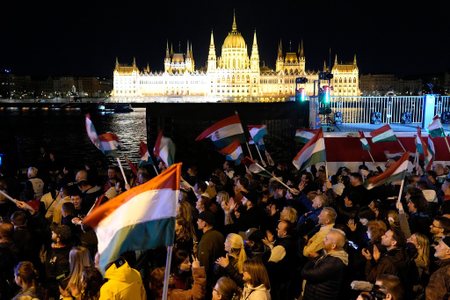
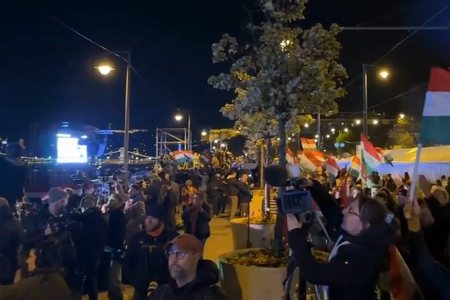
Neither the vice president's visit, nor enthusiastic phone calls, nor economic promises, nor Russian energy could stop the Hungarians' desire for a new chapter. On the banks of the Danube, thousands of people celebrated not only the victory of a new party, but also the fact that Hungarian democracy, even after 16 years of pressure from abroad, was still alive. Hungary is turning towards Europe, not because Brussels forced it, but because Hungarians themselves chose it. This is the lesson of this night: no leader, no matter how strong or supported by the world's greatest superpowers, is invincible forever. When the people decide to change, there is nothing to stop them. / Pamphlet


Harruat Vuçiçin që inskenoi një atentat me dinamit në linjat e gazit.
Nuk mund ta permendin, se gjith kta majmunet tane paguhen nga serbia.