


 Shkruar nga Pamfleti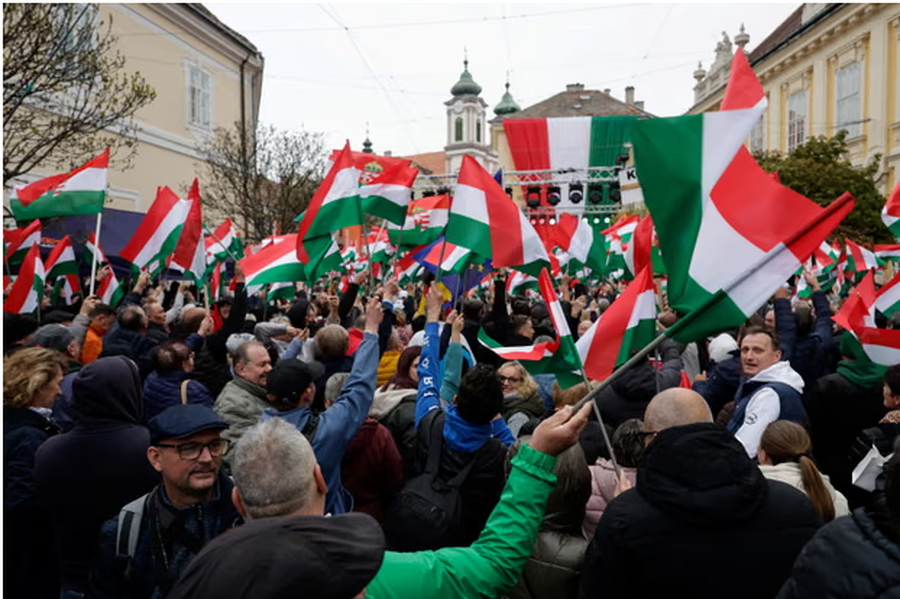
Viktor Orban and his center-right rival, Peter Magyar, have traded accusations of foreign interference in the April 12 election, which polls suggest could mark the end of the Hungarian nationalist prime minister's 16 years in power.
As the two leaders' campaigns entered their final stages ahead of Sunday's vote, which is being watched with as much attention in Brussels, Moscow and Washington as in Budapest, Orban said on social media that his opponent "will stop at nothing to seize power."
The prime minister claimed that Hungary and his Tisza party, which according to most polls has a double-digit lead over Orbán's far-right Fidesz party, were "collaborating" with foreign intelligence and threatening supporters of the ruling party with violence.
“This is an organized attempt to use chaos, pressure and international intervention to question the decision of the Hungarian people,” Orbán said, adding that Hungary needed “unity and security” and change would “threaten everything we have built together.”
Magyar, a former Fidesz loyalist who broke away from the ruling party two years ago, accusing it of corruption and propaganda, hit back, saying Orbán would be “walking away from the same people he has abandoned and betrayed: millions of Hungarians.”
Magyar added in a social media post: “The ongoing electoral fraud carried out for months by Fidesz, together with criminal acts, intelligence operations, disinformation and fake news cannot change the fact that Tisza will win these elections.”
He urged voters "not to fall prey to provocations" and said that Orbán, who led Hungary towards an "illiberal democracy", has inspired far-right leaders and led to bitter clashes with the EU, should "accept the judgment of the Hungarian people with dignity".
The populist prime minister, 62, is the EU's friendliest leader with Moscow, and recent allegations of Russian interference in the vote, along with revelations that Orbán's ministers shared confidential EU information with Moscow, have sparked outrage across the bloc.
Government spokespeople, on the other hand, have tried to present the series of leaks revealing Budapest's close ties to Moscow, including the transcript of a conversation between Orbán and Russian President Vladimir Putin, as evidence of foreign interference.
While opinion polls show Magyar in the lead, observers warn that the electoral system is complex and constituencies have been redrawn in Fidesz's favor. Some estimate that Tisza needs a six-point lead in national polls just to secure a majority in parliament.
Both candidates held rallies on Friday with Hungarian supporters in Hatvan, about 60 km east of Budapest, saying they hoped above all for change from an Orban era marked by rising levels of cronyism and corruption, as well as a stagnant economy.





Lini një Përgjigje