


 Shkruar nga Pamfleti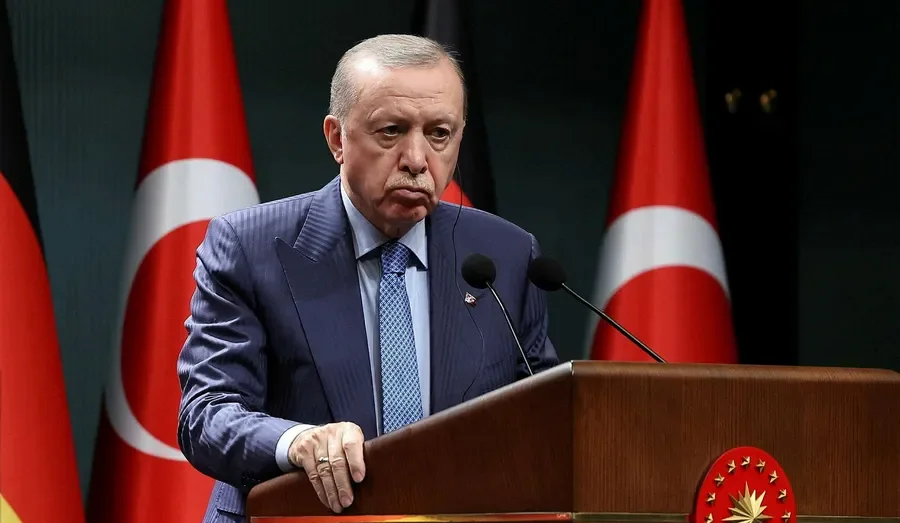
The arrest warrants issued a week ago by the Istanbul Public Prosecutor's Office against 37 Israeli officials are just the beginning of Turkey's pursuit of the perpetrators of what it calls systematic acts of genocide and crimes against humanity in Gaza.
Prime Minister Benjamin Netanyahu heads the list, followed by Defense Minister Israel Katz, National Security Minister Itamar Ben-Gvir, IDF Chief of Staff Eyal Zamir, and Israeli Navy Commander David Saar Salama. The statement did not name the other 32 people for whom arrest warrants have been issued.
The statement details dozens of incidents involving harm to civilians, including women and children, citing the destruction of hospitals and other civilian infrastructure and the prohibition of food and other humanitarian aid.
A senior Turkish official told Haaretz that the arrest warrants were drawn up under the explicit direction of President Recep Tayyip Erdogan and that the process took weeks. He added that the main dilemma was timing, with a significant obstacle to issuing the warrants being Turkey’s discussions with the United States and intermediary countries over the composition of the multinational force that is supposed to be deployed in the Strip.
"Erdogan appears to have concluded that, in light of Israel's firm opposition to allowing Turkish forces to operate in Gaza and the understanding that the US administration tends to endorse Jerusalem's position," the official said, adding "there was no point in waiting any longer."
However, this Turkish interpretation should be taken with reservations. For Erdogan, the issue of Turkey's participation in the multinational force has not yet been resolved, and he plans to fight hard for it.
It is doubtful whether he sees any contradiction between issuing arrest warrants for senior Israeli officials and increasing Ankara's chances of joining the multinational force. Erdogan may try to exploit his status as "the darling of the Trump administration" both to punish Israel and to secure American approval for participation in the force.
Erdogan's push is not just about cementing Turkey's position as a pillar in a region that has become the focus of American policy. For years, Turkey was excluded from any involvement in the Israeli-Palestinian conflict. It was not a party to any previous negotiations between US administrations, Israel and the Palestinian Authority that concerned a solution to the "Palestinian problem."
Even during periods when Erdogan's relations with Israeli prime ministers were good and even excellent, such as his close friendship with Ehud Olmert, Israel did not see Turkey as a potential mediator.
Moreover, Egypt, Jordan, the United States, and the Palestinian Authority itself preferred Arab mediation to Turkish involvement. It is not too much to mention in this context Turkey's harsh criticism of the United Arab Emirates when the latter signed a peace agreement with Israel, and Ankara's threat to sever relations with Abu Dhabi as a result.
Throughout the Gaza war, Turkey never found a seat at the main mediation table, although in the early days of the war, both Israel and the United States repeatedly asked Turkey to contribute to the hostage-free efforts. According to Israeli sources, Turkey secured the release of five Thai citizens from Gaza and participated in other discussions on the release of Israeli hostages.
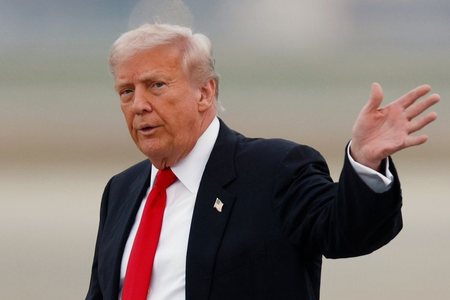
However, in all the "public displays" led by Qatar, Egypt and the United States, Turkey was absent from the main stage. It seems that only towards the final stage, when US President Donald Trump presented his plan, did Hamas give Turkey its public status as one of the guarantors for the ceasefire and the full implementation of Trump's 20-point plan.
The partnership with Turkey that Trump embraced in light of Erdogan's signing of the so-called Trump Declaration for Sustainable Peace and Prosperity after the Sharm el-Sheikh summit in Gaza on October 13 has affected many countries, not just Israel.
Egypt, which holds the copyright to Trump’s peace plan, is also ignoring Turkey’s involvement. While full diplomatic relations between Egypt and Turkey have been restored after some 12 years of estrangement and deep hostility, and trade ties are flourishing, Cairo has strong reasons to oppose Turkey’s massive involvement in Gaza.
If Trump's plan progresses beyond a ceasefire, into the second and third phases, Egypt sees itself as the natural candidate to implement the Gaza reconstruction plan by overseeing the "Peace Board" that Trump will chair.
For Egypt, this would mean not only billions of dollars in revenue, but also the employment of Egyptian companies and workers in the reconstruction of Gaza, the purchase of consumer goods and construction materials, and the collection of tariffs and fees for services purchased in Gaza. Egypt seeks to command the multinational force in order to guarantee the “well-being” of its border with the Gaza Strip.
In this future scenario, the last thing Cairo needs is business competition with Ankara, which would erode the profits that Gaza could generate. And that is not the only concern. There are political “tension zones” between Egypt and Turkey stemming from their rivalry in Libya, when Turkey and Qatar politically and militarily supported the recognized government, while Egypt and the United Arab Emirates supported separatist military commander Khalifa Haftar.
The maritime border treaty between Turkey and Libya, which threatened Egyptian gas exports to Europe, also sparked a conflict between the two that has since subsided, especially after Turkey provided Egypt with a gas liquefaction ship to help it overcome its natural gas shortage. However, the political tension has not completely disappeared.
While Erdogan has warmly embraced Syria's new leader, Ahmad al-Sharaa, and transformed the country into a Turkish protectorate, Egyptian President Abdel-Fattah al-Sissi is still keeping Trump's new beau and "old friend," Saudi Crown Prince Mohammed bin Salman, at bay.
Al-Sissi fears that Turkish forces in Gaza, at a time when Erdogan enjoys Trump’s support, could transfer the “concession” over security control of the Gaza Strip to Turkey, or at least force Egypt to maintain military vigilance. It is no coincidence that al-Sissi did not send Foreign Minister Badr Abdelatty or any representative on his behalf to the conference initiated by Turkey last week to discuss the future of Gaza. / Adapted from Haaretz /





Lini një Përgjigje