


 Shkruar nga Pamfleti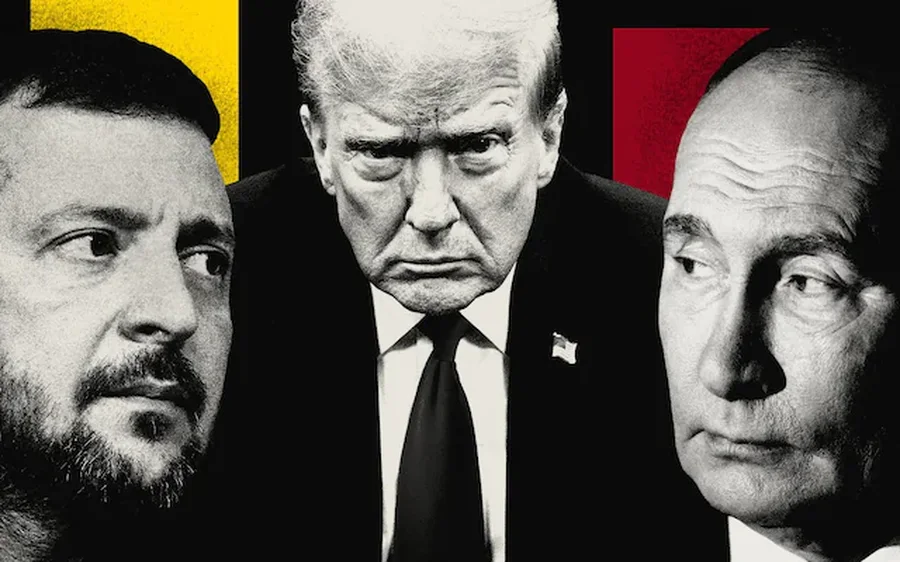
After Trump's announcement of European arms sales to Kiev and his ultimatum to Putin, there is no shortage of doubts and uncertainties, especially regarding the long-term plan. Europe is pleased with this change in stance on weapons, although it does not believe in the effectiveness of the threat of "taxes and sanctions" that will come into effect in exactly 50 days.
Moreover, although NATO Secretary General Mark Rutte, speaking from the Oval Office next to Trump, called the US president's demand that Europeans pay for the weapons "self-evident", the EU High Representative for Foreign Policy, Kaja Kallas, declared yesterday: "We welcome President Donald Trump's announcement to send more weapons to Ukraine, although we would like the US to share the burden with us."
Another issue is what kind of weapons will be sent. Rumors have been circulating for days about the possibility of sending long-range missiles, but both Trump and Rutte were vague on Monday about the contents of the "package," apart from mentioning Patriot defense systems.
Anonymous sources cited by the newspapers say that Trump will also send offensive weapons: in particular, more ATACMS (Army Tactical Missile System) missiles, with permission to be used by the Ukrainians at full range up to 300 kilometers in Russian territory (they do not reach the cities of Moscow and St. Petersburg, but can hit weapons bases and depots in depth). In addition, Ukraine has requested but has not yet received JASSM (Joint Air-to-Surface Standoff Missiles), which have a longer range than ATACMS and can be launched from F16 fighter jets (which have already been offered by the Europeans to Kiev).
But yesterday the US president declared that he has no intention of sending long-range missiles at the moment, although he did not rule out this possibility in the future. And yet, it was he who raised Zelensky's hopes, asking him, on July 4, whether he was able to hit Moscow and St. Petersburg. Now the White House says that was just a normal question.
Trump's NATO envoy, Matt Whitaker, emphasizes that the priority is the Patriot defense systems that can intercept Russian ballistic missiles and it is hoped that they will arrive in the coming days from European reserves, while the Europeans themselves are waiting for new supplies from America. Even the Ukrainians themselves consider the Patriots to be the most urgent need: they currently have 8 units, of which two are not operational, and many cities are vulnerable to Russian air strikes.
But all experts emphasize that, in addition to the Patriots (which are needed as soon as possible), weapons that allow the Ukrainians to "take the initiative" on the battlefield are also necessary: "More offensive weapons to hit targets behind the front line," wrote yesterday in an editorial in the Washington Post. This is an area where the Biden administration has acted very slowly and with great hesitation, always fearing that more direct attacks on Russia would cause a wider regional conflict with a nuclear power."
Just after threatening secondary sanctions against countries that buy Russian gas and oil, Trump has asked Republican senators to temporarily freeze a bill that provides for secondary sanctions of up to 500%, supported by 85 out of 100 senators: these sanctions would have devastating consequences, but the Republican leader in the Senate, John Thune, explains that "for now, the president wants to manage this issue himself."
Is Trump really ready to move forward with secondary sanctions that would hit China and India — the US’s arch-rival and a key ally? The US itself would also suffer, due to the rise in oil prices. Many do not believe that Trump is willing to sacrifice these relationships for the sake of Ukraine.
Moreover, negotiations on tariffs are underway with both China and India, and, according to political scientist Ian Bremmer, Trump is realizing that he is in a weaker position than he thought, both politically (in terms of public patience) and economically (due to the potential consequences of Chinese restrictions on critical minerals), and has asked the "hawks" in his administration to lower expectations for the short term, while also easing some restrictions on the export of semiconductor chips to China.
Will New Delhi and Beijing manage to reduce their dependence on Russia within these 50 days? Hardly, given the complexity of such an operation. Can China put pressure on Moscow to stop the war? It is not certain that China would want this: a quick end to the war would risk shifting all US attention to the Indo-Pacific. /Corriere della sera



Lini një Përgjigje