


 Shkruar nga Martin Wolf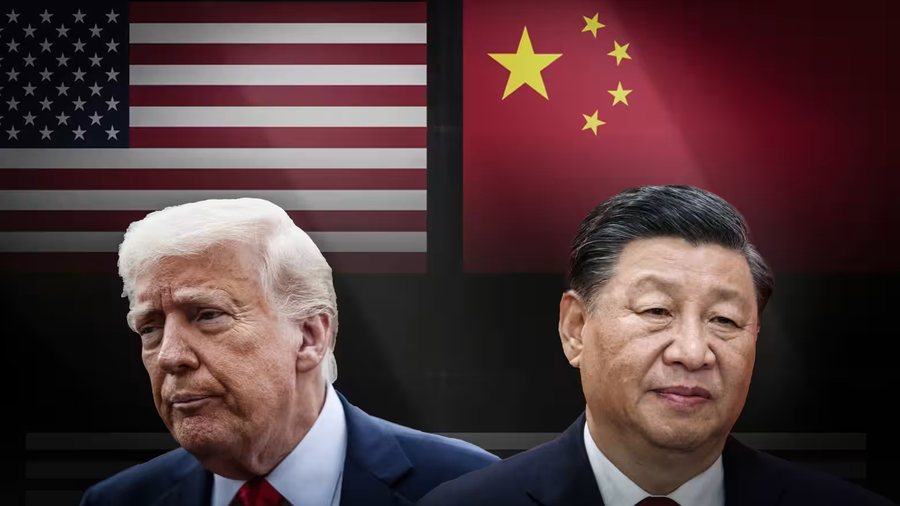
It is impossible for the rest of the world to ignore these predatory superpowers, as together they generate 43 percent of global GDP at market prices...
Donald Trump’s second term is transforming the world. It is very likely that the autocratic regime that he and his servants in the administration and on the Supreme Court are creating will last. However, even if it does not, it will have changed the world simply because it happened. What happened once can happen again. This should transform views on the future. However, this future will not be determined by the US alone. China is also a superpower. So what role can it play in this new era?
Let’s start with the US. Other democracies thought they shared core values with them. But this US clearly doesn’t. Trump himself is complaint-driven, deal-oriented, and capricious. That alone makes him difficult to deal with. As Célia Belin of the European Council on Foreign Relations adds, his foreign policy “is his domestic agenda, exported.”
"Trump and his Maga camp are using the same three methods at home and abroad: elimination, transformation, and subjugation ," she adds.
At home, they seek to eliminate the “deep state” and turn a liberal America into a nationalist one. Abroad, similarly, they seek to eliminate alliances and other commitments and transform allies into vassals.
These goals are bad for much of the world and unwise for the U.S. Adam Posen, president of the Peterson Institute for International Economics, takes this view at length in a Foreign Affairs article on “The New Economic Geography.”
In the post-World War II world, he writes, the United States provided other countries with insurance against all sorts of risks. But the costs it incurred were not uncompensated: other countries invested in the United States, opened their economies to American investors, lent money to the United States at low rates, made the U.S. dollar the global currency, and transformed American capital markets into the center of global finance. This was a mutually beneficial arrangement at the time.
Trump complains that the US has been “cheated.” However, the fact is that it has remained the richest and most technologically advanced economy in the world in a period of unprecedented global growth: between 1950 and 2020, average global real GDP per capita increased by 360 percent!
You say you were deceived? That would hardly be true.
Sadly, Trump has destroyed this great bargain. In its place, we see a series of incredible and predatory deals. In addition to imposing huge tariffs on countries that thought they were America's friends, Trump has demanded that the money be invested as he sees fit, much to the chagrin of foreign partners. This is pure gangsterism.
Another way to think about what happened is that in the old world of US trust, there was interdependence, but some countries were more dependent than others. This allowed interdependence to be “weaponized.” As Henry Farrell and Abraham Newman argue, the US did this quite freely. Within what was seen as a long-term mutually beneficial relationship, such weaponization, especially through the use of sanctions, was tolerated, however reluctantly. But Trump is turning interdependence into a grip. That is a very different matter.
Moreover, others can play this game. In fact, China is already doing so. This idea is presented in a stark way by two European economists, Moreno Bertoldi and Marco Buti, in a paper that examines how the EU is caught in a pinch between an “extractive” superpower and a “dependent” superpower.
China is second: it creates dependency. By flooding markets with its goods, it exacerbates global trade and macroeconomic imbalances. Its exploitation of WTO rules to support new industries undermines trust in the rules-based trading system it is supposed to support. The weaponization of critical materials and control of the clean energy supply chain are also weakening support for policies aimed at tackling climate change, especially in the EU. However, China is a more reliable and rational partner than today’s US: at least, it does not deny climate realities.
It is impossible for the rest of the world to ignore these predatory superpowers, as together they generate 43 percent of global GDP at market prices. But a way must be found to manage their global influence.
Part of the answer must be defense. The US should be the main victim of this, as it has had the most valuable alliances. But a regime that happily destroys its own key national assets will not worry about that.
Moreover, Trump believes that allies can be turned into vassals. This is not inconsistent with their behavior. The United Kingdom has chosen to be a vassal. This, ironically, is a consequence of Brexit’s quest for expanded national sovereignty. But Japan, South Korea, and even the EU do not seem much different, so far.
However, I hope that this is unlikely to last. Both former allies and other countries will look for alternatives. This will increase China's influence. In fact, the US has already pushed India and Brazil closer to Beijing: Xi Jinping must be silently thanking Trump for his ugly mistakes every day. Most likely, then, countries will try to pit one superpower against the other. India and Brazil will behave this way, as will others.
Vassalage and the pitting of one superpower against another leaves a third possibility. The world we are heading into will be poorer, more unstable and more dangerous than the one we had before the US embraced Maga. Other countries must dare to follow a more independent course, together, including in the management of global public goods such as health, climate, and even security. Can the EU help lead the way in this direction? This may now seem like a fantasy. But stranger things have happened. / Adapted from “Pamphlet” by “FinancialTimes”




Vetëm njëri e ka ditur se kush janë Amerika dhe Kina.....