


 Shkruar nga Pamfleti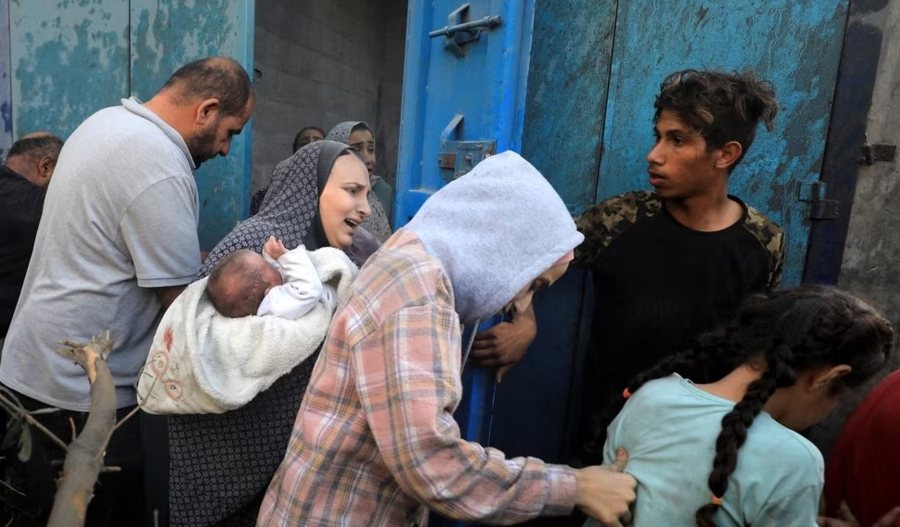
A month ago, Israel was awakened by the deadliest tragedy in its 75-year history.
Hamas militants entered its territory on October 7, killing and massacring more than 1,400 people and taking 239 hostages.
The Israeli government declared war on Hamas in Gaza and set the stage for a massive military response to the surprise attack.
"This fight will take time. It will be difficult," said Israeli Prime Minister Benjamin Netanyahu, vowing to destroy Hamas.
The ensuing carnage turned into the bloodiest month for the 2.3 million Palestinians in the Gaza Strip.
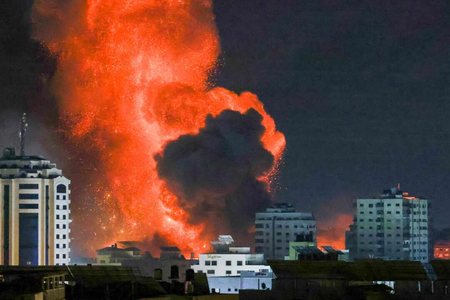
The Israeli military retaliated with a daily campaign of airstrikes - targeting what it said was Hamas infrastructure - as well as deploying troops to surround the strategic Gaza City.
Gaza's health ministry, run by the militant group, said on Monday that 10,022 people have been killed - among them 4,104 children - since Israel launched attacks on the enclave.
Israel describes its actions as self-defense, but not everyone agrees.
"Gaza is being deprived of food, water, medicine and fuel. Israel is letting in the smallest possible amounts. It is shocking how the international community is allowing 2.3 million people to be hungry, dehydrated and without the necessities of life," Khaled Elgindy, director of the Institute's Palestine and Palestinian-Israeli Affairs Program, told RFE/RL. for the Middle East.
The only thing that the war has created, according to him, is "a great humanitarian catastrophe".
"... and there is no end in sight. It is a very shocking situation, both from a human and political and diplomatic point of view. A complete failure," says Elgindy.
The humanitarian situation in Gaza
The President of the United States, Joe Biden, questioned the accuracy of the information from the Ministry of Health in Gaza, regarding the victims, while the Israel Defense Forces also said that "any information provided by a terrorist organization, should be taken with care".
Hamas, which has controlled Gaza since 2007, has been designated a terrorist organization by many countries, including the US and the UK.
However, the regional director of emergencies at the World Health Organization, Richard Brennan, said last week that he believed the figures provided by the Ministry of Health in Gaza were reliable.
"We believe that the information management systems, which the Ministry of Health has established over the years, coincide with the analyses," he said.
The leaders of all major UN agencies called on Monday for an "immediate humanitarian ceasefire", saying "enough is enough".
“Vrasjet e tmerrshme të më shumë civilëve në Gazë janë një mizori, ashtu siç është edhe privimi i mbi 2 milionë palestinezëve nga ushqimi, uji, barnat, energjia elektrike dhe karburantet”, thanë ata në deklaratë.
Sipas tyre, më shumë se 23.000 njerëzve të plagosur “u duhet trajtim i menjëhershëm brenda spitaleve të mbingarkuara”.
Shërbimet e telefonit dhe internetit ndërpriten vazhdimisht në Gazë, duke i lënë njerëzit në pamundësi për të thirrur ambulancat.
Shumë familje jetojnë bashkërisht në shtëpi, ose flenë në tenda. Egjipti hapi në disa raste pikën kufitare Rafah, duke i lejuar qindra shtetas të huaj dhe palestinezë të plagosur rëndë të kalojnë në territorin e tij.
Situata me pengjet
Udhëheqësit e agjencive të OKB-së kërkuan, gjithashtu, lirimin pa kushte të pengjeve që mbahen nga Hamasi.
Në ditën e sulmit, më 7 tetor, Hamasi mori 239 pengje në qytetet kufitare me Gazën, në një festival muzikor në natyrë dhe në disa baza ushtarake.
Ato përfshijnë civilë të moshave të ndryshme - në mesin e tyre 33 fëmijë dhe një foshnje 9-muajshe - si dhe shërbyes ushtarakë.
Sipas Qeverisë izraelite, më shumë se gjysma e pengjeve besohet se kanë pasaporta të huaja dhe se vijnë nga 25 vende të ndryshme, përfshirë SHBA-në, Francën, Gjermaninë, Argjentinën, Tajlandën dhe Rusinë.
Organizata Botërore e Shëndetësisë tha se është “shumë e shqetësuar” për gjendjen e tyre, sidomos të fëmijëve, të moshuarve dhe atyre me shëndet të dobët.
Hamasi thotë se i mban pengjet fshehur në të gjithë Gazën, përfshirë edhe në tunele.
Sipas tij, së paku 50 prej tyre janë vrarë nga sulmet ajrore izraelite, por kjo shifër nuk është verifikuar në mënyrë të pavarur.
Deri më tani, pesë prej pengjeve dihet se janë liruar.
Mendohet se grupi militant mund t’i ketë kapur pengjet për t’i bërë presion Izraelit që të lirojë disa ose të 5.100 palestinezët që mbahen në burgjet izraelite.
Netanyahu i hodhi poshtë thirrjet e familjarëve për armëpushim.
“Vlerësimi ynë i përbashkët, jo vetëm i anëtarëve të kabinetit, por i të gjitha forcave të sigurisë dhe ushtrisë, është se aksioni tokësor krijon mundësi për shpëtimin e pengjeve tona, sepse Hamasi nuk do t’i lirojë ato nëse nuk është nën presion. Thjesht, nuk do ta bëjë”, tha ai.
Cila është rruga përpara?
“E vetmja rrugë përpara është armëpushimi i menjëhershëm”, thotë Elgindy nga Instituti për Lindjen e Mesme.
Sipas tij, edhe çështja e pengjeve, edhe situata humanitare në Gazë duhet të zgjidhen në tryezën e bisedimeve, me ndërmjetësim ndërkombëtar.
“Zgjidhje ushtarake të këtij problemi nuk ka. Dikush duhet të jetë në gjendje që t’ia thotë Izraelit këtë në mënyrë eksplicite. Shpresoj SHBA-ja”, thotë Elgindy.
Si alternativë, ai përmend zgjidhjen me dy shtete, e cila prej vitesh shtyhet përpara edhe nga SHBA-ja.
Kjo zgjidhje kërkon krijimin e një shteti të pavarur për palestinezët, krahas atij të Izraelit.
Por, thotë Elgindy, kjo duket vështirë e arritshme tash për tash.
According to him, the Palestinian leadership in Ramallah would like to see such a solution, but not the "extremist Government of Israel", consisting of right-wing, extreme-right and ultra-orthodox parties.
For the US, Elgindy says that "it cannot convince Israel to make a temporary humanitarian pause in the bombing of Gaza", let alone for major political developments, such as the two-state solution.
Asked if this solution is the only option, Elgindy replies:
"There are other options that should be considered. It is the possibility of a state for all people between the Jordan River and the Mediterranean Sea - regardless of whether they are Arabs or Jews."
The conflict between Israelis and Palestinians is decades old and is mainly related to the issue of territories.
The President of the United States, Joe Biden, said on October 25 that the situation between them cannot return to the status quo before October 7.
When the crisis is over, according to him, there should be a picture of what comes next.
"In our view, it should be a two-state solution," Biden said.
"And that means a concerted effort by all parties - Israelis, Palestinians, regional partners, global leaders - to put us on the path to peace," the US president said.
What is the history of Israel's conflict with Hamas?
Israel has a long history of enmity with Hamas. He fought it in Gaza four times and carried out many other operations, causing hundreds of Palestinian casualties.
Hamas militants fired thousands of rockets at Israel, killing hundreds of Israelis. Israel accuses Hamas of kidnapping Israeli citizens and organizing protests that threaten its borders.
Hamas and its supporters, on the other hand, accuse Israel of oppressing the Palestinians and violating their rights.



Lini një Përgjigje