


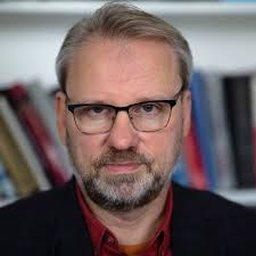
 Shkruar nga Wolfgang Munchau
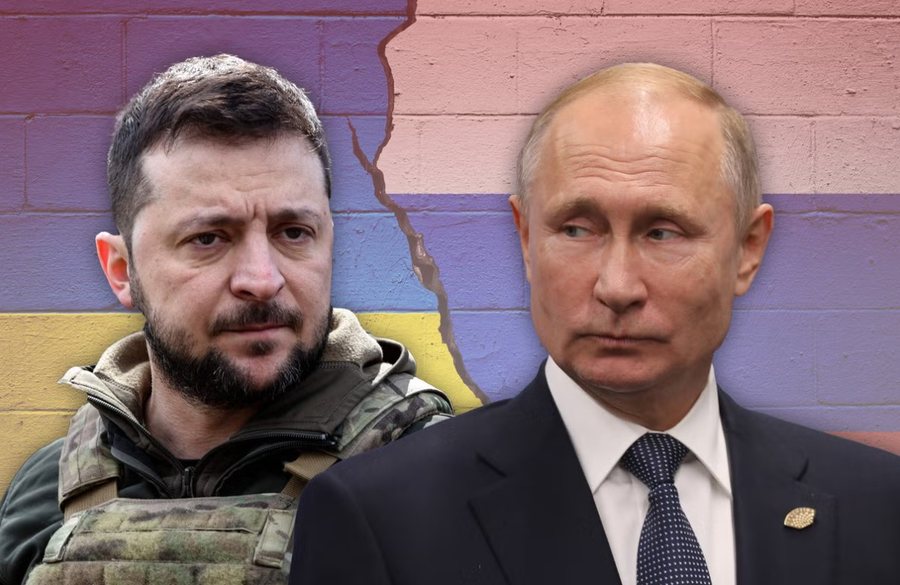
Although the outcome of the conflict still seems uncertain, it is a safe bet that neither of the two contenders will get what they seek...
I have no idea when the war in Ukraine will end, but I can make a guess about its conclusion. I have the impression that there will be something very similar to the recent prisoner exchange between Russia and the West.
That agreement seemed to come out of nowhere, but it was certainly the result of intensive work of discreet diplomacy. The West secured the release of sixteen prisoners, mostly Westerners, including American journalist Evan Gershkovich.
Vladimir Putin has secured the return of his favorite assassin, Vadim Krasikov, released from a prison in Germany. In 2019 Krasikov killed Zelimkhan Khangoshvili, a former commander of a Chechen rebel group and then employed by the Georgian secret services, where he helped unmask several Russian spies. The German court, in handing down the sentence, had stated that Krasikov worked for the Russian government. It's not entirely clear why Putin sought Krasikov's release, but it's clear that he cared deeply.
Diplomatic intervention to end the war will take longer, but this too will happen in the most discreet way possible. It will undoubtedly come as a shock to Ukraine's supporters in the West, many of whom remain convinced that Ukraine can aspire to total victory, including liberating Crimea and even triggering regime change in Russia. The problem for Ukraine is that its Western backers have not established a common goal of ending the conflict.
The war in Ukraine will end when both sides realize that the cost of the war outweighs the potential benefits. But we haven't reached that point yet. Russian troops are still advancing on Ukrainian territory, especially in the last two months, albeit with very modest results.
The Ukrainian offensive in the neighboring Russian region of Kursk represents an interesting but very dangerous maneuver. If successful, it would force Russian forces to abandon the front line in Ukraine and move back inside, a move that could represent a valuable bargaining chip for Ukraine in peace negotiations. However, I don't see how Ukraine will be able to take back the provinces conquered by Russia, nor how Russia will ever be able to conquer new territories, except for a few small villages here and there.
The occupation of Kursk certainly represented a boost to Ukrainian morale. Ukraine is currently receiving the sympathy of the international media, but the war cannot be won by military prowess. Unfortunately, this latest success will not significantly affect the progressive fatigue affecting countries such as the United States and Germany, in continuing to provide aid to Ukraine. I do not even believe that the results of the presidential elections in the USA will have a decisive impact on the situation. As the war enters its third year, and with the battle lines essentially unchanged, many in the West, not just the pro-Russian far right, are hoping for a cessation of hostilities. Absent a decisive military breakthrough, skepticism is likely to grow.
Among the reasons for the weakening of Western support we find economic difficulties. Aid to Ukraine is beginning to erode the domestic spending of friendly countries, and military budgets are tight everywhere. Gas prices have started to rise again in energy markets due to the crucial role played by the Kursk province in channeling Russian gas to Europe. Ukraine seized Sudzha in Kursk province, located near facilities where Russian gas enters the Ukrainian pipeline network. After the sabotage of the Nord Stream gas pipelines in the Baltic Sea two years ago, Russian gas continued to flow to Europe through the Sudzha transit point. Ukraine also operates large gas storage facilities on which supplies to Western Europe depend. If these pipelines are blocked, Europe will find itself in trouble, and now the two warring countries are busy attacking and destroying each other's energy infrastructure.
Western economic sanctions have failed to pressure Russia to abandon its aggressive ambitions. The country's economy is still on its feet. From the beginning, I raised doubts about the effectiveness of economic sanctions, precisely given the large extent of the Eurasian continent, where it is almost impossible to control the numerous trade routes. China, India and Russia have strengthened their strategic alliance, while Putin receives weapons from North Korea and Iran.
Russian resources, however, are by no means inexhaustible. Right now, Russia benefits the most from the war economy, but that too is destined to disappear. If it is not a good idea to challenge Putin in a contest of economic viability, we should not draw the opposite conclusion either, namely that Putin is willing to prolong the war indefinitely. Unless there are fundamental changes on the battlefield next year, there will be no point in him continuing to fight. The same applies to Ukraine.
President Volodymyr Zelensky wants the full withdrawal of Russian forces, while Russia wants to unite four Ukrainian provinces. Although international law is fully in favor of Ukraine, this is not a war that can be resolved in the courts. From a military point of view, the objectives of both sides seem unrealistic. My base case scenario is that there will be a deal halfway through, maybe next year. Although the outcome of the conflict still seems uncertain, it is a safe bet that neither of the two contenders will get what they are looking for. There will be a no-winner deal, but one that will allow both to claim victory. It will be a dirty deal, very similar to the last prisoner exchange, and it will be handed to the world as a fait accompli. / Adapted "Pamphlet" from "Corriere Della Sera"


Lini një Përgjigje