


 Shkruar nga Pamfleti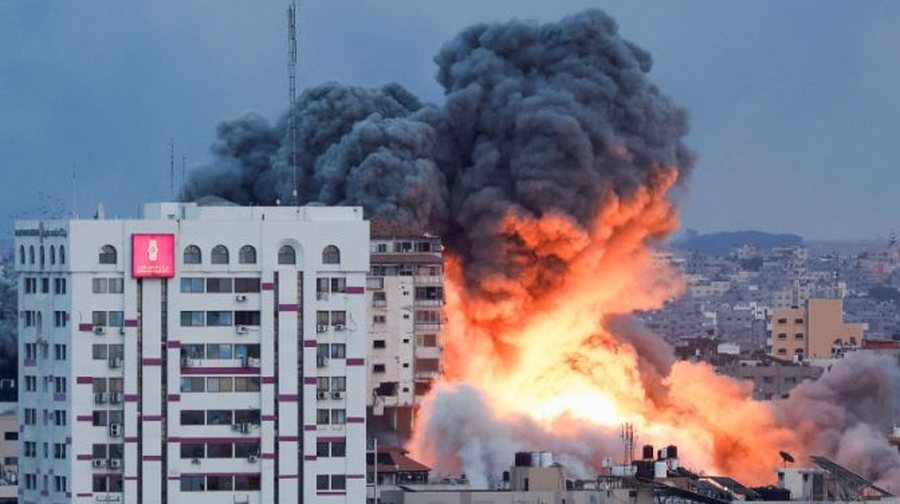
There are two key questions immediately following Hamas' surprise attack on Israel: what was the attack intended to achieve, and why now?
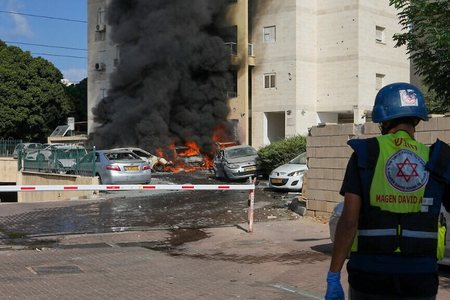
Although Israeli Prime Minister Benjamin Netanyahu announced that Israel was at war with Hamas and other Gaza factions, it is important to understand what Hamas' military goals did not include.
Hamas fights its periodic conflicts for political reasons, for support in Gaza and elsewhere, and to ensure its continued relevance.
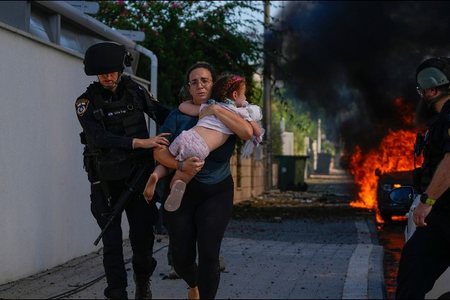
Hamas's military leadership is aware of its capabilities. Gaining and holding ground in Israel is far beyond one's means. The kidnapping and killing of Israeli civilians is an operation designed to terrorize and have the widest possible international audience.
Washington's attempts first by Donald Trump (with the Abraham Peace Agreement) and more recently by Joe Biden to subcontract large parts of the Middle East process to side deals with the Gulf kingdoms were always unpredictable.
While the US and Saudi Arabia have long understood that any progress in normalization depended on moving towards a two-state solution, the two obstacles were always seen as a far-right Israeli government that many saw as incapable of compromise and a move of Hamas in Gaza.
Even earlier this year, the complicated and often fractious relationship between Saudi Arabia and Hamas appeared to be warming, with a Hamas delegation visiting Riyadh for the first time in seven years. This came against the backdrop of Riyadh's own orientation towards China and better relations with Syria's Bashar al-Assad, which was seen as an opening to Hamas.
The reality is that while Hamas has framed the attack as a response to Israeli incursions around the al-Aqsa mosque in Jerusalem, it chose to instigate this conflict – at this time and in the way it did – as a way to impose itself on that broader diplomacy.
One of the oldest conflicts in Middle East reporting and analysis is the perceived gap between the attitudes of elites in governing circles in Arab states and the views of the wider population in the countries of the region.
It's a divide that Israeli-Palestinian conflicts have exposed in the past and that has forced Arab countries — even those that have kept their disillusionment with Abbas's Palestinian leadership somewhat hidden — to walk a tightrope of public statements and actions. Indeed, the language of Hamas military commander Mohammed Deif in announcing the attack was instructive. "Today the people are reclaiming their revolution," Deif said in a recorded message, as he called on Palestinians from East Jerusalem to northern Israel to join the fight, suggesting Hamas sees the attack as an attempt to regain control. on the Palestinian narrative.
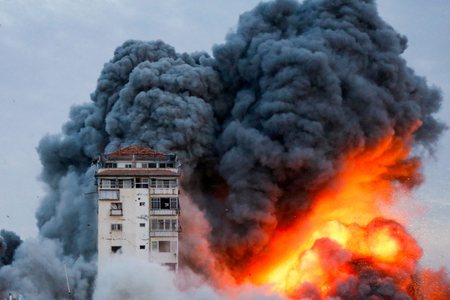
And while the call for Al-Aqsa is a popular one, underscored by rising tensions around the area, the gravity of the Hamas attack seems deliberately designed to trigger a very significant Israeli attack against Gaza, with all the inevitable civilian casualties that would result. would include./The Guardian




Lini një Përgjigje