


 Shkruar nga Pamfleti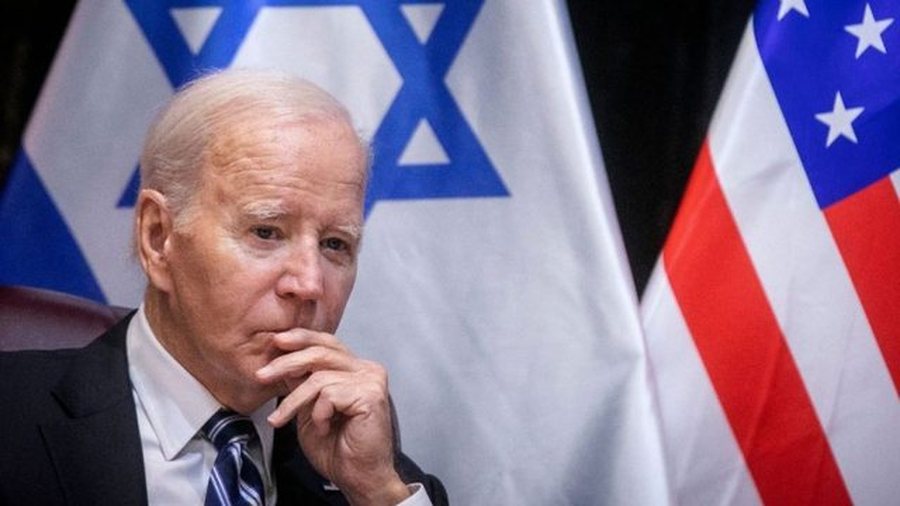
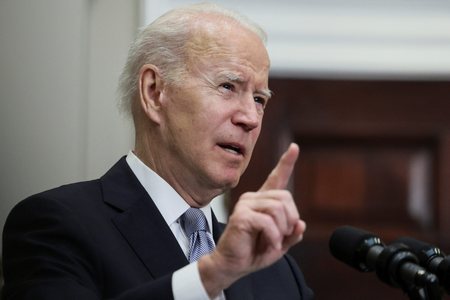
Pressure is mounting on US President Joe Biden to attack Iran directly after three US soldiers were killed and dozens wounded in a drone attack on a US military post in northeastern Jordan.
While striking Iranian targets is an option, analysts said the US is more likely to strike one or more groups based in Iraq and Syria that are backed by Iran. However, they acknowledged that it is becoming increasingly difficult for Washington to avoid a direct confrontation with Tehran. Biden has been reluctant to strike directly at Iran, fearing it could plunge the Middle East into a larger conflict. The region is already grappling with war in Gaza and Yemen and attacks by Houthi rebels on merchant ships in the Red Sea, as well as counterattacks by US and British forces against Yemeni rebels.
But the deaths of US soldiers and dozens injured in a drone attack on a Jordanian military post known as Tower 22 near the Syrian border could force the US to mount a stronger-than-usual response. The Islamic Resistance in Iraq, an umbrella organization made up of Iranian-backed militias, claimed responsibility for the attack in Jordan. In a statement issued on January 28, Biden explicitly blamed “radical militant groups supported by Iran operating in Syria and Iraq," but did not say that Tehran had ordered the attack.
Meanwhile, on January 30, the American president said that he has decided how to respond to the attack on soldiers in Jordan, but did not reveal more details.
US Defense Secretary Lloyd Austin made a similar statement, saying militias were responsible for the attacks, repeating Biden's pledge that the US "will respond at a time and place of our choosing".
What might the American response look like?
A number of voices in the US Congress – most Republicans – are calling on the US administration to strike directly at Iran.
“Hit Iran now. Strike hard," urged Sen. Lindsay Graham, Republican of South Carolina.
Arkansas Republican Senator Tom Cotton, a vocal critic of the Biden administration's Iran policies, insisted that the deaths of three American soldiers justified "devastating military retaliation against Iran's terrorist forces, both in Iran and across the Middle East." Medium".
However, analysts said targeting the Islamic Revolutionary Guard Corps, separately on Iranian soil, would be seen by Tehran as a major escalation.
"The idea of targeting Guard positions inside Iran would only seem rational if the US wanted a full-scale war with Iran, a scenario that currently does not seem to exist," Hamidreza Azizi told RFE/RL. , researcher at the German Institute for Security Affairs in Berlin.
Instead, the US is more likely to crack down on militias in Iraq and Syria, which are backed by Iran, in a way that would please worried voices in the US.
"Consequently, the US may decide to target senior Iraqi militia leaders," Azizi said. "I remain skeptical that such a measure will serve as an effective deterrent, but US officials may consider the risk of this approach to be more acceptable than the risk of a direct strike against Iran," Sanam Vakil, director of the program for the East. Middle and North Africa at the Chatham Institute in London, told REL's Farda Radio that "we have finally reached the point where the US can no longer avoid an escalation of forces in Iraq and Syria, supported by Iran".
She predicted that Washington would likely respond with attacks on those two states rather than striking Iran directly. However, she warned that it is becoming increasingly difficult for the US government to avoid a direct conflict with Tehran.
"If further attacks on US forces and international shipping do not stop, it will become increasingly difficult for the Biden administration to resist pressure to take the war to Iran," Vakil said.
Ali Fathollah-Nejad, director at the Berlin-based Center for the Middle East and World Order, told REL that Washington and Tehran "have a similar level of antipathy" to launching a direct war.
He added that the US is more likely to strike Islamic Revolutionary Guard Corps targets in the region than inside Iran. Iranian officials have sought to distance Tehran from the drone strike in Jordan, but have not condemned the attack.
Iran's Foreign Ministry spokesman Nasser Kanani insisted on January 29 that "the resistance groups... do not take orders from Iran."
Separately, Intelligence Minister Esmail Khatib maintained that Iranian-backed militias operate "at their discretion" against "American aggressors."
Fathollah-Nejad said that while Iran's collaborators "can indeed enjoy a level of independence", the Islamic Republic would not risk them having full autonomy in the "dangerous" context of the war in Gaza "to avoid getting into any direct confrontation” with the US and Israel.
Turmoil in the region
For months, many have expressed fears that there could be a regional conflict after war broke out in October between Israel and Hamas, the Palestinian group designated a terrorist organization by the US and the European Union. Israel launched an offensive in Gaza from which has killed thousands of people in the Palestinian enclave since Hamas led an October 7 attack in southern Israel that killed nearly 1,200 people, most of them civilians.
Members of the so-called "Axis of Resistance" – Iran's network of regional allies and collaborators – have joined the fray in support of the Palestinians.
Hezbollah in Lebanon is sporadically firing rockets into northern Israel, while Iranian-backed militias have targeted US troops in Syria and Iraq more than 150 times. No American soldiers had been killed in these attacks until the January 28 drone strike in Jordan.
The US has responded to the attacks and even killed a leader of an Iranian-backed militia in Iraq in precision strikes earlier this month. For months, Yemen's Houthi rebels have tried to intercept merchant ships. in the Red Sea, targeting ships that, according to the rebels, have ties to Israel or sail towards Israeli ports. Since then, they have expanded their targets, also attacking US and British ships, in response to US and British airstrikes on Houthi targets in Yemen.
The drone attack on US forces in Jordan and the Houthis' continued attacks on commercial ships, including tankers, sent oil prices soaring on January 29, according to Reuters.
Democratic Congresswoman Barbara Lee said on January 28 that "violence [in the Middle East] is spiraling out of control," insisting that a ceasefire in Gaza is needed to reduce tensions.
Vakil agreed that reaching a ceasefire "is more urgent than ever in order to prevent a wider regional escalation", but warned that a halt to hostilities in Gaza would not necessarily stop attacks by groups it supports. Iran./REL



Lini një Përgjigje