


 Shkruar nga Pamfleti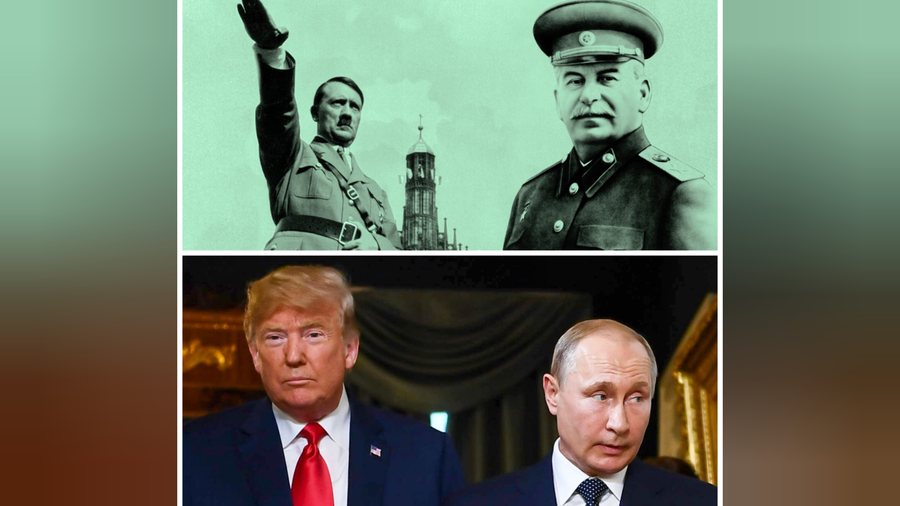
The idea that large nations can exercise joint control over smaller countries is an illusion that always ends badly...
The two greatest of each era sometimes agree to not fight and divide the world between them. Their alliance can last for a while. But often, they end up fighting each other, and causing a lot of damage to those they tried to dominate.
Let's count the examples. In the late 15th century, Spain and Portugal thought it would be a good idea to divide the New World between them through the Treaty of Tordesillas. But it was not accepted by any other European power, so the benefits for the signatories quickly disappeared.
Perhaps the best-known case is the Hitler-Stalin non-aggression pact of 1939-1941. But a similar pattern emerged after Napoleon met with Russian Tsar Alexander I at Tilsit in 1807.
Hitler and Stalin
After Stalin signaled that he wanted to reach a pact with Hitler, German Foreign Minister Joachim von Ribbentrop and Soviet Foreign Minister V.M. Molotov signed a Non-Aggression Pact in August 1939, with secret clauses that divided Central and Eastern Europe between Berlin and Moscow.
In September of that year, Hitler invaded Poland, while Soviet troops attacked and occupied the east. Thus began World War II. The two Great Powers did not agree on the details of the division, but Stalin continued to deliver materials needed for the German war machine.
Disappointed by Great Britain's failure to surrender after a months-long aerial bombing campaign, and fearful of launching a seaborne invasion that could be catastrophic, Hitler shifted his forces eastward and invaded the Soviet Union on June 22, 1941.
Thus began a 4-year massacre that ultimately destroyed the Third Reich and claimed the lives of 25-42 million Soviets (historians debate this figure).
Napoleon and Alexander
The experience of the French and Russian emperors was not much better. After the French troops defeated the Russians at Friedland on June 14, 1807, the Russian Tsar Alexander I decided to enter into an alliance with France. The two emperors signed the Peace of Tilsit on July 7.
They pledged not to fight each other, and secretly agreed to pressure Portugal, Denmark, and Sweden to isolate England. Napoleon gave Prussia, Alexander's ally, a minor role, even though Tilsit was in East Prussia (now Kaliningrad, Russia).
Despite French and Russian demands, the other smaller powers resisted pressure and refused to join the naval blockade of England. Disappointed, Napoleon turned his army east and attacked Russia again, reaching Moscow in September 1812.
Then, fearing winter, Napoleon began the long and disastrous march back to France in October, losing most of his troops to cold and disease along the way. In 1814, Russian forces arrived in Paris as part of a grand coalition that led to Napoleon's exile on Elba.
Russia then joined the other major European powers in Vienna to redraw the map of Europe. After returning from Elba to Paris, Napoleon again mobilized his army but suffered a final defeat at Waterloo in June 1815.
This time he was exiled much further afield, to the Pacific island of St Helena, while the Congress of Vienna changed Europe on a completely un-Napoleonic scale. In retrospect, the Treaty of Tils brought great losses and few gains for either side.
Trump and Putin
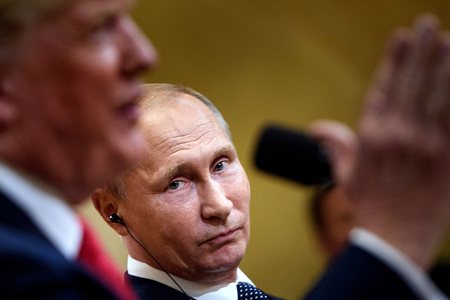
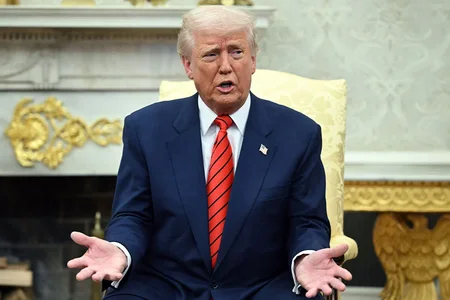
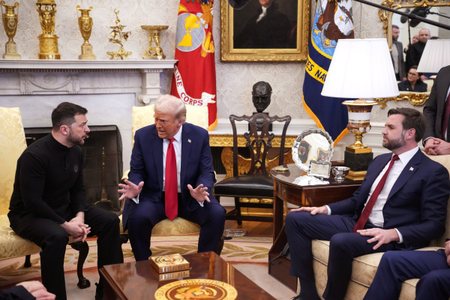
In his second presidency, Donald Trump seems to want a kind of global co-governance with Putin, leaving Ukraine and much of Central and Eastern Europe in a new sphere of Russian influence.
This is essentially what Putin demanded in December 2021 before launching the war 2 months later. Seeing Europe as weak, Trump seems willing to accept Putin's terms, including the loss of territory and perhaps even the disintegration of Ukraine as a nation.
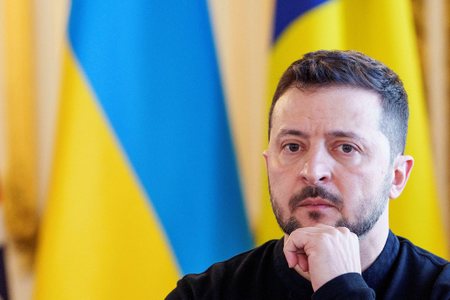
Trump has praised Putin and called Ukrainian President Volodymyr Zelensky a dictator who opposes peace with Russia. Peace on Putin's terms would free Russia from any obligation to compensate Ukraine for the $1 trillion in damage it has caused, documented war crimes, and the high number of dead and wounded in Ukraine.
The American president's respect for Putin is harder to understand than Stalin's for Hitler, because the US and its allies are much stronger than Russia and its partners. But despite the momentum, the Trump-Putin alliance is unlikely to last.
Trump seems enamored with autocrats, but the American public may not tolerate this orientation. Meanwhile, many countries that fall prey to Russian or American dictates will rebel.
Until Putin meets the fate of Napoleon or Hitler, every country bordering Russia — from Estonia to Kyrgyzstan — will resist the Kremlin’s attempt to rebuild empire. And soon, Americans will seek to reestablish ties with those with whom they share their long-held values. / Adapted from “Pamphlet” by the Center for European Policy Analysis
*Note: Walter Clemens, Fellow at the Davis Center for Russian and Eurasian Studies at Harvard University, USA.


Lini një Përgjigje