


 Shkruar nga Paolo Rossetti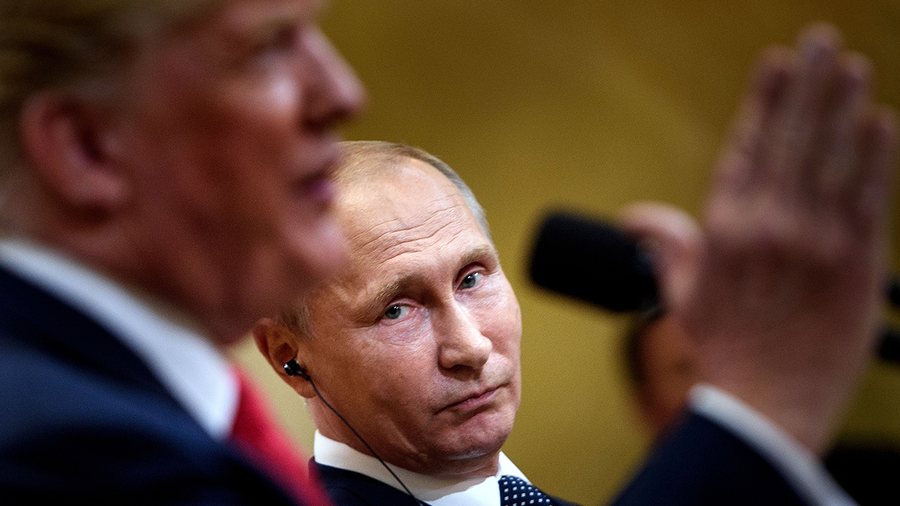
It remains to be seen whether the Russians will accept the ceasefire.
Proposal for a 30-day ceasefire (presented by the Americans, and accepted by the Ukrainians) and guarantees that American intelligence will resume cooperation with Kiev, and that military support will not be cut off.
The meeting in Jeddah, Saudi Arabia, between the American delegation, led by Secretary of State Marco Rubio, and the Ukrainian one led by Andriy Yermak, President Zelensky's chief of staff, has opened the possibility of a possible reduction in tensions in relations between the two countries.
But to end the war in Ukraine, says Maurizio Boni, general of the Italian Army Corps and analyst at the "Analisi Difesa" portal, there are still many aspects that need to be clarified: the concessions that the parties are willing to make, the role of Zelensky but also of the British who have signed agreements with the Kiev government for control of some strategic resources in the post-war period.
It remains to be seen whether the Russians will accept the ceasefire. They have repeatedly said they do not want solutions that go through lengthy negotiations, but a clarification of the new security architecture that guarantees Moscow's interests.
Ukraine accepts the American proposal for a 30-day ceasefire, taking advantage of the resumption of cooperation with the US, which Trump had cut off. This seems like a step forward in the negotiations. But will the Russians accept the ceasefire?
I believe that the Russians will not accept the ceasefire. After 30 days, the immediate and temporary ceasefire can be extended by mutual agreement. But this is the “Trojan Horse” that Moscow will not accept.
Because it would mean freezing the conflict, and would lead to the sending of Western troops to Ukraine at the request of the Kiev government. At that point, everything would be ready to escalate. This is a scenario that the Russians want to avoid at all costs.
Why can't the Americans impose themselves on Moscow?
I don't think they understand the importance of this aspect for the Russians. Putin, Lavrov and Peskov have repeatedly said that a ceasefire makes no sense to them, as they intend to discuss the root causes of the war, the reasons that caused it. And they want a security architecture that guarantees Russia's interests first and foremost. Why should the Russians accept a ceasefire at this point? They are retaking Kursk, meter by meter.
US and Ukraine say talks in Jeddah went well. What is the real issue on the table, the priority?
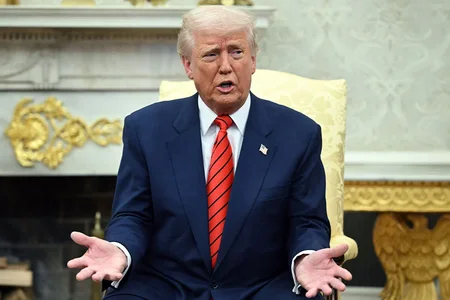
I think it's concessions that are being asked of both sides. Trump's team has always said that in order to achieve peace, both sides have to give up something. And on the eve of the talks, he made some very controversial statements, in which on the one hand he was conciliatory, while on the other hand he threatened Russia with sanctions until a peace agreement is reached.
Rubio and Trump's special envoy for Ukraine and Russia, Keith Kellogg, have repeatedly stressed that concessions that the parties are willing to make should be put on the negotiating table. Are they talking about territorial concessions?
In Jeddah, the focus was on the concessions that Ukraine is ready to make, which the Americans expect to match with those of the Russian side. But they cannot be only about territories. Even from this point of view, they would not even be concessions, because the Russians will simply retain what they have conquered militarily. Moreover, in territories that are predominantly Russian-speaking. But I believe that there is no fundamental development yet. Both the Americans and the Russians are trying to understand what role Zelensky should have.
Will the future of the Ukrainian president also depend on the concessions he makes?
For Britain, Zelensky's successor is Zaluzhny, the former head of the army, now Ukraine's ambassador to London. The British are playing a very important role in this context, but not necessarily in favor of Trump's plan. On the other hand, the United States trusts Poroshenko and Yulia Tymoshenko.
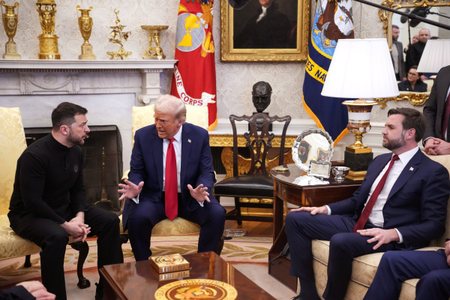
Americans are debating whether Zelensky should survive politically, or whether it is better to force him to call elections as soon as possible. According to some sources, there is strong pressure for him to step down, so that negotiations can continue with other actors.
Was the recent Ukrainian drone attack on Moscow aimed at convincing the Russians of the need for an air ceasefire, as is being proposed by Kiev?
Most of the drones were neutralized. At this stage, such attacks do not make much sense, because they irritate the Kremlin. But drones are the only weapons that the Ukrainians have for now to strike Russian territory.
Beyond the hype surrounding the meeting in Jeddah, have we entered the depths of the negotiations?
We are only at the beginning of them. Zelensky is begging the US not to abandon Ukraine, and is placing great hopes on Europe, which has shown unconditional support for Ukraine, regardless of the cost. The issue lies in what Zelensky has promised Trump to ensure his political survival, and above all in the expectations of the US.
Meanwhile, Europe is out of all the current talks. The Ukrainian president is appearing more conciliatory towards the US administration, having realized that otherwise his exit from the scene would be a matter of days. The New York Post reported on February 22 that, according to sources close to Trump, Zelensky had been advised to flee to France. According to a Politico report, the US was negotiating with the Ukrainian opposition on a plan to remove Zelensky from power.
Kremlin spokesman Peskov said these are not peace talks yet. Are we just in the preliminary stage?
Of course it is. There is still a long way to go from the ceasefire to the post-war period. At the moment, there is a discussion about concessions, the role of Zelensky, but also mineral resources. But here the role of the British must also be taken into account.
What is their relationship?
The British have taken over management of the country's key resources, with an agreement covering revenues from ports, energy infrastructure and nuclear power plants.
Could there be a clash between the US and the UK?
Yes, because the 'lion's share' of the post-war period will be taken by large companies linked to the Americans and the British. Then come France and Germany, which were already present before the start of the conflict./ Adapted from "Pamphlet" by "Il Sussidiario"


Lini një Përgjigje