


 Shkruar nga Pamfleti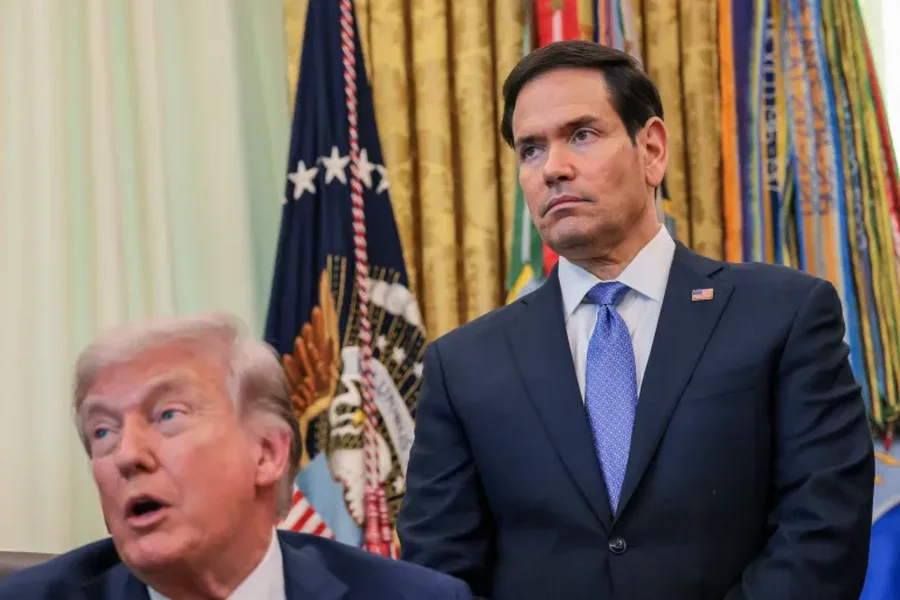
US Secretary of State suggests alliance meeting in July will be tense as US seeks help over Strait of Hormuz
Donald Trump is disappointed that NATO allies have refused to get more actively involved in attacks against Iran, US Secretary of State Marco Rubio said, warning that the issue could make the alliance's summit in July a difficult one.
Rubio, during a meeting with NATO foreign ministers, stressed that he expects the rift to be discussed at the July summit in Ankara, describing it as "one of the most important summits" in NATO's 77-year history.
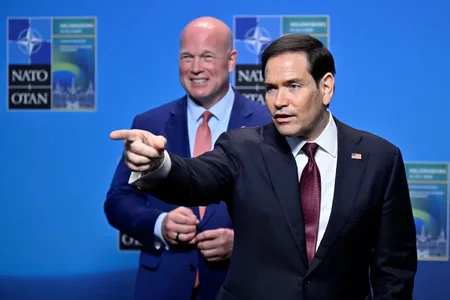
"The president's attitudes, frankly, the disappointment, towards some of our NATO allies and their reaction to our operations in the Middle East are well documented," Rubio said as he arrived at the start of the meeting in Helsingborg.
"This issue will have to be addressed. It will not be resolved or discussed today. It is something that needs to be discussed at the leadership level," he added, as the US made fresh demands for help in reopening the Strait of Hormuz if peace talks with Iran do not progress.
After the meeting, Rubio stated that he had discussed with counterparts from NATO countries the possibility of them providing military assistance.
“We have to have a plan B if someone is shooting; then how are we going to reopen the straits?” Rubio said, adding “I don’t know if that would necessarily be a NATO mission, but certainly there would be NATO countries that could contribute.”
Britain and France have offered to lead a multinational air and naval force to ensure the safety of merchant ships in the Strait of Hormuz, once the US and Iran reach a peace deal or a lasting ceasefire.
The number of US troops in Europe is also expected to be reduced by 80,000 soldiers, following a review linked to the US's broader global commitments, Rubio said, although the exact scale of the reduction remains unclear due to conflicting statements from the White House.
"I think it's understandable within the alliance that the U.S. military presence in Europe will adjust," Rubio said after the foreign ministers' meeting, adding that the U.S. has been in communication with European allies on the issue.
"I'm not saying they'll be happy, but they're certainly aware. We have obligations in the Indo-Pacific, the Middle East and the Western Hemisphere," he added.
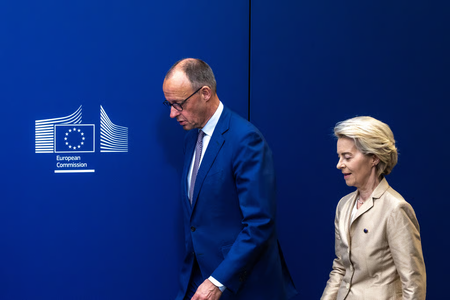
Earlier this month, the US announced it would withdraw 5,000 troops from Germany after Trump reacted sharply to comments by Chancellor Friedrich Merz, who had stated that Iran was humiliating the US in peace talks.
Last week, the Pentagon also announced the suspension of the rotation of another 4,000 troops to Poland, but Trump appeared to reverse that decision on Thursday night via social media, in a hasty announcement that reportedly caught the Pentagon by surprise.
Trump wrote: "Based on the successful election of Poland's new president, Karol Nawrocki, whom I was proud to support, and our relationship with him, I am pleased to announce that the United States will send 5,000 additional troops to Poland."
Other NATO allies acknowledged that unpredictable policy shifts from the White House were making it difficult for them to follow the situation. Sweden's Foreign Minister, Maria Malmer Stenergard, said the situation was "really confusing and not always easy to understand."
The US Secretary of State stated after the meeting that, although he has been "a long-time supporter of NATO", one of his arguments was that US bases in the region have given the US military "logistical options that we would not otherwise have".
"When during a conflict some of these bases are not made available to you, then you start to question whether this value continues to exist," Rubio said, adding that this issue will be discussed in Ankara.
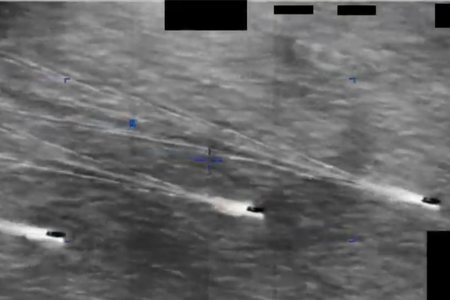
No other NATO member country joined the 38-day attack on Iran, and so far none has shown itself willing to take action to reopen the Strait of Hormuz, although some states have offered limited support.
Spain refused to allow the use of US bases on its territory or airspace for attacks against Iran, while France only allowed the use of tanker aircraft and other support aircraft from the Istres air base in the south of the country.
The UK allowed the US air force to bomb Iranian missile launchers and other military targets blocking passage through the strait, using the Fairford base in Gloucestershire. This was the highest level of support a European country has offered for the US bombing.
Earlier this year, Trump also sought Greenland from Denmark, another NATO member, but later dropped the proposal after international pressure and an agreement to establish an air patrol mission in the Arctic to deter Russian military activity.


Lini një Përgjigje