


 Shkruar nga Pamfleti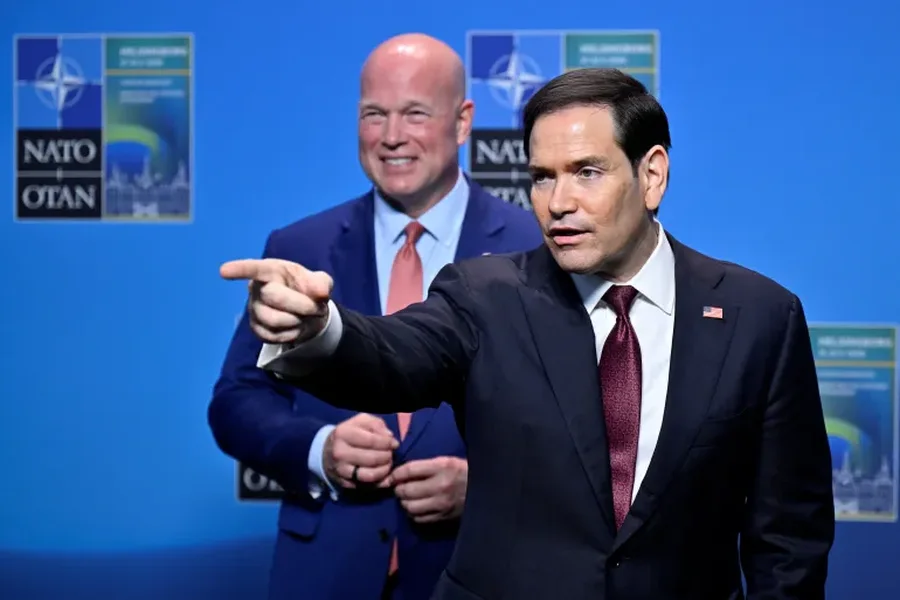
Arab media reports on a draft agreement that envisages a ceasefire and the opening of the Strait of Hormuz, while Marco Rubio says that Washington is also preparing for alternative scenarios.
The United States and Iran may be close to a diplomatic agreement of great importance for the Middle East, while in parallel Washington is also considering alternative scenarios in the event of failure of negotiations on the Strait of Hormuz.
According to Al Arabiya media reports, a final draft of the agreement has been brokered by Pakistan and could be announced within the next few hours. Saudi media sources say the document provides for an immediate ceasefire between the parties, guarantees of freedom of navigation in the Strait of Hormuz, and the gradual lifting of US sanctions on Iran.
Emirati media reports that the agreement could come into effect immediately after official announcement by both parties.
At the same time, US Secretary of State Marco Rubio stated today that the US and NATO allies are discussing the possibility of a "Plan B" in case Iran refuses to reopen the Strait of Hormuz.
Speaking to reporters in Helsingborg, Sweden, Rubio said there is concern about a scenario where military tensions could hinder navigation in this strategic energy corridor.
"We need to have a Plan B if someone is shooting at the Strait of Hormuz," Rubio declared.
He added that the ideal scenario remains the reopening of the strait by Iran, but warned that Western countries, including the US, may be forced to react if this does not happen.
"At some point, ideally, they open the strait. But we also have to think about what happens if Iran refuses," Rubio said, without specifying whether NATO would have a direct role.
The US secretary also commented on the negotiations with Iran, acknowledging that the talks remain difficult.
"There has been some progress, we are not yet where we need to be. We hope that this will change, but it may not happen," he said.
The Strait of Hormuz is considered one of the most important strategic points in the world for global oil transportation, so any diplomatic or military development in this area is closely followed by international markets and Western powers.



Lini një Përgjigje