


 Shkruar nga Pamfleti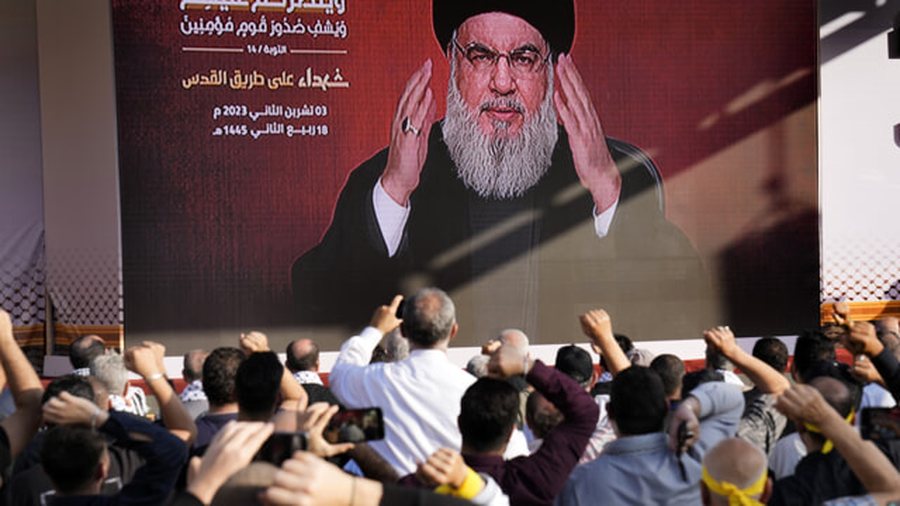
As a strong reaction is expected from a feared Iran after the assassination of Hamas political leader Ismail Haniyeh in Tehran, the Lebanese Shiite movement Hezbollah appears to want to ignite a full-scale conflict before its sponsoring state does.
At least that's what Israel believes, which thinks it will be Hezbollah that will be the first to retaliate in the coming days, not Iran.
According to US intelligence sources, Tehran is apparently reconsidering the large-scale attack announced after the assassination of the political leader of Hamas.
The Lebanese Shiite movement appears increasingly determined to act "independently" to avenge the killing of Hezbollah military commander Fouad Shukr in Lebanon, taking advantage of the Land of Cedars' proximity to Israel, with which bounded in the north.
It is unclear whether and how Iran and Hezbollah are coordinating a possible joint attack. According to CNN's sources, there is a feeling among some officials that Tehran and the Party of God may not be entirely on the same page about how to proceed to attack Israel.
According to Tel Aviv estimates, Hezbollah's response to the assassination of military leader Fuad Shukr in Beirut will be robust, but will focus on military targets in the north of the Jewish state, perhaps with more force in the Haifa area, where the army has a series of strategic bases and structures.
The attack could last from a few hours to a day, depending on the results in terms of Israeli loss of life.
If Hezbollah's attacks cause too many Israeli deaths, the Jewish state's security chiefs anticipate an immediate airstrike in Lebanon, both against the Shiite militia and against strategic assets, including damaging important civilian sites also used from Hezbollah.
Security officials estimate that the IDF will warn residents within a reasonable period of time, between minutes and hours, to prepare for an attack and stay near or inside protected spaces.
But there are those in the Netanyahu government who are pushing for a pre-emptive strike. Israel's Minister of National Security, the ultranationalist Itamar Ben Gvir, made a call on X to Prime Minister Benjamin Netanyahu to remind him that the head of the government during the Six Day War, Levi Eskhol, "did not wait" to launch pre-emptive strikes against potential rival offensives.
The controversial Minister of National Security has repeatedly called for the intensification of attacks in the Gaza Strip and to counter the Lebanese Shiite militia Hezbollah as soon as possible.
By mentioning Eskhol, Ben Gvir alludes directly to the Six Day War, a conflict that broke out in 1967 that pitted Israel against Egypt, Syria, Jordan and Iraq. The war broke out when the Israeli army launched a pre-emptive strike against Egyptian positions, fearing an imminent Arab offensive. Last week, Israel killed a senior Hezbollah official in an attack south of Beirut, the Lebanese capital.
In addition, several countries and Islamic groups in the region, supported by Iran, also accuse Israel of killing the political leader of the Islamic Resistance Movement (Hamas), Ismail Haniyeh, in the attack on Tehran.
Since then, both Hezbollah and Iran have warned Israel that they will launch attacks in response to what happened, meaning that the Israeli authorities and population have been waiting for a possible attack for several days. This is why Ben Gvir advocates acting like Eskhol and launching a pre-emptive strike against his current enemies.








Lini një Përgjigje