


 Shkruar nga Pamfleti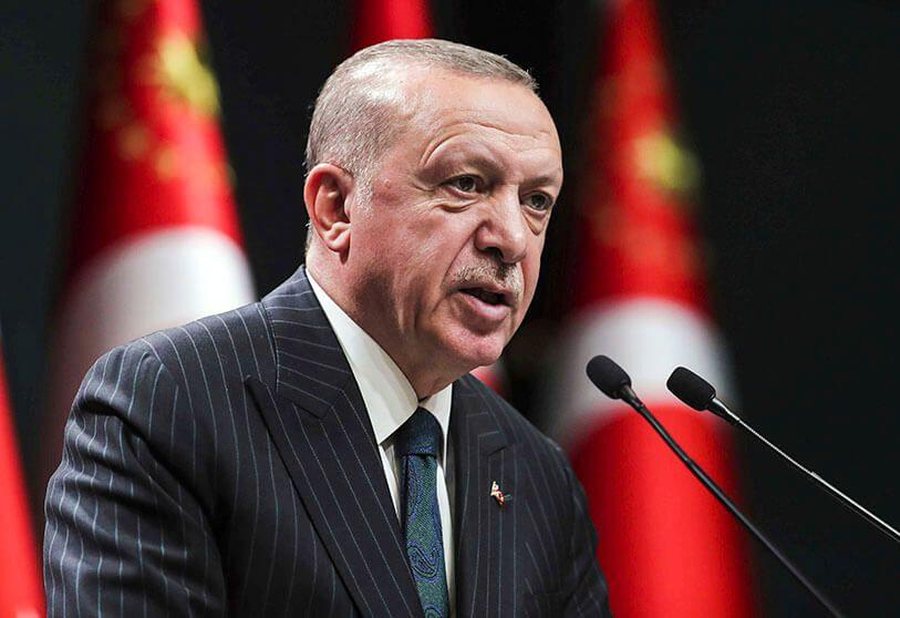
Erdogan cannot completely close the door to the West...
We are all trying to guess what foreign policy Turkish President Recep Tayyip Erdogan will follow after his re-election to office, towards the West and of course towards Greece. To answer this question, we need to know if and how much Erdogan depends on the US and Europe to deal with the huge economic crisis his country is facing.
Some seasoned analysts believe he will do everything in his power to avoid involving the West in a possible "financial rescue" operation for the Turkish economy because he came to power after Turkey approved a watchdog program from the Monetary Fund. International and he is well aware of the political consequences.
They also emphasize the fact that Turkey does not expect more from its relationship with the European Union, in contrast to the 2000s when expectations were very high. But another factor has entered the equation. Erdogan believes that he has found strategic partners, financiers and interlocutors outside the Western camp.
Qatar is offering him money, Russia is paying him handsomely to bypass Western sanctions, while Saudi Arabia looks set to offer him an extraordinary $50 billion aid package.
These relationships bring an important advantage to Erdogan. Moreover, they do not depend in any way on the violation of human rights in Turkey, whether the rule of law prevails, etc. They don't care about these things at all. Because they have a very cynical and transactional relationship with Turkey and Erdogan.
These relationships are not mediated by a Congress or human rights organizations. And of course, none of Turkey's partners examines these relations through the prism of Greek-Turkish relations. They do not worry about this issue. However, Erdogan cannot completely close the door to the West.
It does not benefit them and it will not do so. Ideally, he would like to secure funds from non-Western sources to overcome the financial crisis, to proceed with the purchase of F-16 aircraft from the United States because Turkey's air force is in dire need, to be the main conduit of circumventing sanctions against Moscow.
But at the same time it also plays the role of an important NATO member state. The US and Europe will continue to make the same mistake. For fear of "losing Turkey", they will justify different behavior, even when the interests of the Western Alliance are directly threatened.
Whatever anger there may be behind the scenes about Turkey's veto against Sweden's membership in NATO or the circumvention of sanctions, in the end the "let's take it easy with Erdogan" view prevails.
This is certainly true in Berlin, sometimes in Brussels, and certainly in the National Security Council and the State Department in Washington. The current de-escalation of tensions with Greece seems to be continuing, and it is very positive that a very experienced and prudent diplomat has been placed at the head of the Foreign Ministry, because the temptation of an unnecessary escalation is always there.
But let's be realistic. Erdogan looks in the mirror and sees himself as a powerful leader of a new power, without the need to obey Washington or Europe. Bargaining with the West, as well as Greek-Turkish relations, will continue to have many ups and downs, sometimes even with crises. /Taken and adapted from "Kathimerini"


Lini një Përgjigje