


 Shkruar nga Lirio Abbate
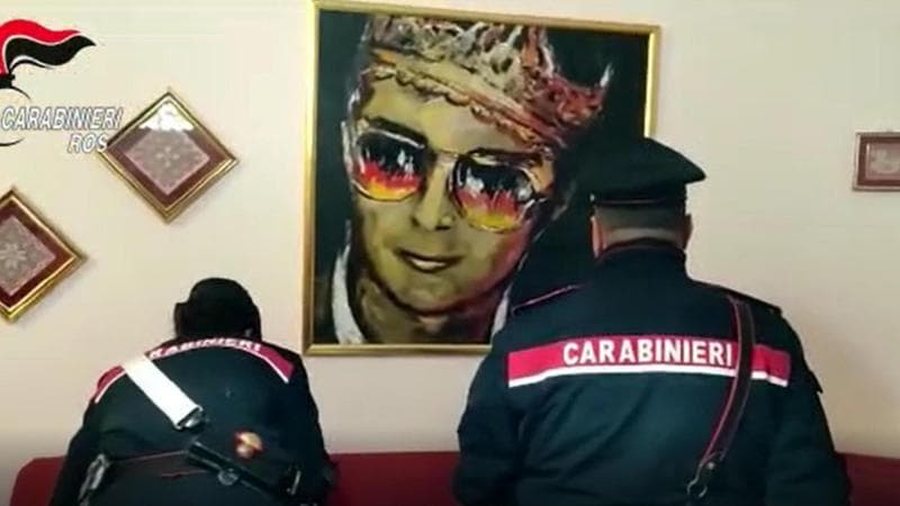
The hidden wealth stretches from Italy to London and the US. From wind energy to supermarkets and art trafficking, the investigations reveal an economic network that blends with the legitimate economy and makes mafia capital almost invisible. A system built to never be found in a single place.
Matteo Messina Denaro's treasure map does not lead to secret bunkers, nor to safes filled with money or to warehouses guarded by "men of honor". Its traces are spread deliberately and widely: Verona and London, Belfast and Dublin, Tuscany, Cyprus and Malta, to third-party companies, investments in renewable energy, trade in cultural goods, supermarkets, archaeological finds and capital distributed within the legal economy.
This is the geography that emerges from the investigations and from the testimonies of the collaborators of justice, who are trying to reconstruct the economic system of "ù Siccu", who died on September 25, 2023, after 33 years on the run.
The Palermo prosecutor's office, led by Maurizio de Lucia, is pursuing hidden assets passing through foreign companies, front persons and capital protected by complex financial structures.
Even after his death, Messina Denaro remains a figure who continues to generate debate. In addition to his role alongside Salvatore Riina during the period of the massacres that struck Giovanni Falcone and Paolo Borsellino, he is also remembered for transforming the Cosa Nostra of Trapani from a violent organization into a genuine economic power, capable of penetrating legal sectors.
One of the key areas of this transformation was the wind energy business. Investigators have identified entrepreneur Vito Nicastri as a key figure in this system, through a network of companies, wind turbines and investments supported by public funds that circulated in a complex manner.
This mechanism turned renewable energy into one of the main channels for the circulation of mafia capital. Nicastri, who died in July 2024, was accused of external collaboration with the mafia, but was later acquitted of the charges on appeal in December 2023, while the seizure measures of his assets were lifted.
He has always denied the charges. However, investigators point out that the pursuit of wind farm money goes beyond Sicily and passes through Tuscany and Veneto, extending as far as Ireland, Belfast and London.
In this context, the presence of photos of Messina Denaro in Verona, in front of the Arena, taken on May 20, 2006, just a few weeks after the arrest of Bernardo Provenzano, also takes on a different meaning. Those images show a calm, almost defiant man, while the search for him continued with great intensity.
U Siccu kept these photos in his diaries, intended for his daughter Lorenza. Verona is not only a place of passage on the run, but for some associates also an important node on the economic map of the network.
However, mafia capital does not circulate only through the energy sector. Another part of the system is related to large-scale food distribution and tourist structures. Giuseppe Grigoli stands out in this field, considered one of the key figures of the network, who built a supermarket empire in Sicily, later seized by the state.
These structures served not only as profitable businesses, but also as vehicles for laundering money and converting it into legitimate capital. At the same time, they created a form of social control through employment, favors, and economic dependencies, in some cases even replacing state functions.
Another important chapter is related to art and archaeology. In this context, an art expert living outside Italy appears, who, according to investigative reconstructions, becomes the center of an international trafficking network of archaeological objects and works of art, from Selinunte to Switzerland, the United States and England.
Investigations also link this network to a failed plan to steal the “Dancing Satyr” of Mazara del Vallo. In this system, an archaeological discovery can have the same value as a foreign bank account, an invisible asset, easily movable and difficult to trace.
This economic structure also includes the Guttadauri, a family from Bagheria that, according to investigators, represents the sophisticated economic wing of Cosa Nostra. A secret bourgeoisie made up of doctors, lawyers and magistrates, integrated into professional and institutional life.
Their connection with Messina Denaro is also familial: one of his sisters was married to Filippo Guttadauro, turning this relationship into a network of stable and inherited interests.
Investigators speak of "economic projections outside Sicily", from Lazio to Tuscany and all the way to northern Italy. In this sense, the mafia no longer appears as a closed clan organization, but as a structure resembling a financial asset company, capable of distributing capital and influence in many sectors simultaneously.
Within this family and economic network, the figure of his niece Lorenza Guttadauro, a lawyer, also appears. In his diaries, ù Siccu wrote that she would be responsible for the funeral and for his last wishes, attributing to her a clear role written in his own hand: “It was I who gave her this authority.”
This dates back to June 1, 2014, when he was still on the run. Then, after his arrest, she became his trusted lawyer and, after his death, left Sicily to work in Rome, in an office at the Ministry of Education.
A mafia boss's fortune rests on a web of family loyalty, where secrets, deals and perhaps even parts of the financial inheritance are passed down from one generation to the next. This story also includes his daughter Lorenza Alagna, born in 1996 from his relationship with Francesca Alagna.
For 27 years she lived away from her father, keeping only her mother's surname. She met him for the first time after his arrest and then decided to officially take the surname Messina Denaro, entering directly into this family and public history.
One more small detail. In his manuscripts, Messina Denaro seems to suggest how he imagined wealth: a penny stuck to the last page of a diary. A simple object, but placed there with purpose.
In the end, one of his most famous phrases summarizes this logic: " If you want to hide a tree, plant it in the forest!"
A precise definition of how he conceived of his treasury: not as wealth hidden in a single place, but as capital dispersed and dissipated within the legal economy, indistinguishable among its network./ Adapted from "Pamphlet", from "La Repubblica"



Lini një Përgjigje