


 Shkruar nga Pamfleti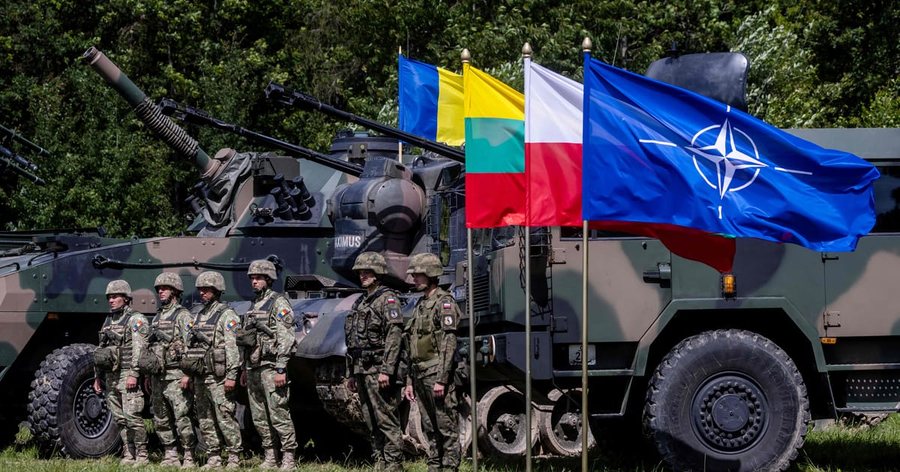
The Western Allies are in a constant state of alert, with 100,000 highly trained soldiers immediately ready for action.
Just a minute from the sound of sirens to the sound of explosions: yesterday morning the residents of Kiev realized very quickly that this time the Russians were firing new-generation missiles to penetrate air defenses. Typically, when Moscow uses drones and older cruise missiles, up to 10 minutes pass between the first alarm and explosions, allowing people to flee to shelters even in the middle of the night. But yesterday was not like that. The explosions caused over a dozen injuries in the central districts of Percherskyi, Solomianskyi, Holosiivskyi and Darnytskyi and damaged several historic buildings.
War at a distance
According to military spokesmen, the Russians launched two 3M22 Zircon hypersonic cruise missiles from bases in Crimea, which were designed in 2022, capable of reaching a speed of 11,000 kilometers per hour and an altitude of 28,000 meters, and have already been used two or three times in past. . The capital's defenses seem to have managed to hit them as they fell, scattering the debris, which caused less serious consequences. The Academy of Decorative Arts and Applied Arts was also destroyed among the buildings.
President Zelensky and Foreign Minister Kuleba reacted by turning to demand the immediate dispatch of Western military aid.
"There is no atrocity that the Russian bastards would not be ready to commit, including the use of ballistic missiles in the heart of a metropolis of several million people. We especially need Patriot missiles capable of defeating enemy attacks," said Kuleba.
The distant war between Russia and Ukraine has been increasing in intensity for several weeks. Kiev has been attacked at least three times in the last five days. Odessa and Mykolaiv are constantly targeted. In the last week alone, the Russians are said to have launched 700 bombs, 190 missiles of various types and 140 drones. Ukraine responds by targeting Russian refineries, as well as Belgorod, Crimea and Rostov in the south.
Alarm condition
The Western Allies are in a constant state of alert, with 100,000 highly trained soldiers immediately ready for action.
NATO is accelerating the implementation of plans developed at summits, first in Madrid in 2022 and then in Vilnius in 2023, to deal with a possible Russian attack. A few days ago, the deputy commander of the Polish armed forces, Karol Dymanowski, publicly stated that "thousands of NATO soldiers are already stationed in Poland".
There are at least 100 thousand, informally confirm Alliance sources, Corriere della Sera writes. They are part of the so-called "Reaction Force", the core of the rapid reaction, which remained inactive for years, but after the invasion of Ukraine became the most important pillar of the strategy now shared by Finland and Sweden. In the span of a few months, we went from 40,000 to 100,000 units. The target of 300,000 men and women in uniform, deployed mainly on the eastern flank of Europe, must be reached in a few months.
The center of operations is now Poland, where the United States has installed an army command with the task of coordinating the movement of ground troops along the corridor from the Baltic to the Black Sea. Yesterday, in Brussels, a meeting was held to monitor the degree of border coverage: it was decided to further strengthen Bulgaria's defense. Great attention, of course, to airspace protection. Watch shifts have been strengthened and the network has no stretch marks.

Planned raids
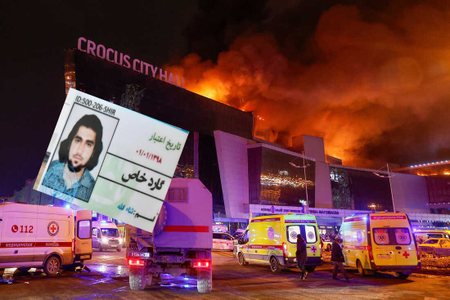
Therefore, the alarm is general, even if there is no anxiety. Of course, on Friday evening the news of the attack in Moscow caused great concern. But now the frenzy and alarmism are useless. Instead, clarity is needed. For example: the mass bombings of Sunday and yesterday should not be interpreted as the first act of the Kremlin's new script. The instigators of the massacre in Moscow are the Ukrainians and therefore we will sink Kiev with the most powerful missiles we have. In reality, our interlocutors point out, the Russians do not have enough ammunition and 30 to 40 days pass between one raid and another. The weekend airstrikes in the capital appeared to be a response to the massacre claimed by ISIS, but they were planned well in advance, after a 4-5 week hiatus.
The US maintains a key role at the military and political-diplomatic level, recommending cautious moves. Once again, Joe Biden wants to avoid direct confrontation. All military movements taking place along NATO's eastern border should not be understood as preparations for a direct intervention on Ukrainian soil. The Biden administration will continue to support the Ukrainian resistance, sending weapons and ammunition, not soldiers. From this point of view, the massacre in the Russian theater has not changed anything.







Lini një Përgjigje