


 Shkruar nga Josep Borrell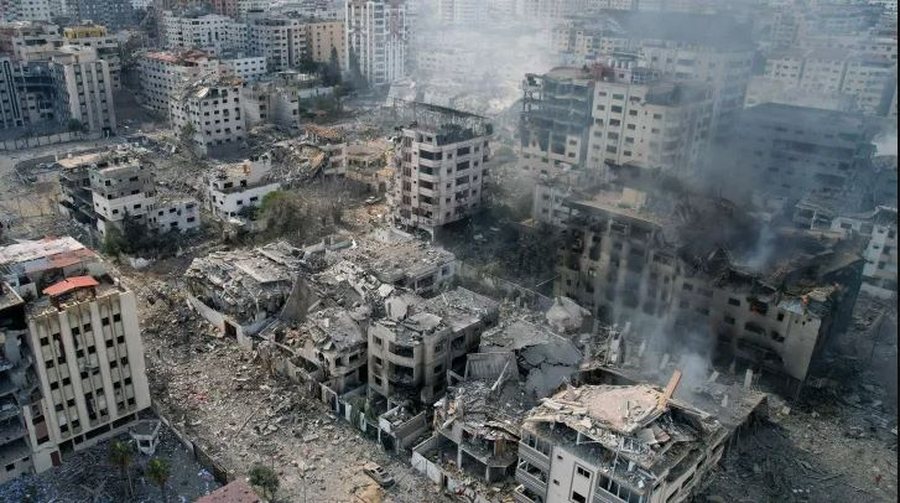
To prevent Gaza from falling into the hands of uncontrolled armed groups that could destabilize the entire region, starting with Israel, the territory must be governed by a state that represents its people.
I have just spent five days in the Middle East. Along with Ukraine, it has become one of the most unstable regions in the world. There will be periods of calm that may give the impression that tensions are easing, but the Israeli-Palestinian conflict remains more widespread than ever and it is here to stay.
Our political myopia, to think that this conflict was manageable by paying lip service to the two-state solution and then letting it fester, must end. Not just for reasons of humanity, justice or morality, but because if we don't fix it now, it could cause displacement of people, including towards Europe, and exacerbate the risk of terrorism and inter-community tensions.
The region is once again haunted by trauma and rage. Israelis are deeply affected by the October 7 massacre, which resulted in over 1,200 people killed and more than 200 hostages. Palestinians face a humanitarian crisis in Gaza, another massacre of more than 13,000 victims, mostly women and children, along with attacks by Israeli settlers in the occupied West Bank and East Jerusalem.
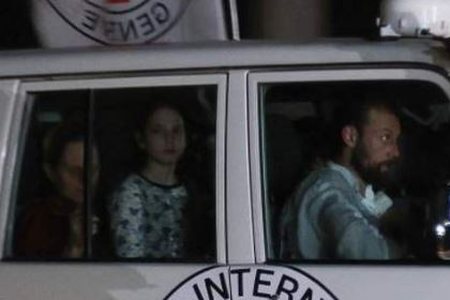
A temporary ceasefire and partial release of hostages took effect on Friday. I hope this will create a positive dynamic that will lead to the release of all hostages and an end to hostilities. The atrocities committed by Hamas and other extremists are harmful to Palestinian interests. The leaders I met in Ramallah acknowledge this.
However, for them the fundamental issue lies in the Israeli occupation. They struggle to explain to constituents why their freedom of movement is restricted while illegal settlements flourish and settlers are free to attack them. They also cannot guarantee security in the occupied West Bank while Israel is withholding the Palestinian tax revenue it collects on behalf of the Palestinian Authority.
One horror does not justify another. However, each side only sees their side of the tragedy, what happened yesterday or what is happening today. But there will be a tomorrow that neither side is yet able to predict. Israelis believe they must eliminate Hamas to ensure their security. The Palestinians prioritize ending the humanitarian catastrophe of Gaza and the provocations of the settlers.
Despite these challenges, we must keep open the possibility for peace. My recent trip to the region has reinforced my belief that the best guarantee for Israel's security is the creation of a Palestinian state. And, in the short term, we must avoid weakening the Palestinian Authority.
Vacuums cannot continue in nature or in politics. If neither Hamas nor Israel governs Gaza, nor should they, the power vacuum will quickly be filled by unchecked forces that could turn Gaza into a failed territory and start another cycle of violence and terrorism. Since Hobbes we know that a society without Leviathan, the state, is doomed to violence and chaos.
We have witnessed similar situations unfold many times before. We have seen flows of refugees fleeing the Syrian conflict in Lebanon, Jordan and Turkey. These countries cannot afford another large influx of Palestinian refugees. In the words of one of my interlocutors last week, we will not survive another Nakba. And Europe and the international community will not and cannot accept another mass forced displacement of Palestinians.
To prevent Gaza from falling into the hands of uncontrolled armed groups that could destabilize the entire region, starting with Israel, the territory must be governed by a state that represents its people. Israel's security requires the creation of a Palestinian state in Gaza and the occupied West Bank, including East Jerusalem.
How and when we achieve this will depend on all of us. One thing is clear: all my interlocutors in the Arab world have accepted the existence of Israel and want to engage with it. They recognize the immense opportunity found in a peaceful neighborhood, cross-border cooperation, and Israel's potential role as a regional economic driver. But everyone agrees that Arab-Israeli cooperation depends on the resolution of the Palestinian issue. There is no way out.
To move forward we must aim for a solution based on justice and equal rights for both peoples. This means, first of all, the need for security throughout the region and in Europe, which faces the immediate consequences of instability. As neighbors, we must join forces with partners in the region and around the world to achieve a stable and lasting political solution for the benefit of Israelis, Palestinians and the region. This is also in our best interest. The EU, along with several Arab countries, launched efforts towards this goal with the Day of Peace Campaign, launched at the UN in September, shortly before the storm began. We are determined to continue working towards this objective./ Adapted "Pamphlet" from "Financial Times"



Lini një Përgjigje