


 Shkruar nga Pamfleti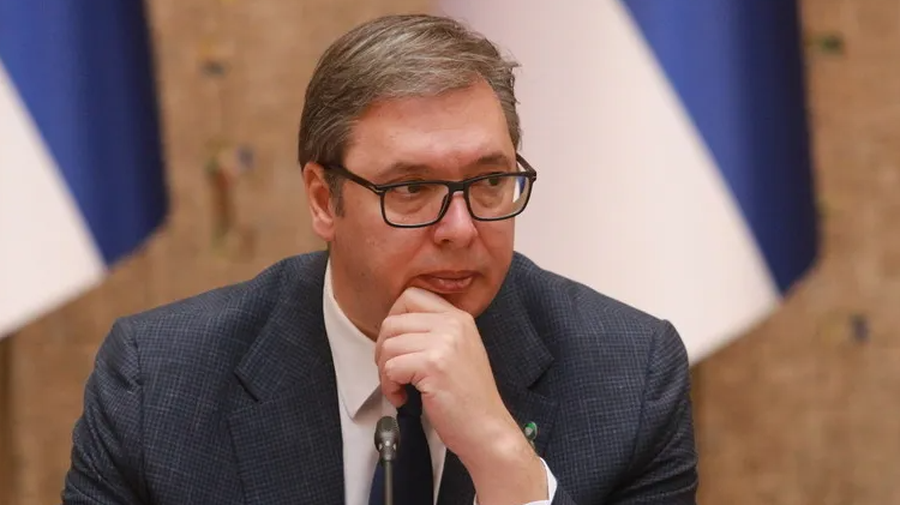
Russia does not want equal partnerships, even with culturally close nations. It wants controlled client states, subservient regimes, that depend on Moscow for survival, not legitimacy. When an ally becomes stable and sovereign enough to choose its own path, Moscow instigates “coups,” unrest, etc., to remind them who holds the keys.
The recent coup attempt in Serbia represents a critical turning point in Balkan politics, exposing Serbia's fragile domestic institutions and delicate balance between the EU and Russia.
While the plot was quickly neutralized, the event raises urgent questions about Russian subversion tactics, the timing amid regional instability, and the striking similarities to the recent coup attempt in Armenia.
Serbia is currently under strong pressure from the EU and the US to take a clear position on Ukraine, normalize relations with Kosovo, and reduce its dependence on Russian energy.
President Aleksandar Vučić also faces growing opposition, especially from nationalist and far-right factions, who accuse him of “betraying Slavic unity.” The coup attempt appeared to be aimed at thwarting reforms and imposing a return to a hardline pro-Russian line.
Meanwhile, the coup attempt coincided with the Belgrade-Pristina talks, mediated by Brussels. Their interruption serves Russian interests, preserving frozen conflicts and blocking the paths to EU integration. Then, socio-economic pressure and elite tensions should not be left aside.
Serbia is currently facing high inflation, energy insecurity, massive public fatigue with government corruption, and fragmentation of the regime's inner circle, which is creating space for foreign intervention.
Russian Traces: Hidden Hand, Familiar Tactics
The Russian secret service has deep roots in Serbia, through Russian-trained military personnel, security services (infiltration of the BIA), the Orthodox Church, and far-right political movements. As with Armenia, the foreign affairs secret service, the GRU, likely provided operational signals, while the internal security service, the FSB, worked to create a political and ideological narrative around the “betrayal of sovereignty.”
The coup plotters are said to have had links to veterans of the Kosovo and Bosnian wars, far-right groups such as Srpska Desnica and Obraz, and Russian-linked training camps in the Balkans. It resembles the Armenian model, where disaffected military and nationalist actors were mobilized to exert “patriotic pressure.”
In the weeks leading up to the attempt, Russian-funded media outlets (RT Balkan, Sputnik Serbia) amplified anti-EU and anti-NATO sentiment. Orthodox clergy near Moscow warned of a “Western spiritual invasion.” Armenia and Serbia see their Orthodox Churches used by the Kremlin as a soft power lever.
The consequences of this effort
First, we may see an internal political reorganization. Vučić is likely to purge pro-Russian figures in the military and secret service, tighten control over far-right factions, and accelerate covert cooperation with Western intelligence.
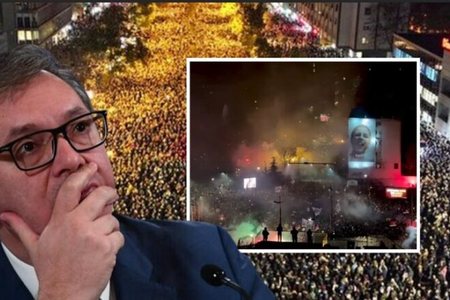
Second, we will see further polarization of the public. A short-term surge in nationalism could hinder the momentum of reforms. In the meantime, there will be the potential for new protests or radicalization, especially in southern Serbia.
Third, there will be a direct impact on Serbian-Russian relations. This will happen in the form of a rapid cooling of them. Serbia has already publicly distanced itself, while Vučić implied “sabotage by foreigners”. Currently, cooperation with Russia in the field of defense is seen as an obstacle, not an asset.
Fourth, we could have a strategic realignment, in the form of closer security cooperation with NATO (unofficially) and US and EU intelligence services. In this context, Serbia could accelerate the diversification of its energy supply, its military reforms, and the de-Russification of key infrastructure.
Fifth, Belgrade is likely to reformulate its neutrality: not pro-Western, but anti-destabilizing, justifying closer ties with Europe as a matter of national survival. The coup attempt in Serbia is not isolated.
It fits a pattern of Russian hybrid coups, aimed at striking at states in transition away from Moscow’s sphere of influence. For now, Vučić’s survival in power may depend on his ability to decisively purge pro-Russian actors, stabilize institutions, and balance East-West pressures with greater transparency.
Russia does not seek equal partnerships, even with culturally close nations. It wants controlled client states, subservient regimes, dependent on Moscow for survival, not legitimacy. It prefers its partners to be internally fragile, dependent on Russian “stabilization,” and vulnerable to Russian intelligence infiltration.
When an ally becomes stable and sovereign enough to choose its own path, Moscow can begin to instigate controlled chaos: a “coup,” riots, cyberattack, or elite defection—to remind them who holds the keys.
By attempting a coup in response to Serbian weapons going to Ukraine, Moscow is sending a frightening message to Hungary not to try to respect NATO too much, to Kazakhstan not to sell drones to Europe, and to Georgia that the situation will escalate if it continues to move West. / Adapted from "Pamphlet" by the "Lansing Institute"


Lini një Përgjigje