


 Shkruar nga Colin P.Clarke & Christopher J.O’Leary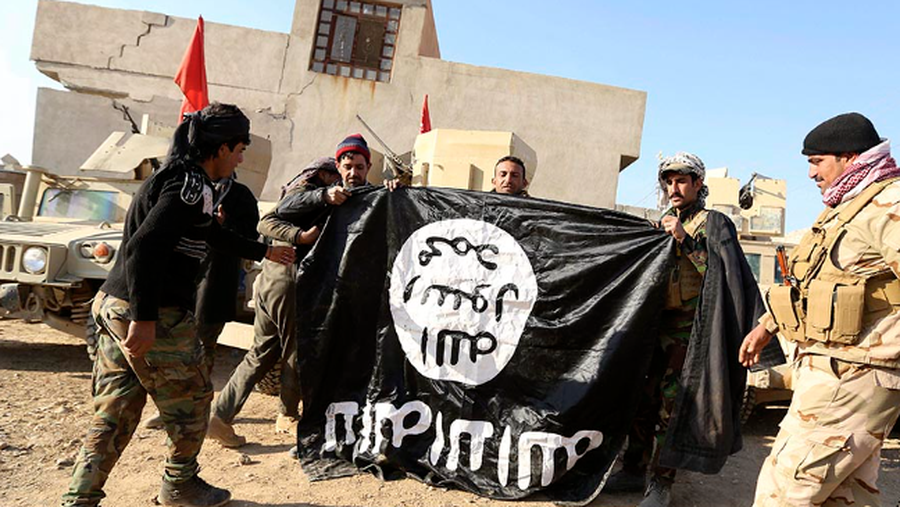
ISIS-K is currently the Islamic State's standard-bearer and most operationally capable affiliate, prompting comparisons with the Yemeni branch of al-Qaeda in the Arabian Peninsula, which built a reputation as an organization capable of planning and carrying out high-profile terrorist attacks. high...
Five years ago, the last remnants of the so-called Caliphate of the Islamic State were destroyed. The Syrian Democratic Forces (SDF), a Kurdish militia backed by the United States and its allies, entered the Syrian town of Baghouz to capture the group's remaining fighters and their families.
The fall of ISIS's last stronghold was the culmination of a years-long effort led by the United States and its allies to drive the radical group out of the Levant. At its peak in 2015-2017, the territory controlled by ISIS was larger than the current territory of Great Britain.
It boasted tens of thousands of foreign fighters from dozens of countries, but also the fact that it was able to carry out complex terrorist attacks in the heart of Europe, such as the one in Paris in November 2015 and in Brussels in March 2016.
His propaganda inspired "lone wolves" to carry out brutal acts aimed at vehicular crushing of crowds of civilians. His fighters beheaded Western hostages and used their videos and images to lure radicalized recruits.
But at the beginning of 2024, the organization is almost unrecognizable from what it was just 5 years ago. Although ISIS is no longer in strong positions in the Middle East, large numbers of fighters remain in Iraq and Syria, where they conduct guerrilla-style operations. Many of its most active branches are currently located in Africa, with ISIS branches regularly claiming responsibility for attacks in the Democratic Republic of Congo (DRC), Egypt, Mozambique and Nigeria.
Its Afghanistan branch, ISIS-Khorasan (ISIS-K), is the group responsible for the March 22 terrorist attack in Moscow, in addition to attacks in Iran and Turkey earlier this year. ISIS-K is currently the Islamic State's standard-bearer and most operationally capable affiliate, prompting comparisons with the Yemeni branch of al-Qaeda in the Arabian Peninsula, which built a reputation as an organization capable of planning and carrying out high-profile terrorist attacks. high.
ISIS and its affiliates have shown a remarkable ability to adapt to circumstances and survive. After suffering major territorial losses in the Middle East, a significant reduction in fighters and the elimination of key leaders, ISIS managed to transform itself into a decentralized network with regional branches, many of which still retain the capacity to carry out terrorist attacks. high profile.
Built around its central extremist Salafi-Jihadist ideology, which continues to attract aspiring extremists, ISIS has continued to use social media, internet forums and a sophisticated propaganda apparatus to promote its violent and virulent sectarian messages to segments vulnerable populations that have been neglected by the governments of their countries.
ISIS's ability to recruit, inspire, radicalize and mobilize its supporters to violence is directly related to its effectiveness in exploiting historical grievances and its deliberate strategy to create exclusive groups in regions characterized by political corruption, inequality large socio-economic and weak governance.
ISIS's effectiveness in identifying the most fertile ground to promote its ideology and brand has led to the birth of weighty branches in Egypt's Sinai Peninsula, Somalia, Mozambique, West Africa and the Southern Philippines, among others. Each branch's alliance with ISIS depends on their pledging baja' (loyalty) to ISIS's core leadership.
The organization's decentralized structure allows branches to operate semi-independently outside of a traditional rigid command and control structure. But on the other hand, it allows their activities to be positioned within the group's global terrorist plans, as well as to reinforce its overall objectives.
The clearest example is seen where the war against ISIS has remained unfinished, in Iraq and Syria. Nearly 46,500 women and children are still languishing in troubled refugee camps in northeastern Syria, while another 9,000 ISIS fighters are being held in detention centers run by the SDF's Kurds.
In many cases, ISIS fighters have tried to free their comrades from prison, and have even launched a campaign of attacks called "Breaking the Walls", focused on attacking prisons and inciting riots within them. In January 2022, ISIS attacked a prison in Hasakah, Syria, sparking a 10-day rebellion that allowed hundreds of jihadist prisoners to escape.
In the Sahel region of Africa, a large semi-arid expanse of desert spanning West and North-Central Africa, the Islamic State's Sahel Province and the Islamic State's West Africa Province control swaths of territory stretching from the West African coast to in the Lake Chad Basin.
Sipas Indeksit Global të Terrorizmit, 4 nga 10 vendet më të prekura nga dhuna e terrorizmit vitin e kaluar ndodhen në këtë rajon:Burkina Faso (1), Mali (3), Nigeria (8) dhe Nigeri (10). Ndërkohë ISIS-K ka qenë i lidhur me një numër në rritje komplotesh në Evropë kohët e fundit.
Tre burra u arrestuan në fund të vitit të kaluar në landin gjerman Rhine-Westphalia-s mbi planet e dyshuara për të sulmuar Katedralen e Këlnit natën e Vitit të Ri. Sulmet lidheshin me tre arrestime të tjera në Austri dhe një në Gjermani që ndodhën më 24 dhjetor. Thuhet se të 4 personat po vepronin në mbështetje të ISIS-K.
Në korrik 2023, Gjermania dhe Holanda koordinuan një operacion që synonte një rrjet të lidhur me ISIS-K, i dyshuar për përgatitjen e disa sulmeve në Gjermani. Gati 4 vjet më parë, policia gjermane ndaloi një plan për të sulmuar bazat ushtarake të SHBA-së dhe NATO-s në Gjermani (prilli i vitit 2020). U raportua se 4 shtetas taxhikë të arrestuar ishin në kontakt me zyrtarët e Shtetit Islamik në Afganistan dhe Siri.
Sulmi i ISIS-K në Moskë 10 ditë më parë, ishte një kujtesë e fortë e shtrirjes së këtij grupi. Ai tregoi se me kombinimin e aftësive dhe qëllimeve, xhihadistët e Shtetit Islamik mund të synojnë ambasadat, objektet ose personelin amerikan jashtë vendit. Shteti Islamik tërhiqet nga rajone të paqëndrueshme, duke shtrirë tentakulat e tij në Azinë Qendrore, Kaukaz dhe Ballkan.
Pas sulmeve të 11 shtatorit 2001, raporti i komisionit të posaçëm foli për terrorizmin si një sfidë brezash. Për ata që i përjetuan pasojat, si ne të dy, kjo sfidë mbetet pavarësisht lodhjes së kuptueshme nga Lufta Globale kundër Terrorizmit. Aktualisht vëmendja kryesore në Uashington dhe Bruksel ka të bëjë me ‘konkurrencën e fuqive të mëdha’.
Në horizont janë shfaqur sfida të mëdha, ndaj ka kuptim që të devijohen disa nga burimet për të kundërshtuar ngritjen e Kinës dhe për t'u marrë me problemet komplekse të sjella nga Inteligjenca Artificiale. Megjithatë, distancimi nga anti-terrorizmi do të ketë pasoja serioze për Shtetet e Bashkuara dhe aleatët e tyre.
Së pari, është thelbësore të pranohet se Shteti Islamik dhe anëtarët e tij janë një kërcënim i vazhdueshëm dhe i qëndrueshëm. Ndërsa kalifati territorial është çmontuar, tërheqja e tij ideologjike dhe metastazat e tij paraqesin sfida të rëndësishme sigurie për Shtetet e Bashkuara dhe komunitetin ndërkombëtar më gjerësisht.
The United States has largely maintained a monolithic counterterrorism strategy for the past two decades based almost exclusively on military force, and in some ways, it has been a victim of its own success. It is now imperative to understand that terrorism is a complex challenge that spans the political, military, diplomatic and economic spheres. The need to build a counter-terrorism strategy that goes beyond military power is therefore self-evident. The vital first step is to design and implement a fully evolved counterterrorism strategy that combines components of "soft power" with limited means of hard power, using the full spectrum of national power./ Adapted Pamphlet for "Eurasia Review" "



Lini një Përgjigje