


 Shkruar nga Pamfleti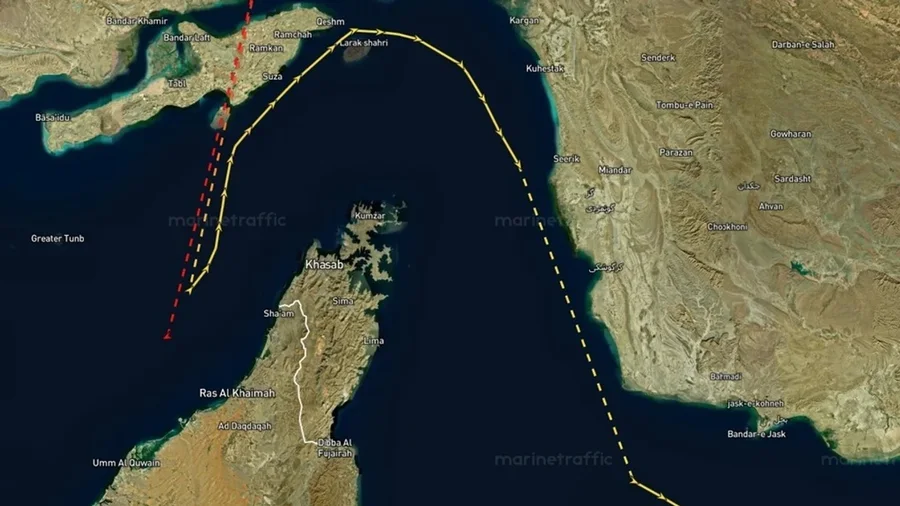
Europe is trying to engage with the complex dynamics of the Strait of Hormuz, including other regions of the world. The signals remain mixed.
The “Coalition of the Willing”, formed in recent weeks, is drawing up a plan to stabilize navigation in Hormuz. It should be emphasized from the outset that this is not a question of military intervention. Or, more precisely, this remains a hypothesis that at the moment only a few countries, notably France and the Netherlands, do not rule out. However, the grouping of 41 countries, including Italy, is acting on several levels: political, diplomatic and economic. The initiative is led by the United Kingdom and is also indirectly supported by NATO Secretary General, Mark Rutte.
Freedom of transit in international waters
At the last online meeting, on April 2, the “ready” decided to create four groups with specific tasks. The first group will organize a political and diplomatic campaign to reaffirm the principle of international law that guarantees freedom of passage in international waters. This is a principle that has never been questioned, even in the Persian Gulf, before the war. The goal is to increase pressure on the ayatollahs, by expanding the coalition of states as much as possible and by encouraging the intervention of multilateral organizations.
Voting in the United Nations Assembly
It would not be difficult to include, for example, the Gulf Cooperation Council, which includes Saudi Arabia, the United Arab Emirates, Qatar, Kuwait, Bahrain and Oman. Also the International Maritime Organization (IMO), the UN agency that guarantees the safety of navigation, headed by Panamanian Secretary-General Arsenio Dominguez. This process aims to culminate in a vote in the UN General Assembly in support of freedom of navigation.
Economic measures against the Revolutionary Guard
The second group will consider economic measures to prevent Iran from profiting from the trade. The Revolutionary Guards (Pasdarans) intend to impose a tax on every ship that passes through. How could this be prevented? The idea is to impose other targeted sanctions on the Iranian fleet or on financial and insurance companies that provide services to Tehran. The coordination of this group has been entrusted to the Netherlands.
Safe corridor for tankers
The third line of action aims to ensure the rapid passage of dozens of tankers and cargo ships that have been blocked in the strait due to US and Israeli bombing. The most concrete option is to return to the IMO to identify a “security corridor” in the strait, paving the way between the mines, if Iran agrees. The operation is complex; countries with good relations with Tehran are being considered. India is considered one of the most suitable options, but has not yet responded.
Greece's coordinating role
The fourth group, coordinated by Greece, will hold regular consultations with the industrial sectors most affected by the blockade of Hormuz: shipowners, oil companies, fuel distributors, as well as agricultural organizations affected by the shortage of chemical fertilizers. The aim is to determine priority supplies and consider alternative routes.
Donald Trump's stance
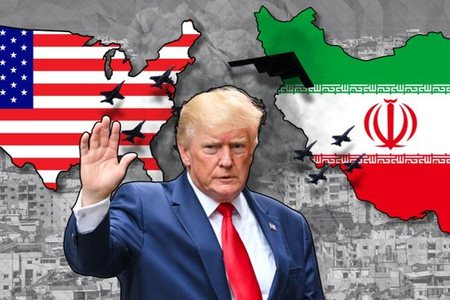
Diplomatic circles acknowledge that such a plan could be considered insufficient by Washington. Trump continues to accuse European partners of “not having the courage” to intervene in Hormuz. He has also stated that the US will demine the area “as a favor to others.”
NATO Secretary Rutte's offers
NATO Secretary General has tried to ease tensions, proposing two courses of action: the Hormuz plan of the "41 willing" and an inventory of actions of allies in support of the war. According to US media, Trump could move US troops from European countries that have not cooperated. / Taken from Corriere della Sera





Lini një Përgjigje