


 Shkruar nga Pamfleti
Hungarians are heading to the polls in an election that could end Prime Minister Viktor Orban's 16-year rule. Opposition leader Peter Magyar has emerged as the biggest threat to Orban's grip on power.

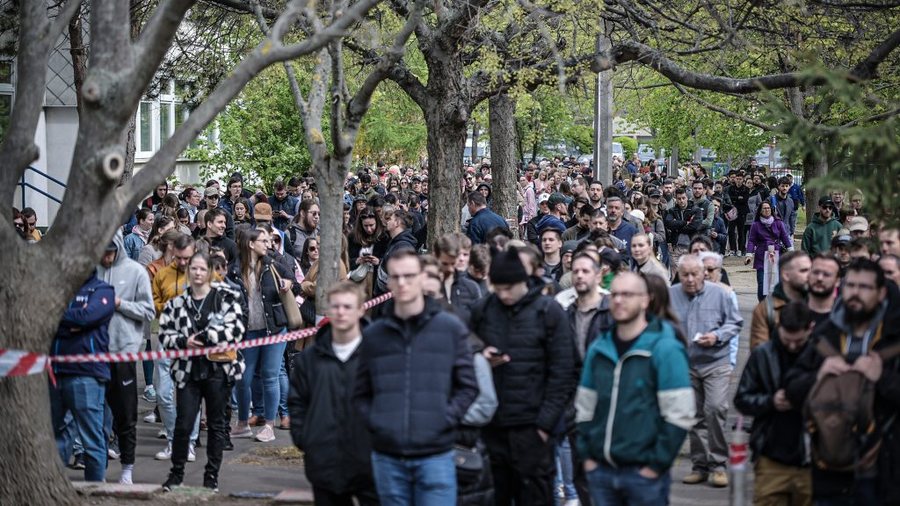
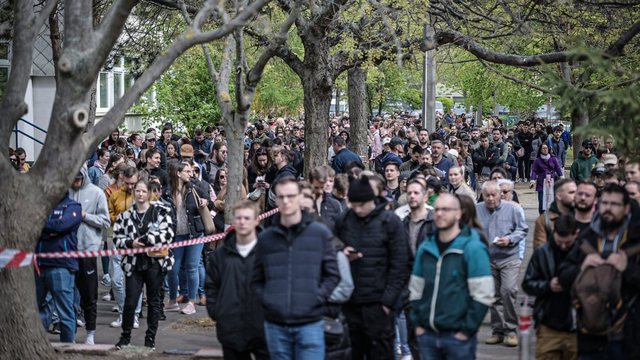
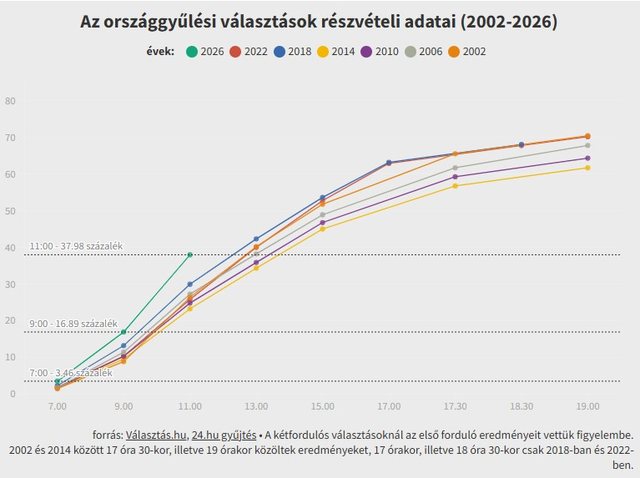
Compared to 25.77 percent four years ago, 37.98 percent participated in the parliamentary elections by 11:00 a.m.
In concrete figures, around 2.8 million Hungarian citizens have voted by 11:00, out of a total of 8 million eligible voters.
This is an extraordinary figure, Hungarian media write.
In 2018, turnout did not even reach 30 percent at this time, and in elections over the past two and a half decades it has remained well below this figure, as the chart shows.
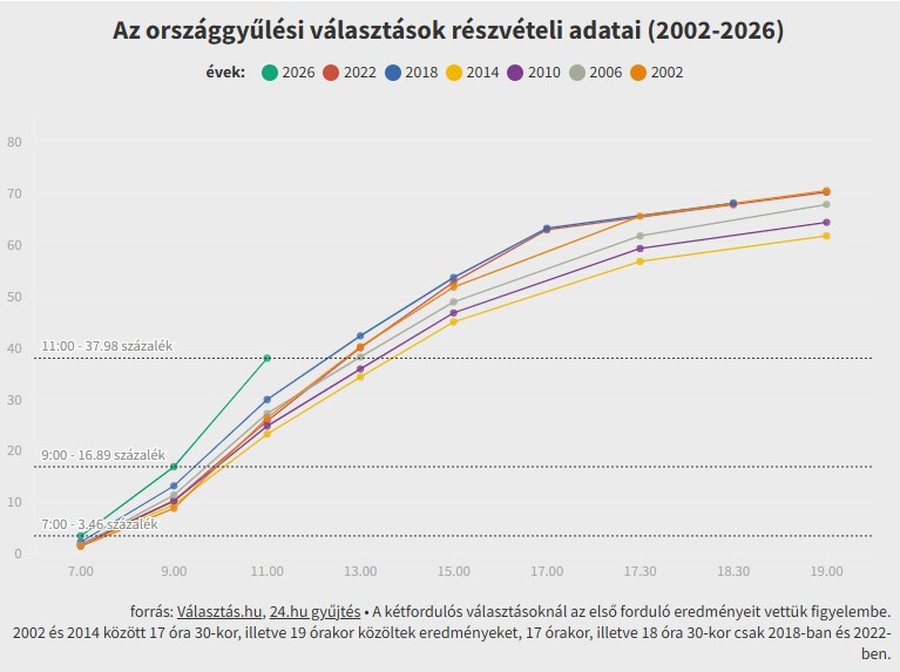
Analysts expect a record turnout of around 75%, surpassing the previous level of just over 70%.
The first results are expected soon after polling stations close, but if the race is close, the winner may not be announced until ballot counting is fully completed next Saturday, according to the National Elections Office.
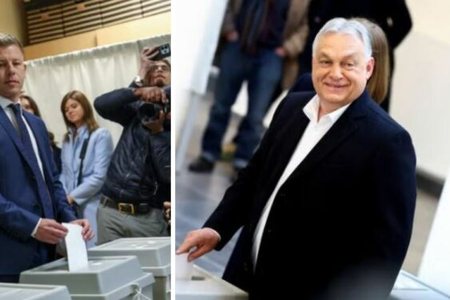
According to Orbán, the large number of voters means nothing.
"If we want to protect Hungary's security, no patriot can stay home! Only Fidesz! Ready for victory!" the Prime Minister wrote on Facebook.
Hungarian opposition leader Peter Magyar said on Sunday that voters in Hungary face "a choice between East and West, propaganda or honest public discourse, corruption or clean public life."
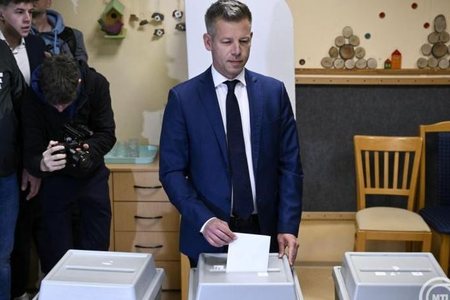
After casting his vote, Magyar appeared confident, claiming that the only question in Sunday's election was not whether his Tisza Party would win or not, but whether it would win a simple majority or a two-thirds majority in parliament.
"I call on all Hungarian citizens to exercise their right to vote ," he said, urging people to report any irregularities at polling stations because " electoral fraud is a very serious crime."
Having campaigned against corruption at home, Hungary's foreign policy may be slightly more favorable to the European Union, if not entirely supportive.
Magyar told reporters that Hungary needed to unblock frozen EU funds and "strengthen Hungary's position with the EU and NATO," but also said he was eager to strengthen cooperation of Budapest's "Visegrad Four" with the Czech Republic, Slovakia and Poland.
In Hungary today, the battle will not only take place at the ballot box. It will also take place within an electoral system that Fidesz has been "adjusting" to its own standards for years.
Opposing him, the 62-year-old prime minister has his former ally, 45-year-old Péter Mályár, who has managed to form an opposition movement around his center-right Tisza party, which, according to polls by independent institutes, has a high chance of winning the election.
If one were to look only at the polls, the conclusion would seem almost self-evident. Viktor Orbán is headed for defeat. The opposition, led by Tisza, seems to be ahead and is seriously claiming first place at the ballot box for the new Hungarian Parliament. Except that in the Hungary of 2026, the first reading is hardly the right one.
The problem for the opposition is not just whether it will come out on top in the vote. It's whether that will be enough. And that's where the real story of this election race begins.
The system that Orbán has built in his 16 years of uninterrupted rule does not abolish voting. It does not formally annul the electoral process. But it does something more complex and ultimately more effective: it turns free elections into an unequal contest from the start. That is why the phrase that is increasingly heard in Budapest sums up the Hungarian paradox quite well: elections are free, but not entirely fair.






Progresista marksista LGBTQI bashkohuni! Dite te veshtira e te drejta po vijne. Pillni ndonje kelysh se raca juaj po shuhet.