


 Shkruar nga Pamfleti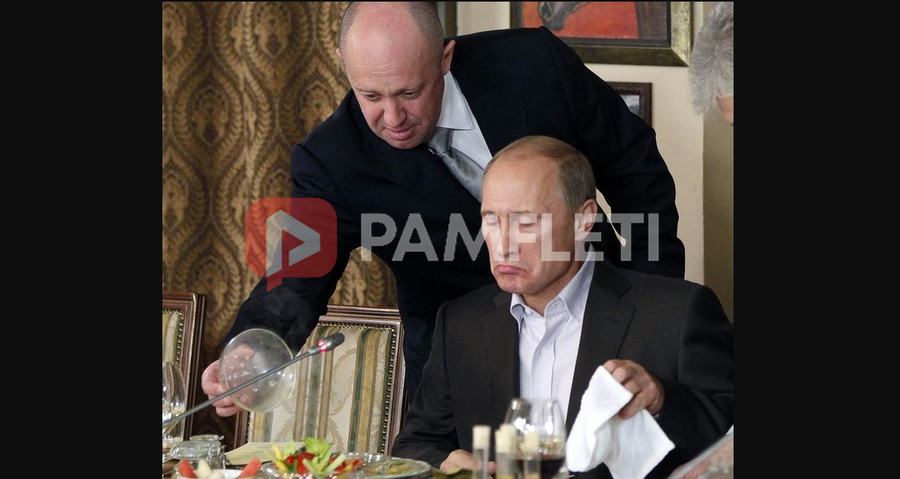
According to international media, there are versions but not a fully enlightened analytical panorama. Moreover, there is always the problem of examining the dynamics of regimes: they have their own characteristics, mechanisms, secrets and rules of survival that are difficult to fully understand...
The most important American media, such as the "Washington Post" and "New York Times", make it known that the CIA knew everything about the rebellious plans of Wagner's head. Even, they emphasize, that Vladimir Putin was informed for a long time, so he started attempts for negotiations from the beginning.
According to the CIA, June 10 is the breaking point between Wagner and Vladimir Putin. The day when Moscow imposes on Prigozhin an act of submission to the Army, and from that moment Wagner's boss is set in motion to react. But of course the main reason is the many losses in the field that his private army suffered.
Meanwhile, the CIA also knew that there was a dose of theatrics in the appearances of Putin's "chef", which the Kremlin uses for its games, but Prigozhin has autonomy and would not be just a puppet.
Compared to the threshold of the invasion of Ukraine, Washington has preferred to keep the information to a limited circle of leaders and congressmen, has given a summary overview, but has not sounded the alarm in public. This happened because the Americans were afraid that the Russian Tsar would use the situation to accuse the US of being behind the uprising. And this was the big concern for Russia's nuclear arsenal.
The Kremlin, according to American estimates, was aware of the danger, had previously collected signals about Prigozhin's threat. At the moment it is not clear why he did not act quickly by stopping the insurgents in time. However, US media, citing CIA sources, said Putin was surprised by how easily Prigozhin took command in Rostov. And here, there are hypotheses that there are significant contrasts within the Russian political and military hierarchy, and of course problems in the security systems, deficiencies that are seen in many cases. From rebel raids in Belgorod to drone strikes in the capital.
The delay in Moscow's response leaves room for those who believe in conspiracy theories.
Meanwhile, another fact is how the rebels were able to advance quickly without encountering real resistance, an aspect that does not exclude the support that Wagner has in some sectors of the armed forces. Maybe not involved or even cooperative, but willing to let things flow. So we were in the classic conditions of a coup.
What happened in the last 48 hours is not easy to fully explain.
According to international media, there are versions but not a fully enlightened analytical panorama. Moreover, there is always the problem of examining the dynamics of regimes: they have their own characteristics, mechanisms, secrets and rules of survival that are difficult to fully understand. The best experts in the field are based on history, its precedents, but there remain dark corners and personal aspects that only those who are really in the magic circle of Vladimir Putin can discover. / Pamphlet





Lini një Përgjigje