


 Shkruar nga Pamfleti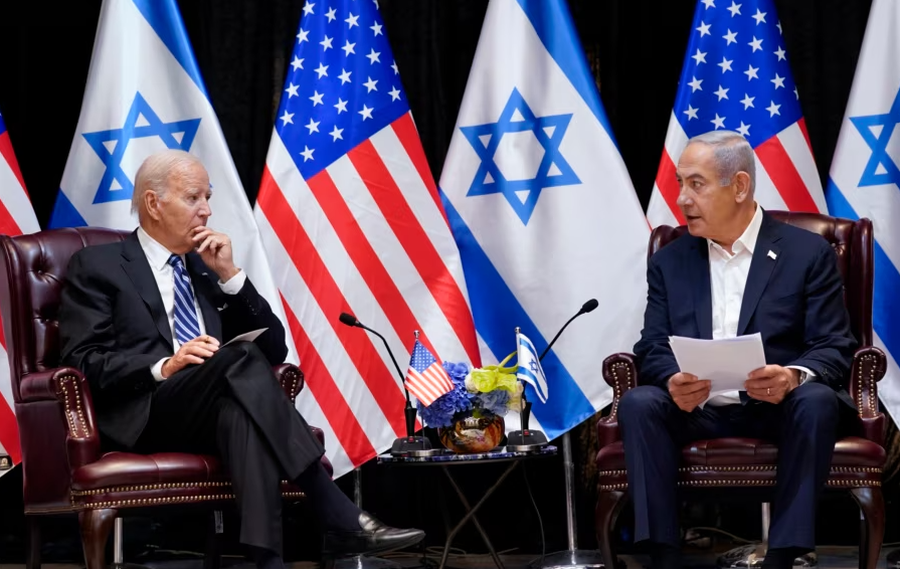
Israel's military operation in Gaza and the consequences of the offensive on Palestinian civilians have been at the center of statements by the international factor, which has reacted strongly.
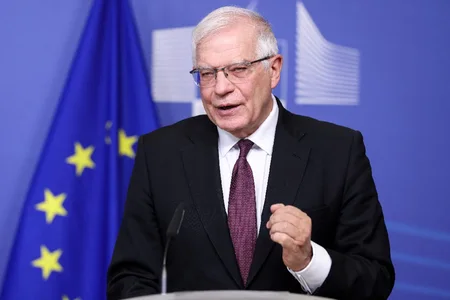
"The usual route to send aid from the ground has been artificially closed. Hunger is being used as a weapon in war," said Josep Borrell, head of the European Union's Foreign Policy
Israel's Prime Minister Benjamin Netanyahu has taken a defiant stance.
"No amount of pressure will be able to stop us. The future and survival of Israel is at stake," he declared.
But at a time when the number of victims and people suffering from hunger in Gaza is increasing, the staunch supporter of Israel, President Joe Biden, seems to be running out of patience.
In an interview for the American television channel MSNBC, Mr. Biden said that "the defense of Israel remains critical, there are no red lines that would make me cut off the supply of ammunition and weapons, without which they would not be able to available Iron Dome air defense system to defend. But there is a red line that if he and they crossed it... there should not have been more than 30 thousand dead Palestinians as a result of the attack... there are other ways to act".
President Biden is increasingly making public his anger with Mr. Netanyahu, including over Israeli policies that have slowed the delivery of much-needed humanitarian aid overland.
The United States has joined other countries in delivering food packages to Gaza by air.
US troops are heading to the Mediterranean to build a temporary port on the Gaza coast to enable aid to be shipped by sea from Cyprus.
Washington continues to support Israel with military aid.
But what could happen if Prime Minister Netanyahu goes against the calls of the United States and undertakes the offensive in Rafah, where more than 1 million Palestinians have taken refuge, would Mr. Biden cut off the supply of American weapons to Israel?
"We are in communication with the Israelis on this matter. We are continuing our efforts. I'm not going to get on this podium and speculate on this issue," said Jake Sullivan, National Security Advisor.
As November's presidential election approaches, President Biden aims to avoid the possibility of Republicans taking the votes of Israel's supporters.
But at the same time, he must not allow progressive Democrats, young voters, Muslim and Arab-American voters to abandon him because of the President's support for Israel.
So, if in the first days after the Hamas attack on October 7 he strongly supported Netanyahu, now he is distancing himself from him.
"It seems that he is making a political break from Netanyahu", says Laura Blumenfeld, from "Johns Hopkins" University.
Mr. Biden's stances appear to be driven by both his domestic and foreign policy objectives.
"Separating Netanyahu and what Biden calls his war-damaging policies from the state of Israel so that Biden can continue to support Israel without sacrificing his moral principles," she added.
Recently, Israeli war cabinet member Benny Gantz was hosted by Democratic lawmakers, Vice President Kamala Harris and other senior US officials, a signal of support from the US administration should the centrist politician become prime minister. future of Israel.
However, it remains to be seen if President Biden's change in attitude towards Prime Minister Netanyahu will be enough to calm Americans angry with the policies of the head of the White House on the war in Gaza./ VOA





Lini një Përgjigje