


 Shkruar nga Maurizio Guaitoli
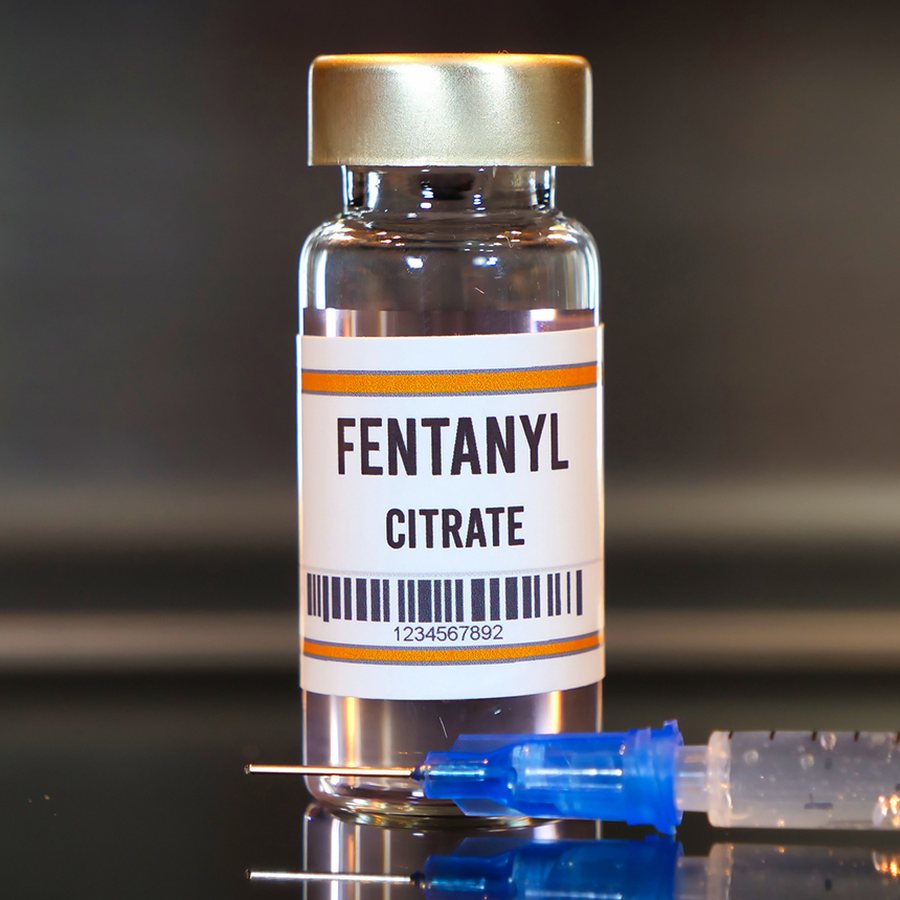
From a geopolitical point of view, the spread of this synthetic drug prompts a whole series of conspiracy conjectures, which are not exactly unfounded. In fact, Beijing is the only country that encourages the export of basic ingredients for its production, especially to Mexico and South America...
Who's Afraid of Fentanyl? As you know, this deadly synthetic drug is a synthetic substitute for heroin. But it is 30 times more powerful, although its effects in time are shorter than heroin
At this historical moment, Europe has every reason to fear its massive spread, given that American President Joe Biden has already seen the tragedy that is happening in his country, where more than 100 thousand are registered every year dead from overdoses.
For this reason, the first thing that the American president recently asked his Chinese counterpart, Xi Jinping, was to limit as much as possible Chinese exports abroad (especially to Latin America and Mexico) of tens of tons of active ingredients for the production of deadly drugs , discovered in the 1960s by a Belgian chemist.
If this actually happens, then European anti-drug officials expect a major diversion of fentanyl shipments to our continent. The circumstances are aggravated, among other things, by the fact that in the European market, there is a progressive shortage of Afghan heroin, due to the restrictive policies recently adopted by the government led by the Taliban.
The indisputable advantage of fentanyl is based on the very simple way of production and transportation. Unlike heroin and cocaine, which, being natural substances, are obtained from the distillation of poppy flowers and poppy leaves, respectively.
The latter are high-risk activities for drug traffickers, as they require a production with several processing processes as well as complex smuggling networks. However, once the shift has taken place, and with the abandonment of other types of opioids in favor of fentanyl, this transition is proving to be irreversible.
Above all, this is because of the huge profit margins derived from it for organized crime. In fact, in the illegal market, 1 kg of fentanyl generates profits of 1 million dollars, which is much more than can be earned with other drugs.
From a geopolitical point of view, the spread of this synthetic drug prompts a whole series of conspiracy conjectures, which are not exactly unfounded. In fact, Beijing is the only country that encourages the export of basic ingredients for its production, especially to Mexico and South America.
From there, transformed into pills by Mexican drug cartels, it floods into the vast American market. And as the two neighboring countries hold presidential elections this year, the successor to current Mexican President Andrés Manuel López Obrador must decide whether to remain a dangerous narco-state or a loyal U.S. ally. and its major industrial centers, ready to move their industries to Mexico as an alternative to China.
And to reverse this trend, it will not be enough for Beijing to complain that the blame for the illegal import of tons of fentanyl lies with American consumers, and between the lines (which is also acceptable) the moral degradation of the West, which does not knows or does not want to adopt strict punitive policies against those who use drugs.
In this aspect, totalitarian systems are much more advantageous, since they are not forced to react depending on the reaction of public opinion within the country. Of course, in the US, the social wound created by the drug fentanyl, especially in recent years, has direct political consequences in the last presidential elections of this year.
Because even small towns have been affected by this powerful drug, and thousands of young Americans are dying more from fentanyl overdoses than from traffic accidents. Now, seeking Xi Jinping's support to contain this emergency means that the United States will have its 'hands tied' in advance, in case China increases pressure on Taiwan to influence the upcoming Taipei elections.
And as strange as it may seem, fentanyl and its combinations with other synthetic drugs can also be a weapon of war. For example, in 2002, Russian soldiers on the orders of Vladimir Putin used a fentanyl-based aerosol to neutralize Chechen terrorists who had taken hundreds of people hostage.
However, they also caused 130 civilian casualties. The use of aerosols of this type exploits a legal loophole, since it has the advantage that it is not a nerve agent, the use of which is prohibited under international conventions, however it has an undoubted effect on the central nervous system (the human brain ).
Fortunately, today there are international entities such as the Organization for the Prohibition of Chemical Weapons, which are denouncing the use of fentanyl-based aerosols in warfare and calling for their ban, which is understandably opposed by countries such as Iran, Russia, Syria, China and North Korea. .
These 5 dictatorial states are included in a special classification by the Pentagon, which defines them respectively as "a growing threat" (China), "a high risk" (Russia), "an imminent threat" (Korea and North) and "a serious danger" Iran, which is apparently pursuing its strategy of dual use of CNS aerosols for war purposes.
The latter, of the type used by the Russians in 2002, was most recently used in 2019 by Shiite militias in Iraq to suppress anti-Iranian protests. If it is true that Syria has dismantled its chemical weapons factories under Russian supervision, it is a fact that Damascus still has the know-how and is able to produce CNS fentanyl derivative aerosols in a very short time.
It could make them available to Hezbollah militias in Lebanon by smuggling them across the Iranian border. Although for now Tehran has put the development of nuclear weapons on the back burner, it has nevertheless increased its research on chemical weapons with the aim of using them on the battle fronts. Under these conditions, do you know what could happen in the near future if these weapons are transferred to Hamas?/ Pamphlet adapted from "Opinione.it"






Lini një Përgjigje