


 Shkruar nga Nathalie Tocci
The war is ongoing, and although it did not go according to the Kremlin's script, Putin nevertheless managed to capitalize on it politically. Between the repressive crackdown, the rekindling of nationalism from the "great new patriotic war" against the West, and the reorganization into a war economy, the occupation of Ukraine is it works for Putin.
It is clear to all that a dangerous escalation in the Russian occupation of Ukraine is underway.
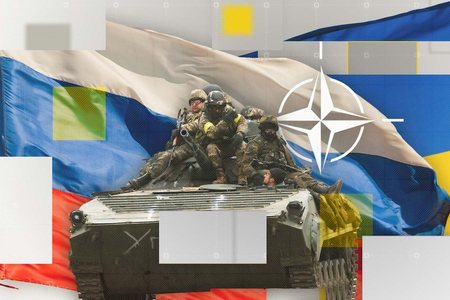
The Kremlin admits for the first time that it is not a "special military operation", but a real war. And while at the front Ukrainians are rushing to build fortifications on the almost thousands of kilometers of the contact line, Moscow is preparing for a new offensive.
Over the past week, Russia has launched about 190 missiles, 140 drones and 700 bombs aimed at civilian and military targets in Ukraine.
And in the background, Moscow is amassing weapons and troops on the border with the Baltics and Finland. If we want to reverse the escalation, the question is what are its causes.
The first and main contextual cause has to do with the internal situation in Russia. The terrorist attack on Crocus City Hall claimed by ISIS-K is secondary.
More important is the fact that the elections in Russia have passed and that the "special electoral operation" (unlike the "special military operation" of two years ago) was a resounding success for Vladimir Putin.
The war is ongoing, and although it did not go according to the Kremlin's script, Putin nevertheless managed to capitalize on it politically. Between the repressive crackdown, the rekindling of nationalism from the "great new patriotic war" against the West, and the reorganization into a war economy, the occupation of Ukraine is it works for Putin.
This does not mean that the regime is strong.
A country in which a militia attempts a coup, the regime feels the need to kill opposition leaders. But strength and weakness not only coexist, they are two sides of the same coin. To prevent the apparent contradiction from exploding, Putin it needs a fight. To keep the bike straight, you have to pedal, and in this case also accelerate.
Instead, I would give less weight to various conspiracy theories linking the terrorist attack to Ukraine.
On the one hand, Putin, although he has an interest in diverting domestic attention from the weaknesses of his security apparatus by pointing the finger at Kiev, certainly did not need the attack to trigger an escalation.
Escalation would have happened anyway.
On the other hand (and it almost seems absurd to have to specify this), it would be a suicidal act for Ukrainians to support a terrorist attack, thus antagonizing their allies in their moment of greatest need.
The second reason is, in fact, Ukraine's difficulty at the front, due to the lack of ammunition and weapons sent by Western countries.
Here the issue is primarily about Washington and the fact that American aid has been stalled in Congress for more than four months. There is nothing we can do to influence Putin's willingness to continue this war. Conflict against Russia is likely. continue in one form or another as long as Putin remains in the Kremlin, because his power (and not only) depends on him.
What we can do is change its trajectory, reversing the perception of strength and weakness, clearly signaling that escalation does not pay for Putin.
By hinting at the possibility of sending troops to Ukraine, French President Emmanuel Macron was trying to do just that.
But concrete actions are needed more than words.
And everyone, starting with Italy, whose contribution in support of Ukraine was appreciated by Kiev, but is generally disappointing, we can do much more.
If we want to reverse the dynamic of escalation and not find ourselves suffering the consequences, there is no alternative.


Lini një Përgjigje