


 Shkruar nga Pamfleti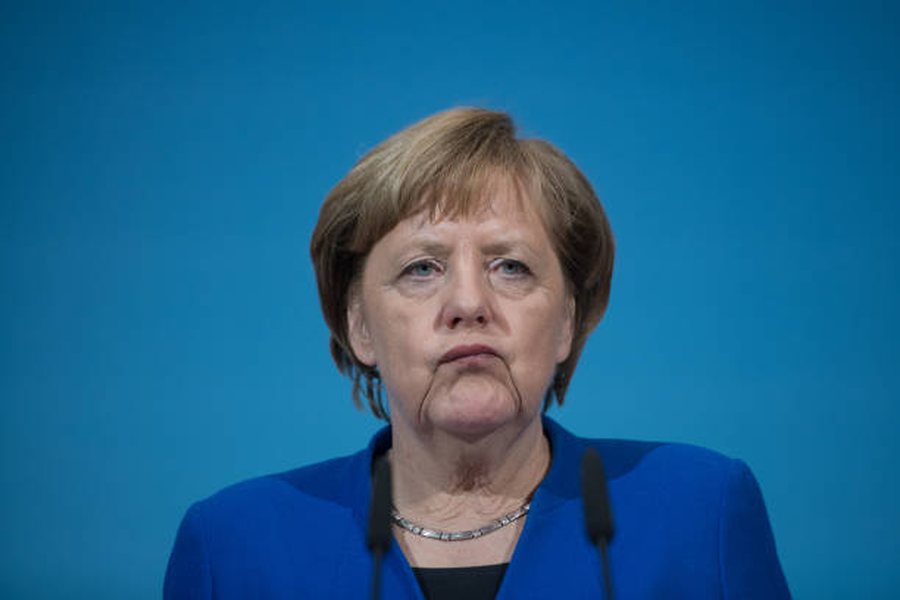
After Merkel's departure, Germany is unable and unwilling to lead Europe...
An old story by the late Henry Kissinger says, "Who do I call if I want to call Europe?"
In fact, for long periods of time (certainly after Kissinger left the government), there was a good answer. During most of the 1980s and 1990s it was Helmut Kohl, the German chancellor, and from 2005 until the end of 2021, it was Angela Merkel. So big, rich and generally weighty is Germany that nothing important happens in Europe unless its chancellor wants it, and what the chancellor wants.
A Google search reveals that Germany's leader is a man called Olaf Scholz, but such a bland and unimpressive figure that he cuts, you'd be forgiven for not knowing. As the European economy stagnates, the hard right climbs in opinion polls almost everywhere and Vladimir Putin's missiles fall on Ukraine, a candidate for European Union membership, Mr. Scholz is invisible. His Social Democrats are only the third most popular party in Germany, with a paltry 15% support. Much of his time must be spent propping up his weak tripartite coalition.
This confused impotence has significance beyond Germany. The EU has been left without a leader by the absence of Scholz. Germany should be the driver, whether raising money for Ukraine, fixing the migration problems, building the capital markets union, reforming the system so that Ukraine and others can be admitted, or preparing Europe for whatever is coming. to bring a Trump victory in November.
Kohl and Mrs. Merkel knew this, and traveled and negotiated incessantly. As a result, Europe prospered. This idea seems completely alien to the taciturn Scholz, a staunch supporter of Ukraine who has failed to inspire others.
Of course, not everything depends on the chancellor.
The vital adjunct of a strong Germany is a strong France. However, Emmanuel Macron, Scholz's counterpart, has become widely disliked in the country; he lost his parliamentary majority in 2022 and struggles to pass legislation. This week he fired his prime minister, as beleaguered French presidents are wont to do, and appointed Gabriel Attal, a charismatic but inexperienced 34-year-old. In the past, Macron was a champion of reform, but these days his ability to influence Europe has diminished.
More importantly, Scholz and Macron are said by insiders to be at odds, partly because their personalities are so different, but also because they have incompatible views.
Macron favors more spending at the European level, more independence from NATO and America and a dirigiste economic policy, but Scholz disagrees with none of this. Differences of opinion can be productive if there is a willingness to work together; but there isn't.
The news is not all that terrible. Although the Franco-German engine that drove Europe is broken, some auxiliary mechanisms are still firing.
One is the president of the European Commission, Ursula von der Leyen, a far more effective German than Scholz, and one who deserves to be reappointed in the autumn. She has put her position to good use, arguing for and making good use of an €800 billion ($875 billion) Covid recovery fund; but her powers are limited and she is no Jacques Delors, who brought European leaders together to build the single market and common currency. Another motivating force is Donald Tusk, the new prime minister of Poland and a former president of the European Council. Unfortunately, he will be busy trying to gain control at home.
Even if Joe Biden wins in November, America is retreating from its role as Europe's main source of security. Europe will have to spend and do more to keep its citizens safe. However, instead of facing the challenge, Europe's leaders are looking inward./ Adapted from The Economist


Lini një Përgjigje