


 Shkruar nga Pamfleti
A sentence in Friedrich Merz's speech at the CDU party congress provides a major clue to Angela Merkel's possible return.
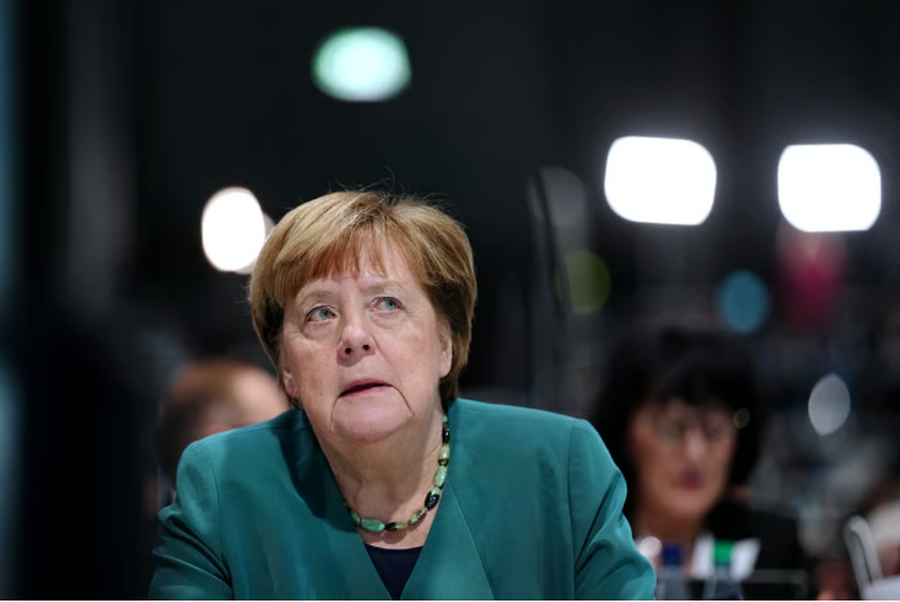
For almost a full minute, delegates at the Christian Democratic Union congress in Stuttgart applauded the guest of honor, seated in the front row, while the moderator at the podium began to show signs of impatience.
“By her side…” he said, trying to introduce the next personality. Only after he interrupted the applause for the second time did the hall finally calm down.
Friedrich Merz, the Chancellor of Germany and chairman of the CDU, experienced a moment that could be considered a two-way situation: the welcome of Angela Merkel.
Merkel, chancellor from 2005 to 2021, former CDU chairwoman and Merz's rival for years, had largely stayed away from party activities since leaving office. However, on Friday in Stuttgart, the 71-year-old was greeted not only with courtesy but with genuine warmth. Many delegates stood up.
Party congresses are carefully orchestrated events, a combination of political rally and symbolic reunion. Shows of unity often hide deeper tensions. Yet Merkel’s brief, muted appearance in Stuttgart sent a clear message: for her, for Merz, and for the party they both shaped. Despite internal debates over her legacy, a formal break with the Merkel era does not seem imminent.
If there is one development to be noticed, it is that Merz is increasingly approaching the political profile of the woman against whom he once built his political identity.
This shift was summed up in one sentence from his speech: “I have made a final decision to seek support for our policies exclusively from the political center.”
This statement marked a significant change. It was hard not to think that Merkel listened to it with a certain amount of restrained pleasure.
A year ago, on the eve of the campaign for Germany's federal elections, the CDU CSU parliamentary group under Merz presented a non-binding but symbolic motion to tighten migration policy. The resolution passed only because the far-right Alternative for Germany (AfD) party voted in favor, a taboo in German politics, where traditional parties maintain a wall of separation against any form of cooperation with the AfD.
“I don’t look to the right or to the left; on these issues I look straight ahead,” Merz declared at the time. Many interpreted this as a willingness to soften the dividing wall. The political left reacted with alarm, and mass protests followed. Merkel, breaking the silence she had maintained since leaving the chancellorship, criticized Merz’s move as a mistake.
Few doubt that she now welcomes his repositioning.
"Dear Angela, welcome to Stuttgart"
This raises a question: why was Merkel so warmly welcomed in Stuttgart, even though a broad section of the party admits that her government included serious mistakes, from her approach to Russia to her management of the migration crisis in 2015?
For years, Merz kept his distance, promising to make the CDU distinct again and the German state more capable of exercising its authority. Now he declared: “Dear Angela, welcome to Stuttgart.”
Critics online have coined the compound term "Merzel" to ironize the perceived rapprochement between Merz and Merkel.
Does this indicate a softening of convictions? Or has Merz concluded that the majority in the party prefers harmony, real or staged, to open conflict, especially when power is at stake?
Wherever Merkel moved in the congress center, heads and cellphones turned in her direction. Delegates greeted her warmly, hugged her and asked for photos. Some described the party as a “family,” including figures who had once criticized her.
Jana Schimke, a former CDU MP from Brandenburg and current head of the German Hotel and Restaurant Association, belongs to the conservative wing that has opposed Merkel's centrist course for years. "I see it as very positive that the former chancellor is here," she said. According to her, Merkel wants to show support for Merz.
Jens Spahn, now chairman of the CDU CSU parliamentary group and a former health minister in Merkel's government, struck a similar tone. "A party congress is a moment of positioning, but it is also a family celebration," he said. "And Angela Merkel is part of the family."
Volker Kauder, the former leader of Merkel's parliamentary group for many years, clearly stated: "The party wants unity, not conflict." While the Prime Minister of Saxony, Michael Kretschmer, reacted sharply to the idea of a break from Merkel: "Not at all!"
"Merzel"
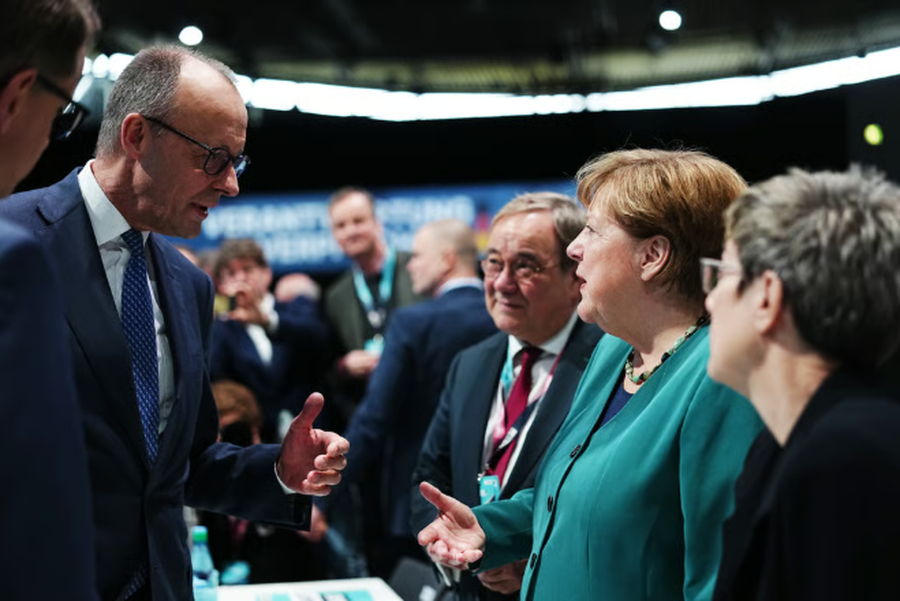
A former federal minister, who asked to remain anonymous in order to speak openly, offered a more strategic reading: for Merkel, the visit was a “double victory” ; it showed that she still cares about the party.
For Merz, despite personal dislikes, there was little alternative but to use a conciliatory tone.
According to the same source, there may also have been an electoral calculation. In Baden-Württemberg, where CDU regional leader Manuel Hagel aims to defeat Green candidate Cem Özdemir in regional elections on March 8, pictures with Merkel could attract center-left voters more effectively than images with Merz.
In the end, the CDU aims above all to govern. Which parties it attracts voters from and with what image, message or promises remains secondary.
There is little resistance within the party to the perceived rapprochement between the two figures. Some 91 percent of delegates re-elected Merz as CDU leader in Stuttgart, a stronger support than that recently received by his Bavarian counterpart, CSU leader Markus Söder, or Vice Chancellor Lars Klingbeil of the Social Democrats.
Merz leaves Stuttgart as winner. But Merkel can also claim a quiet, belated victory./ Politico.eu



Lini një Përgjigje