


 Shkruar nga Pamfleti
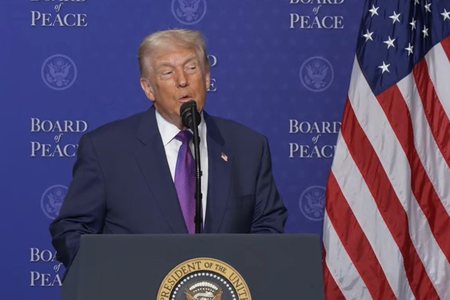
Donald Trump said the pressure on Cuba is "so strong, there's no oil, there's no money, there's nothing," confirming that the goal of his policy is to weaken a Marxist regime that has been in power for 67 years.
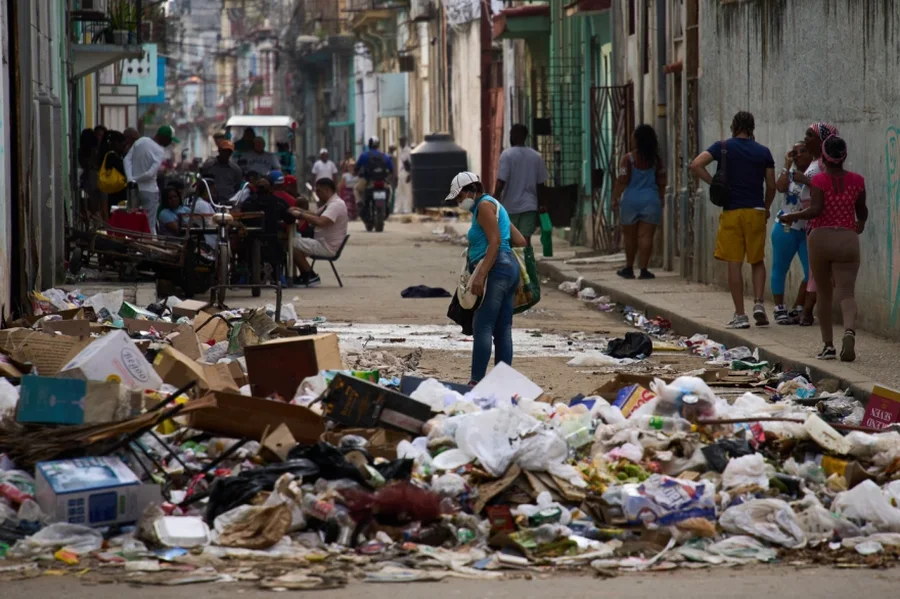
Cuba is facing severe shortages of fuel and basic goods, following the tightening of the US embargo imposed by the Donald Trump administration.
The oil shortage, following the fall of Maduro in Venezuela and the US ban on Mexico supplying Havana, has paralyzed transportation, services and public infrastructure, while citizens are experiencing a dramatic deterioration in living conditions.
During a trip to the Cuban capital, Havana, Daily Mail journalist David Jones captures an image that captures the scale of the crisis.
From the 39th floor of the Iberostar Selection La Habana, the country's tallest building, the normally busy streets seem almost deserted. Gas stations have dried up, power outages are frequent and dusk plunges the city into darkness as electricity is scarce. The airport has run out of fuel and the airspace remains almost empty.
Donald Trump said the pressure on Cuba is "so strong, there's no oil, there's no money, there's nothing," confirming that the goal of his policy is to weaken a Marxist regime that has been in power for 67 years. The embargo that bans fuel exports to Cuba, with the threat of harsh trade sanctions for violators, has already turned into a widespread humanitarian crisis.
Food shortages are widespread. With inflation making even basic goods unaffordable, families are searching for food scraps in garbage dumps on every corner of the city. Rodent and mosquito infestations are multiplying. Young mothers are exchanging their limited savings for baby formula and children's medicine, while pharmacy shelves are empty.
At the El Salvador elementary school, where 350 students are fed meals cooked over charcoal, principal Juan Renier worries that the extended suspension of classes will lead to a surge in juvenile crime. Today, only children under 12 attend classes, while teenagers wander the streets or look for work in tourism, which has declined drastically since the pandemic.
About 2,000,000 Cubans have left the country in recent years, mostly to the United States, with remittances the main source of survival for many families. Meanwhile, a limited number of businesses linked to the regime continue to profit, such as stores selling Chinese photovoltaic systems at prices disproportionate to average annual incomes.
The Iberostar Selection La Habana opened in 2025 and is part of the regime’s commercial arm, GAESA, in partnership with a Spanish multinational. According to the State Department, the investment has been added to a list of prohibited businesses, as it is considered to benefit the government elite at the expense of citizens. The hotel, which reportedly cost up to $500 million, is a symbol of social inequalities in a country facing serious shortages in basic infrastructure.
At the same time, dependence on Venezuelan oil, which was cut off under US measures, has worsened an already fragile economy. Many Cubans express the view that the government is using the embargo as a pretext for corruption and administrative incompetence.
In the Alamar neighborhood, a vast Soviet architectural complex in eastern Havana, residents live without adequate transportation and often without electricity.
"The problem is not the system, but the leaders. They talk about socialism, but this is not real socialism," says one resident, adding that "90% of people are angry."
The historical memory of the Bay of Pigs invasion in 1961 still influences public debate. Nemesia Rodríguez Montano, who experienced the events, says that the United States is still seeking to "defeat" Cuba through "psychological warfare." On the contrary, Orlando Exposito believes that if the operation had been successful, the country could have been "peaceful and prosperous."
As social pressures grow and public protests remain limited due to fears of repression, the question is whether President Miguel Diaz-Canel can manage the crisis or whether developments will lead to broader political unrest. The coming months are expected to be decisive for the country's future.



Lini një Përgjigje