


 Shkruar nga Sarang Shidore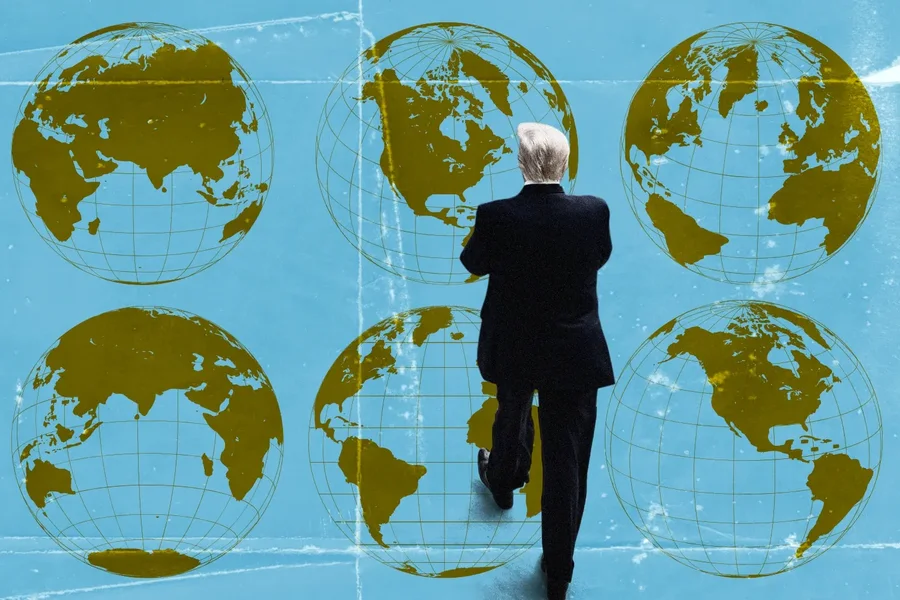
Even if great powers can carve up an interconnected world according to their interests, Washington, Moscow or Beijing may not achieve what they aim for...
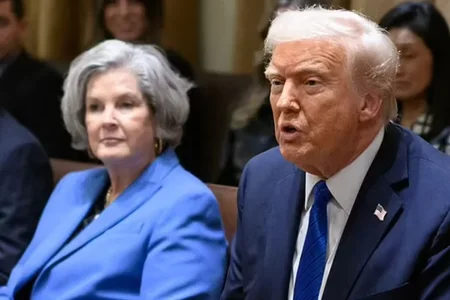
The heated verbal clash in front of the media in the Oval Office between US President Donald Trump and Ukrainian President Volodymyr Zelensky, Secretary of State Marco Rubio's statement that Ukraine "is not our war," and Russian President Vladimir Putin's tacit acceptance of the possible annexation of Greenland by the US, have increased speculation that Washington is abandoning the old model based on allies and partners, and is pursuing the old approach of spheres of influence.
These signals were also confirmed by Trump's recent speech in Saudi Arabia, where the president rejected what he saw as a tendency of previous US presidents to "see into the souls of foreign leaders and use American policy to impose justice for their sins."
The great promise of the spheres of influence approach is to reduce, if not eliminate, the risk of world war. As great powers fragment the world, limit their vested interests, and respect each other's "backyards," they have fewer disagreements, and therefore fewer reasons to engage in conflict.
Or at least that's what it claims. And such a promise should not be lightly ignored. For in our age of nuclear weapons and hypersonic missiles, wars between great powers count as existential threats to humanity.
In many ways, we live in a more dangerous world today than in the final stages of the Cold War. Recent years have been marked by growing risks of a direct Russia-NATO clash in Ukraine, and a deterioration in security relations with China over Taiwan and the South China Sea.
Not to mention the heightened tensions between the great powers in the Sahel and the Middle East. Arms control hangs in the balance, and the decline of unipolarity has Washington worried. In these circumstances, if spheres of influence dramatically reduce the chances of a world war, that can only be a good thing.
But a closer look shows that spheres of influence may no longer be the right solution in our time. The US conceptualization of the sphere of influence is too broad and will not be acceptable to China. In an interconnected world, geographical division is extremely challenging.
And the Global South is not what it used to be, and it may resist such a configuration in both direct and indirect ways. Spheres of influence are a kind of agreement between great powers to regulate the world. Traditionally, they involve an implicit territorial division between the great powers, coupled with a shared understanding of how to maintain the agreement and settle disputes.
The term was first used in the context of the Great Game (a 19th-century war between the British and Russian empires), when in 1869 the Russian diplomat Alexander Gorchakov assured Lord Clarendon, Britain's Foreign Secretary at the time, that Afghanistan was "completely outside the sphere within which Russia could exercise her influence."
A series of consultations between the great powers had begun with the Congress of Vienna in 1814-1815, followed by the infamous Berlin Conference of 1884-1885, which divided Africa among the European powers. These meetings aimed to achieve a balance of power on the European continent, as well as to define zones of control in the territories beyond.
In the current context, we can imagine a new division of the world between 3 great powers - the United States, Russia and China - as follows: Washington would have influence in the two Americas, Europe, parts of the Middle East, Japan and Australia.
Moscow “around its vast territory,” while Beijing would have influence over part of East Asia and most of Southeast Asia. But other arrangements are conceivable. To be clear, the United States does not have an official policy of spheres of influence, and it is unlikely to make one anytime soon.
But many signs point to a grand strategy being experimented with that is very different from the decades of unipolarity since the end of the Cold War. The Biden administration valiantly tried to preserve US supremacy. Although it occasionally rhetorically embraced multipolarity, its policies on the ground aimed to maintain US dominance globally and across all dimensions of power: military, economic, and institutional.
Meanwhile, the new administration’s clearer embrace of multipolarity is a promising start to reforming U.S. foreign policy. After a brief trade war, the United States and China have now announced what appears to be a progressive agreement.
Trump has also expressed his willingness to reach an agreement on nuclear arms reduction with Russia and China, and to halve the defense budgets of each of them. Meanwhile, the current administration has focused more on the Western Hemisphere.
The expressed desire to buy the Panama Canal, Greenland, and Canada shows that the United States is focusing on America more intensely than it has in decades. These moves suggest a return to the Monroe Doctrine.
In addition, Washington’s policy of high tariffs has treated Latin American countries less harshly, a move seen as a hedge against Chinese encroachment. But if the United States were to limit its sphere of influence to its own “backyard” and a set of allies and partners in Europe and Asia, Russia and China would likely agree.
In fact, its scope is much broader. The Trump administration has targeted the BRICS group, and has decided to boycott the upcoming G-20 summit in Johannesburg. Recently, the United States has been pressuring much of the world to exclude China from their economies, using its tariff policy as a tool of pressure.
On the other hand, China is unlikely to agree to settle for a limited sphere of influence, limited to its coastal waters. While spheres of influence generally kept Europe peaceful for much of the 19th century, the arrangement did not last long.
As states rose, so did their interests. When a new state like Germany rose and tried to become a great power, Britain and France could not tolerate this. Disputes over colonies were very destabilizing.
So if territorial control and division were to become the new benchmark for power and success, any previous understanding between the current great powers could be short-lived. The ambitions of some middle powers in the current order will naturally expand as their power grows.
Some of them may even desire their own expanded areas of control. So the promise of peace in a new world with spheres of influence may be an illusion. /Adapted from "Pamphlet", from "Foreign Policy"



Lini një Përgjigje