


 Shkruar nga Lorenzo Santucci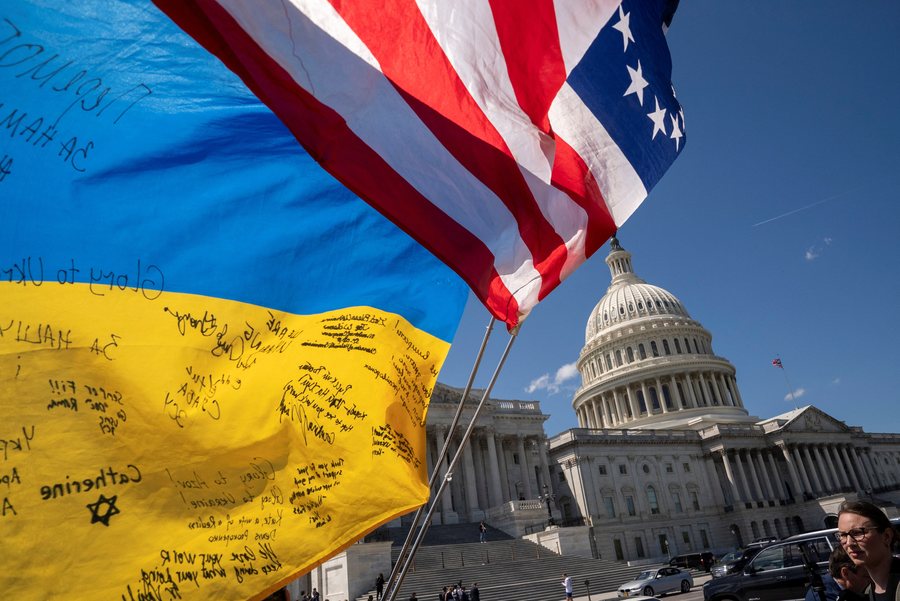
Di Liddo's prediction is that during the period starting in a few days, and ending when the most sophisticated military supplies arrive in Ukraine, the Russians will have to push as far forward as possible to had further territorial benefits.
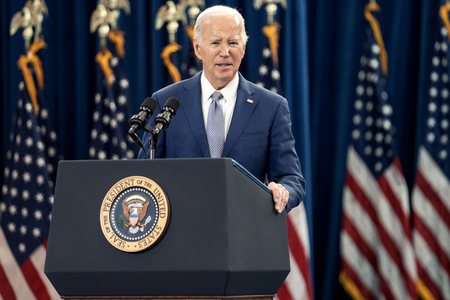
In a few days, Ukraine will begin to receive what it has been asking for for some time from the United States: artillery and ammunition, which will be followed in the coming weeks by long-awaited air defense systems. First, the $61 billion aid package will also need the Senate's green light and President Joe Biden's signature.
Two trifles compared to the enormous energy and long time it took to break the logjam in Congress. Second, it is futile to deny the importance of this new aid, but it would be equally utopian to think that it represents a turning point in this conflict.
Because as the Institute for the Study of War points out, its effectiveness will depend on the speed with which weapons are transported. Sending them quickly can give the Ukrainian army the opportunity to at least stabilize the situation on the front line, avoiding new obstacles like those of recent times.
As the director of the Center for International Studies (CeSI), Marco Di Liddo, told Huffington Post Italia, the latest US aid package "will guarantee Ukrainians better protection and the ability to retaliated, striking deep in the rear of the Russian army".
In this respect, Liddo says, it relieves the pressure, but does not reverse the current inertia of the war. Because to drive the Russians out of the occupied territories, much more equipment will be needed. Moscow still retains the initiative on the battlefield, increasing its attacks and pushing forward as much as possible.
The West's delay in giving Ukraine the necessary support also led to the loss of the latter's offensive capacity, and forced its troops to move into defensive positions. However, the arrival of US munitions will give it a fresh boost, as will the first long-range ATACMS missiles, which should be delivered by the end of this week.
Now that America is out of the loop, Russia is likely to increase its firepower on the front. For the Kremlin, the new aid "will not change anything", except that it will "cause new victims among Ukrainians". As the spokesman Dmitri Peskov said, it is not certain how things will go, but for Russia, the delivery of new weapons is not a surprise.
Although it has threatened again with a nuclear war, to which Poland has responded by expressing its willingness to accept nuclear weapons on its territory, "Moscow already knew that sooner or later the package would be voted on and took advantage of the 6-month delay, but without having any destructive consequences" further emphasizes Di Liddo.
"The Russians have had some new territorial gains, but they remain limited to a generally stationary front," the expert further emphasizes. Liddo expects from the Russian army some kind of continuity, i.e. a "mobilization of the military industry and an intensification of relations with countries that are in favor of reducing the Euro-American weight on the global stage, starting with China, which is allowing the Russians to to continue the war by importing energy and exporting technology".
The situation is different for Ukraine. The head of the Military Intelligence Service (GUR), Kyrylo Budanov, says that "the next period will be difficult, and there will be problems starting from mid-May." However, in his interview for the BBC, he specifies "that difficult and catastrophic days are two different things".
"We have gone through difficult periods several times and we will get through this time too, believe me. Nothing extraordinary will happen. We all know their plans in advance. Most of them have an answer, although some issues remain that will be difficult to resolve. But we will find an answer. As always, we will find something at the last moment" - he emphasized.
The problems of the Ukrainian army have been known for a long time. There are two main ones: the amount of supplies sent from the West and the lack of soldiers, which according to Di Liddo "cannot be solved in a short time". If the troop shortage can only be addressed by the Ukrainian government with a new mobilization, which seems increasingly inevitable given that the lack of manpower is the biggest problem, the shortage of assets is mainly driven by allies.
The latter sent an "amount of aid which was not enough to change the situation on the battlefield, not daring to follow a strategy that would really change the situation on the front". Such help can be the F-16 fighter jets, which "Ukrainians are waiting for like bread".
While not talking about concrete figures, Denmark assured that it will keep the commitment to send its planes, as it had previously agreed with Ukraine. But Copenhagen is an exception. Few countries are willing to follow her example, and this includes European partners who are skeptical about giving up their Patriot defense systems.
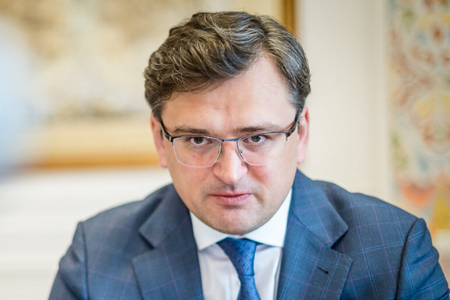
Addressing the European Council of Foreign and Defense Ministers, Ukrainian Foreign Minister Dmytro Kuleba called for "action, not discussion". But
Di Liddo says that aside from political discussions, the problem is of an industrial nature. "The European economy must be mobilized, being oriented towards war, and not all governments agree on this. Some companies are not ready to face the risk of certain investments, and the fear of going to war is a taboo subject in Europe, which scares and divides," he declares.
Therefore, Di Liddo's prediction is that during the period starting in a few days, and ending when the most sophisticated military supplies arrive in Ukraine, the Russians will have to push as far as possible to the front to have further territorial gains.
But looking at the pace of the offensive, they will be limited because the Ukrainians are prepared for the attacks. There may be other small successes, such as the recent Russian occupation of another village in Donetsk, Novomikhailovka, but nothing remarkable.
After that, thanks to the new American aid, this initiative will also be curbed. For the president of CeSI, the summer season represents "a decisive period". Favorable weather conditions will allow both sides to express themselves in the best way on the battlefield, especially Ukraine.
"Theoretically, Kiev should have an advantage, since we are talking about an army that is moving from Soviet or Russian military doctrine, which is more static and relies on firepower, to the Western one, which emphasizes the ease of maneuvering.
So if the terrain is in good condition, then you are in the best position to operate at your best. The Russians and the Ukrainians should maximize their profits until the summer, in order to arrive at the beginning of October in the best possible condition" - concludes Liddo.
In the fall, another confrontation will take place, which will be equally decisive for the future of Ukraine. If there are no changes in the White House, support for his cause will continue.
Meanwhile, a return of Donald Trump could change the cards on the table. For this reason, Biden urged Congress to approve the new aid package, perhaps the last of its kind, to avoid a collapse of Ukraine. At least for the next few months. / Adapted "Pamphlet" from "Huffingtonpost Post Italia"




Lini një Përgjigje